Introduction to Silage Stretch Film
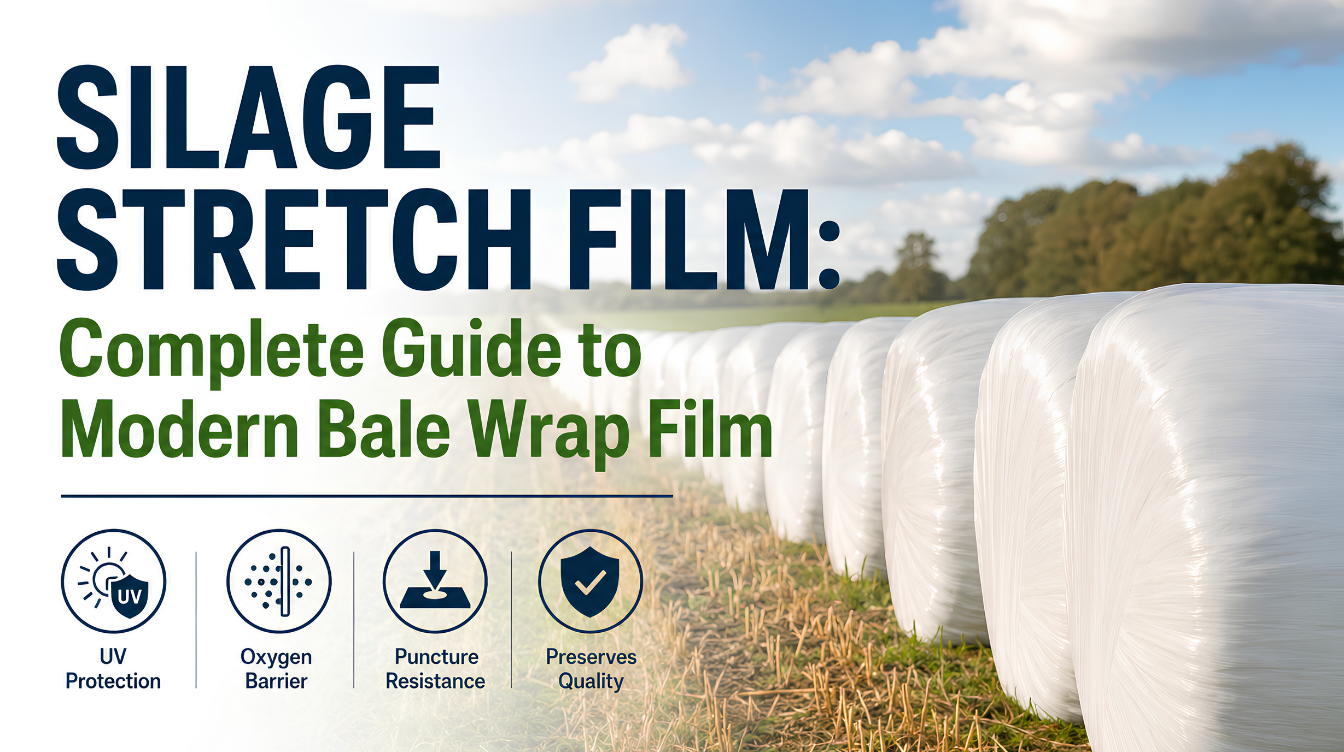
Silage stretch film is a multi-layer stretch film designed for wrapping hay, forage, grass, and maize silage into sealed bales. This guide explains how silage stretch works, why it matters for preserving forage quality, and how farmers can choose the right wrap film for best results.
- Used by dairy farms, livestock farms, fodder storage companies, agricultural businesses, and agricultural distributors.
- Suitable for round and square bales.
- Made from virgin LLDPE or agricultural-grade polyethylene using blown or cast co-extrusion production.
- Helps preserve silage by limiting air, moisture, and oxygen access.
What Is Silage Stretch Film?
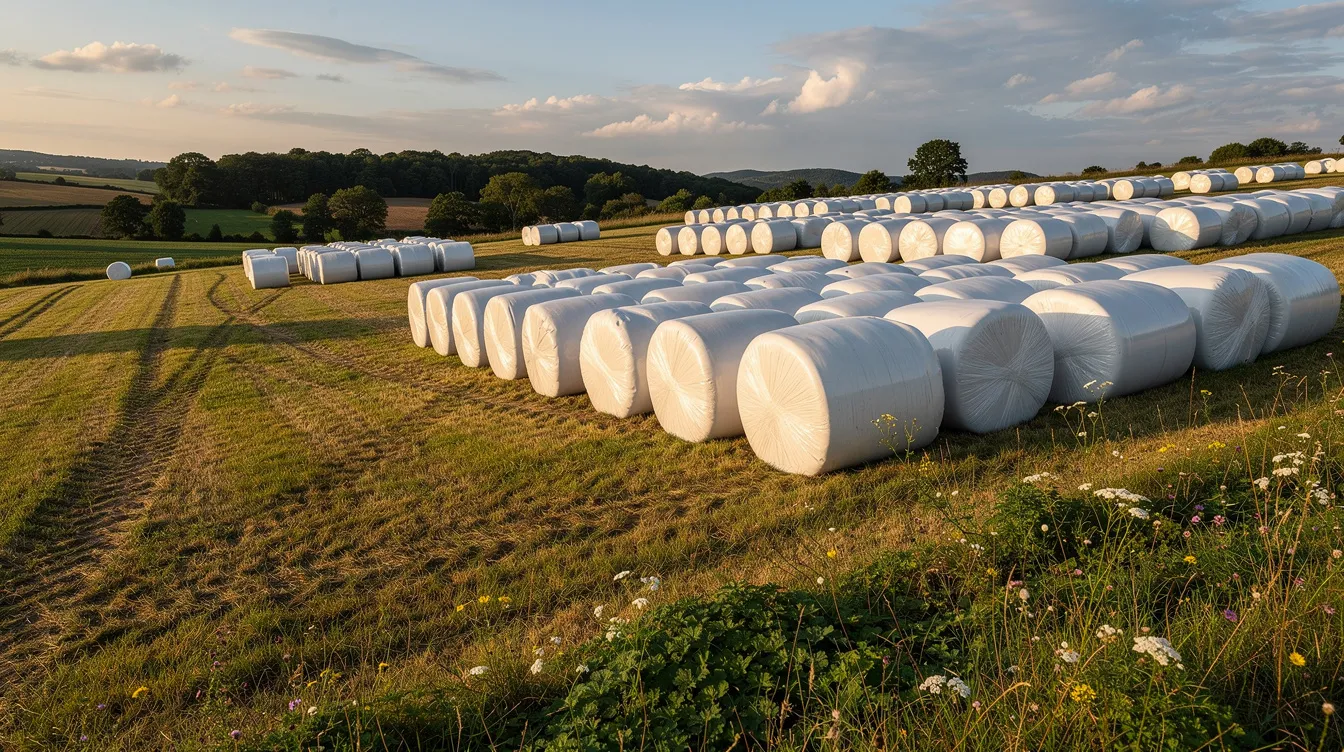
Silage stretch film is an elastic, multi-layer plastic hay bale wrap engineered for baled forage such as grass, alfalfa, haylage, and maize silage. Standard silage stretch film is made from polyethylene.
It differs from normal packaging stretch films because it offers:
- Higher uv protection against uv rays and long outdoor uv exposure.
- Stronger oxygen barrier performance for anaerobic storage.
- Better puncture resistance during handling, stacking, and transport.
- Agricultural-grade tack, cling, and stretch of about 50–70%.
The terms silage films, bale wrap film, bale wrap, silage stretch, and wrap film usually describe the same product category.
The Role of Silage and Why Preservation Matters
Silage is fermented, high-moisture forage used as nutritional feed for cattle, sheep, and other livestock. Good silage gives farmers stable feed supply during dry seasons, monsoon periods, winter, or limited pasture access.
Farmers judge quality by:
- Fresh acidic smell, stable color, and no visible mould.
- Low dry matter loss and minimal nutrient loss.
- Consistent fermentation and nutritional value.
- Strong forage quality that supports milk yield and weight gain.
Silage stretch film maintains nutritional value by preventing spoilage. Anaerobic fermentation in silage preserves feed’s nutritional quality and prevents spoilage.
Traditional Methods vs. Modern Bale Wrap Film
Traditional methods include pits, bunkers, clamp silos, and earthen trenches covered with tarpaulins, soil, or tyres. They can work, but poor sealing often allows air and oxygen to enter.
Modern bale wrap film changes the process:
- Forage is baled into round, square bales, or rectangular units.
- Each bale is wrapped as an individual storage unit.
- Individually wrapped bales reduce spoilage compared to traditional silage methods.
- Wrapped bales are easier to sell, move, and feed in portions.
Research on silage covering shows that better sealing reduces dry matter loss compared with uncovered systems, especially at exposed surfaces.
How Silage Stretch Film Works
The wrapper stretches the film around tight bales in multiple layers, usually 4–8 layers depending on crop, bale density, and storage time. The film’s cling helps each layer bond into a tight seal.
This creates three effects:
- Silage stretch film creates an airtight seal around bales.
- Reduced oxygen supports optimal fermentation and anaerobic fermentation.
- It prevents spoilage and moisture ingress effectively.
Good bale wrap film also blocks rain, dust, and fluctuating storage conditions throughout the storage period.
Materials, Structure & Technical Specifications
High-performance silage stretch films are usually manufactured from high quality raw materials such as virgin LLDPE or agricultural-grade polyethylene. Multi-layered silage stretch film offers extra puncture resistance.
Typical specifications include:
| Parameter | Common range |
|---|---|
| Width | 250 mm, 500 mm, 750 mm |
| Thickness | 20–30 micron, often 23–29 micron |
| Structure | 3–7 layers, sometimes more |
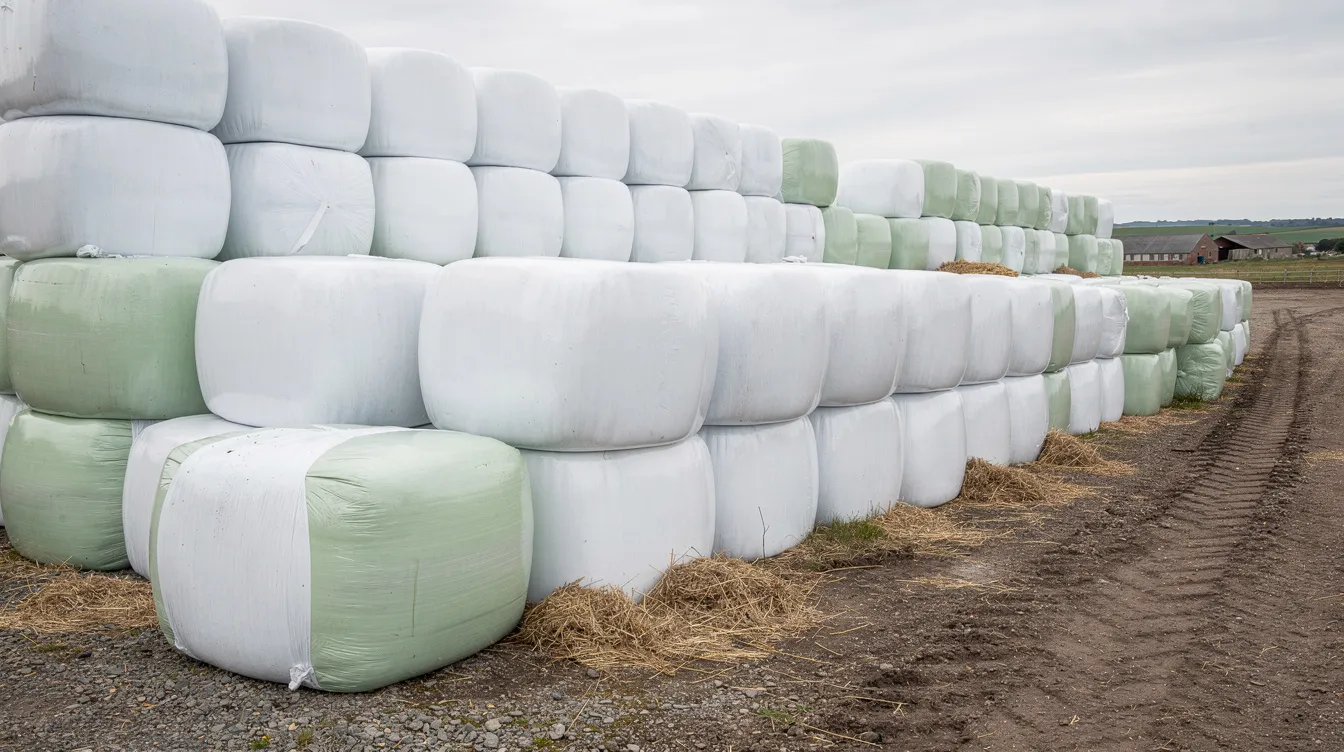
| Colors | White, black, green |
| Key properties | high puncture resistance, oxygen barrier, cling, durability, resistance to heat and weather |
Tilak Polypack’s reference range uses multi-layer blown technology with options in white, green, and black for bale wrapping applications.
Key Benefits of High-Quality Bale Wrap Film
- Preserves nutritional value, energy, and protein in forage.
- Silage stretch film reduces feed wastage and spoilage.
- It reduces feed wastage and lowers overall feeding costs.
- Supports maintaining bale shape and stable ration quality.
- Protects against minor impacts, birds, and handling damage.
- Reduces mould growth by preventing spoilage and oxygen entry.
- Works on both round and square bales with automatic or semi-automatic wrappers.
- Provides key benefits that make silage production more cost effective.
UV Protection, Oxygen Barrier & Color Choices
Outdoor bales need protection from sunlight, rain, heat, and extreme temperatures. The film offers excellent UV protection for stored silage.
Color selection matters:
- White silage film reflects heat to keep silage cooler.
- Black silage film provides excellent UV protection.
- Green silage film blends better with the natural environment.
Choose white in hot climates, black for strong light blocking, and green where appearance in the field matters. A strong oxygen barrier helps maintain low-oxygen conditions until the bale is opened.
Application Areas: Round & Square Bale Wrap
Silage stretch film is suitable for grass silage, hay, clover, alfalfa, mixed forage, and maize silage. It is used for round bales and square bales, including modern baler-wrapper combinations and inline wrapping systems.
Consistent thickness, controlled stretch, and tack help machines achieve clean coverage without film breaks at high speed.
Choosing the Right Silage Stretch Film
Before buying a roll, consider:
- Crop type: wet grass, haylage, or maize silage.
- Bale density: tighter bales need stronger protection.
- Climate: hot, humid, high-UV, or rainy areas need better uv protection.
- Storage duration: longer storage may need thicker material or more layers.
- Wrapper size: match 500 mm or 750 mm roll width to the machine.
For normal seasonal silage, a standard 23 micron film may be enough. For longer storage, dense bales, or rough handling, 29 micron or premium multi-layer film is safer.
Best Practices for Wrapping & Storage
- Wrap as soon as possible after baling, ideally within 1–2 hours.
- Use 4–6 layers for shorter storage and 6–8 layers for long-term or risky conditions.
- Set pre-stretch correctly; over-stretching weakens the barrier.
- Store on level, well-drained ground away from sharp stones.
- Protect bales from rodents, birds, and careless loader damage.
- Repair punctures immediately with compatible silage repair tape to restore the airtight seal.
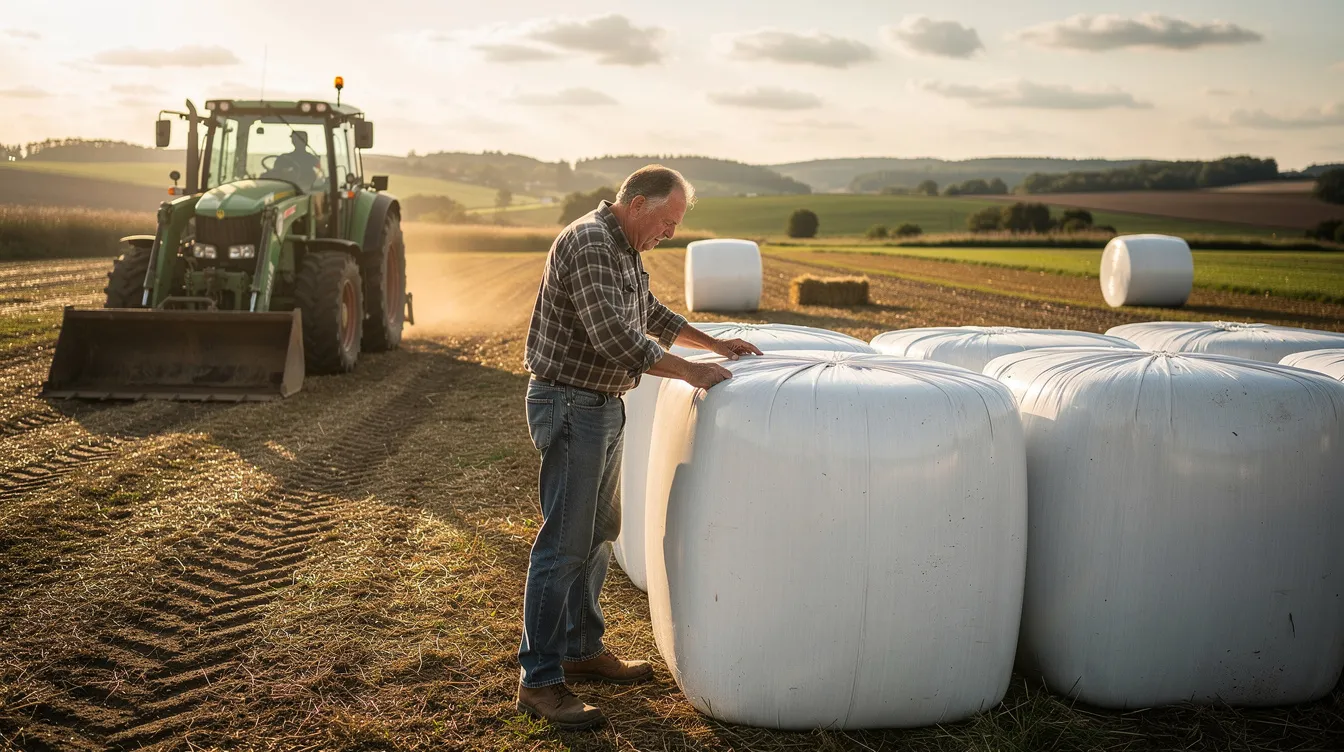
Bales wrapped in silage stretch film can be conveniently stored outdoors when the film quality, layer count, and storage conditions are correct.
Cost-Effectiveness & Sustainability
Premium agricultural film may cost more per roll, but it usually saves money by reducing spoiled feed. On a 2025 dairy farm, even a 5–10% reduction in dry matter loss can offset better film cost through more usable forage.
Sustainability also matters:
- Silage stretch film can be recycled.
- Many modern silage films are recyclable LLDPE.
- Some silage films contain 25% recycled content.
- Recyclable silage stretch wrap contains 25% recycled content.
- Using silage film contributes to sustainable farming practices by reducing wasted crops and lowering reliance on purchased concentrates.
Collect used film separately, remove excess silage residue, and check local recycling options.
Frequently Asked Questions (FAQ)
How long can bales wrapped with silage stretch film be stored?
Well-wrapped bales using UV-stabilized silage film can usually be stored outdoors for about 9–12 months. Storage life depends on crop moisture, bale density, layer count, sunlight, and physical damage.
Is silage stretch film the same as normal packaging stretch film?
No. Both may use polyethylene, but packaging film is not designed for months of outdoor bale storage. Silage film has stronger cling, UV stability, puncture resistance, and oxygen barrier performance.
How many layers of wrap film should I use?
Use at least 4 layers for short-term, low-risk storage. Use 6–8 layers for long-term storage, dense bales, hot climates, or difficult handling conditions.
Can silage stretch film be recycled after use?
Yes. Most LLDPE silage stretch film can be recycled if it is collected cleanly and sent to the right agricultural plastics recycling facility.
What should I do if the film is punctured?
Clean and dry the damaged area, then seal it quickly with compatible silage repair tape. Badly damaged bales should be fed earlier because long-term storage quality may be reduced.
For reliable bale protection, choose a silage stretch film that matches your crop, climate, wrapper, and storage plan. Contact a trusted manufacturer or supplier to select the right film grade for your farm or distribution needs.