Understanding Why Stretch Film Has Become Essential in Modern Industrial Packaging
Across industrial zones in Ahmedabad, Mumbai, Pune, Chennai, Bangalore, and Hyderabad, the movement of goods has become faster, larger, and more operationally demanding than ever before. Warehouses today handle thousands of cartons, palletized shipments, FMCG products, pharmaceutical boxes, industrial machinery components, and export consignments every single day. In such high-volume logistics environments, packaging is no longer only about covering products. It has become a critical part of transportation safety, warehouse efficiency, inventory stability, and export protection.
This is exactly where stretch film plays a major role in industrial packaging operations.
Whether products are transported between manufacturing plants in Gujarat, stored inside large distribution centers in Delhi NCR, or exported internationally through ports in Mumbai and Chennai, stretch wrap film helps maintain pallet stability throughout the entire supply chain. Without proper pallet wrapping, goods may shift during transportation, cartons can collapse under pressure, and expensive inventory damage may occur during warehouse handling or long-distance transit.
For logistics companies, exporters, manufacturing industries, and warehouse operators, industrial stretch film has become one of the most reliable and cost-effective pallet stabilization solutions available today.
What Is Stretch Film?
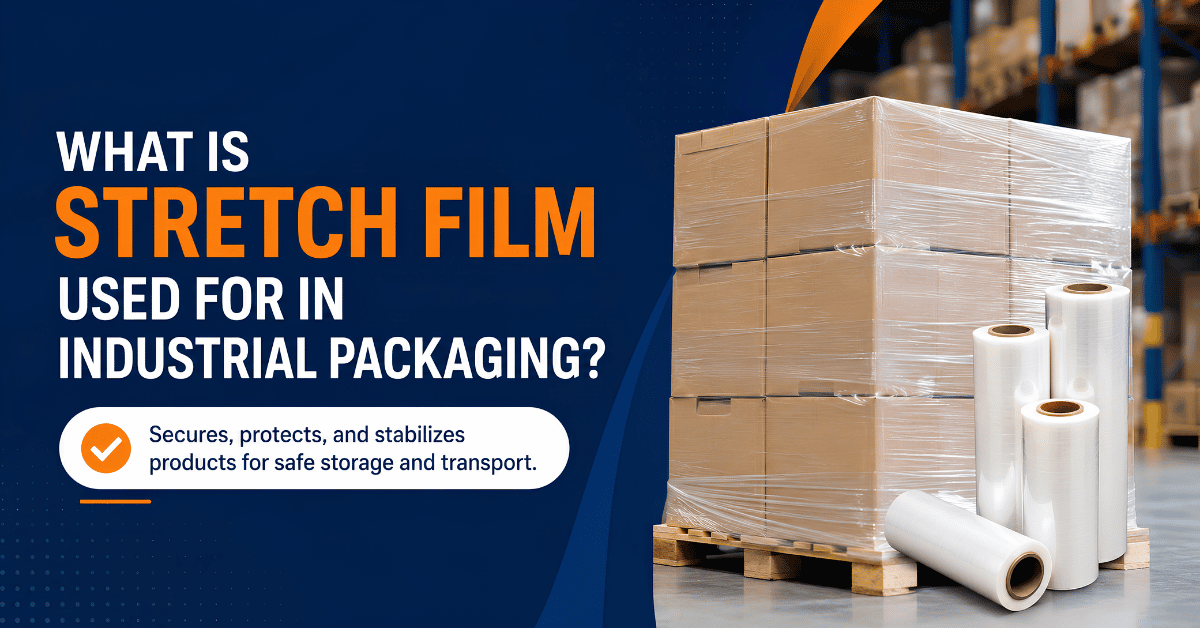
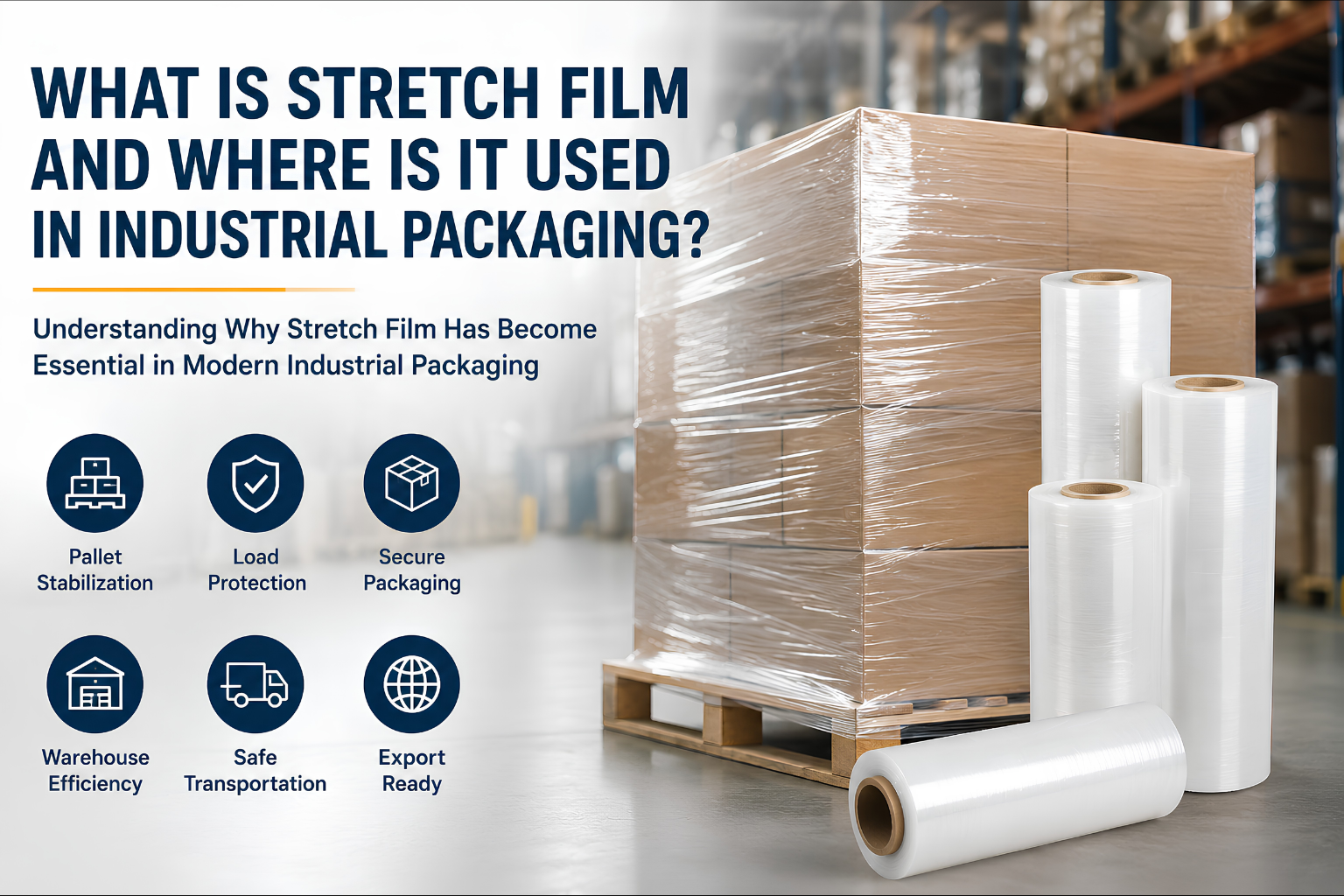
Stretch film, also known as stretch wrap film or pallet wrapping film, is a highly stretchable plastic packaging material primarily manufactured using Linear Low-Density Polyethylene (LLDPE). The film is designed to stretch tightly around products or pallets while generating continuous holding force that secures the load during storage, handling, and transportation.
Unlike shrink films that require heat application, stretch film works through elastic tension. When the film is stretched around a pallet, it naturally attempts to return to its original shape. This recovery force creates pressure around the products, helping stabilize cartons and prevent movement during logistics operations.
In modern industrial packaging systems, this simple yet highly effective mechanism helps businesses reduce transportation damage, improve pallet handling safety, and maintain organized warehouse operations.
Stretch film is now widely used in:
- logistics companies,
- export industries,
- FMCG manufacturing,
- pharmaceutical packaging,
- e-commerce fulfillment centers,
- warehouse operations,
- industrial production facilities,
- and retail distribution networks.
The reason for its widespread adoption is not only protection but also operational efficiency. Compared to traditional strapping or bulky packaging methods, stretch wrapping allows faster pallet securing with lower material consumption and improved handling flexibility.
How Stretch Wrap Film Works in Industrial Packaging Operations
The performance of industrial stretch film depends heavily on elasticity, cling performance, and load retention strength. During wrapping, the film stretches around the pallet and stores elastic energy within its molecular structure. Once applied, the film continuously applies inward pressure against the load, helping products remain tightly secured even during vibration, forklift movement, or long-distance transportation.
In large warehouse facilities across Bangalore and Pune, machine stretch wrapping systems may wrap hundreds of pallets every hour. In smaller manufacturing facilities across Ahmedabad or Rajkot, operators often manually apply hand stretch wrap around finished goods before shipment dispatch. Despite differences in application methods, the core function remains the same — maintaining pallet integrity throughout the logistics cycle.
The effectiveness of pallet wrapping film becomes especially important during export transportation. Containers moving internationally are exposed to continuous vibration, stacking pressure, moisture fluctuations, and handling movement at ports and warehouses. Without proper stretch wrapping, even minor pallet instability can result in damaged goods, rejected shipments, or increased logistics costs.
This is why exporters and industrial warehouse operators increasingly prioritize high-performance industrial stretch film solutions rather than choosing packaging materials solely based on price.
Why LLDPE Is Used for Industrial Stretch Film Manufacturing
Most industrial stretch wrap films are manufactured using LLDPE because of its superior combination of flexibility, puncture resistance, and elongation performance. Compared to traditional polyethylene materials, LLDPE provides higher stretchability while maintaining strong load containment properties.
For industrial packaging operations, these characteristics are extremely important because pallet loads are rarely uniform. Some shipments may contain sharp carton edges, uneven stacking patterns, or heavy industrial products that place continuous stress on the wrapping film during movement.
High-quality LLDPE stretch film helps solve these challenges by offering:
- excellent elongation strength,
- superior cling performance,
- improved puncture resistance,
- high transparency,
- reliable tear resistance,
- and better pallet stabilization.
In logistics hubs across Chennai and Mumbai where export packaging volumes are extremely high, businesses often prefer machine-grade LLDPE stretch film because thinner yet stronger films help reduce packaging costs while maintaining transportation safety.
This balance between cost optimization and operational performance is one of the primary reasons why LLDPE-based stretch wrapping films dominate the global industrial packaging market.
Different Types of Stretch Film Used in Warehouses and Logistics Industries
Industrial packaging requirements vary significantly depending on pallet volume, transportation conditions, warehouse automation levels, and product categories. Because of this, multiple types of stretch films are used across different industries.
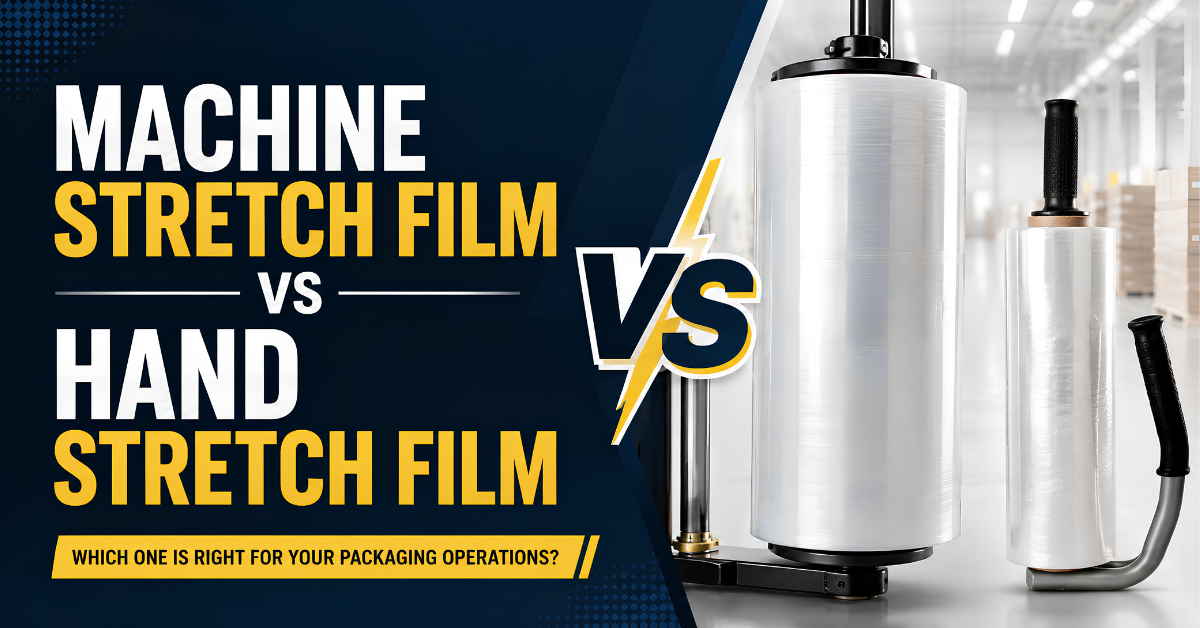
Hand Stretch Wrap for Manual Warehouse Operations
In small and medium-scale warehouses across Gujarat, Rajasthan, and Maharashtra, hand stretch wrap remains one of the most widely used pallet packaging solutions. Manual wrapping is especially common in businesses where daily pallet movement is moderate and fully automated wrapping systems are not operationally necessary.
hand stretch wrap is commonly used for:
- local transportation,
- warehouse packaging,
- FMCG dispatch operations,
- pharmaceutical shipments,
- and smaller manufacturing facilities.
One of the biggest advantages of hand stretch film is operational flexibility. Warehouse staff can quickly wrap pallets of different sizes without depending on machine settings or automated equipment. High-quality manual stretch films also provide excellent cling force and puncture resistance, helping maintain pallet security during loading and unloading activities.
In industrial clusters around Ahmedabad and Vadodara, many growing manufacturing businesses still rely heavily on hand stretch wrapping because it offers a practical balance between packaging efficiency and investment cost.
Machine Stretch Film for High-Speed Industrial Packaging
As warehouse automation continues expanding across major industrial cities like Bangalore, Hyderabad, Pune, and Chennai, machine stretch film demand has increased rapidly. Large logistics companies and export-oriented manufacturing units require packaging systems capable of handling continuous pallet wrapping with consistent film tension and minimal operational downtime.
machine stretch film is specifically designed for automatic pallet wrapping machines used in high-volume industrial environments.
Compared to manual wrapping systems, machine stretch film provides:
- faster pallet wrapping speed,
- reduced labor dependency,
- optimized film consumption,
- improved wrapping consistency,
- and stronger load containment performance.
In export packaging operations where thousands of pallets move every week, machine-grade pallet wrapping film significantly improves operational efficiency while reducing long-term packaging costs.
Many warehouse operators in Mumbai and Delhi NCR now prefer automated stretch wrapping systems because consistent pallet stabilization directly reduces transportation damage claims and improves supply chain reliability.
Industrial Applications of Stretch Film Across Different Sectors
Stretch film is no longer limited to basic warehouse packaging. Its applications now extend across multiple industrial sectors where pallet security, transportation protection, and operational efficiency are essential.
Stretch Film in Logistics and Transportation Companies
Transportation companies depend heavily on pallet stability because goods continuously move through trucks, warehouses, ports, and distribution networks. Even small product shifts during transportation can create major operational problems including damaged inventory, delayed deliveries, and increased return rates.
Industrial stretch wrap film helps logistics providers maintain secure pallet movement across long-distance transportation routes throughout India.
This becomes especially important for interstate transportation between manufacturing centers like Ahmedabad, Pune, Chennai, and Bangalore where shipments may travel for several days before final delivery.
Stretch Film in FMCG Industries
FMCG companies operate at extremely high packaging volumes. Products move rapidly from manufacturing plants to regional distribution centers and retail networks. Because of this, pallet wrapping efficiency becomes critical for maintaining fast supply chain movement.
Stretch film allows FMCG businesses to stabilize large carton loads while maintaining visibility for barcode scanning, inventory management, and warehouse identification systems.
Transparent stretch wrap film is particularly preferred in FMCG warehouse operations because it allows easier product verification during storage and dispatch handling.
Stretch Film in Pharmaceutical Packaging
Pharmaceutical industries require highly secure and hygienic packaging systems to protect sensitive medical products from contamination, dust exposure, and moisture.
In pharmaceutical manufacturing hubs across Hyderabad and Ahmedabad, industrial stretch film is widely used for pallet stabilization inside clean warehouse environments and transportation systems.
High-quality pallet wrapping film helps maintain organized product movement while reducing risks associated with handling instability during transit operations.
Why High-Quality Stretch Film Matters More Than Price Alone
One of the most common mistakes industrial buyers make is evaluating stretch film only on price per roll rather than total packaging performance.
Low-quality stretch films often create hidden operational costs such as:
- excessive film breakage,
- weak cling performance,
- unstable pallet loads,
- higher film consumption,
- machine downtime,
- and increased transportation damage.
In large-scale warehouse operations, these problems can quickly increase overall logistics expenses far beyond the initial savings achieved through cheaper film purchasing.
This is why experienced exporters, warehouse operators, and logistics companies increasingly prioritize film consistency, elongation strength, and puncture resistance instead of focusing exclusively on low-cost procurement.
Premium industrial stretch wrap film often reduces overall operational cost because better pallet containment improves transportation safety and reduces product damage risks throughout the supply chain.
Conclusion
Stretch film has become one of the most important packaging materials in modern industrial logistics. From warehouse pallet stabilization in Ahmedabad to export packaging operations in Mumbai and Chennai, stretch wrap film now plays a central role in protecting goods throughout the supply chain.
Its ability to improve pallet stability, reduce transportation damage, support warehouse efficiency, and optimize packaging operations makes it essential for manufacturers, exporters, logistics providers, FMCG companies, and industrial warehouses across India.
As industrial packaging systems continue evolving toward faster automation and larger distribution networks, the importance of high-performance pallet wrapping film will only continue growing in the years ahead.