Choosing the right hand stretch film is not simply a matter of selecting a roll and wrapping it around a pallet. The film needs to match the size and weight of the load, the way it is being wrapped, the amount of stretch required, and the conditions the pallet will experience during storage and transportation.
A film that works well for lightweight cartons may not provide enough strength for a heavy industrial pallet. Similarly, using a film that is thicker than necessary can increase packaging costs without delivering a meaningful improvement in load stability.
For businesses that wrap pallets manually, understanding thickness, width, stretch, roll size and pallet dimensions makes it easier to select a film that provides reliable load containment without unnecessary material usage.
In this guide, we explain the main factors to consider when buying hand stretch film and how to match the film specification to your pallet and packaging application.
What Is Hand Stretch Film?
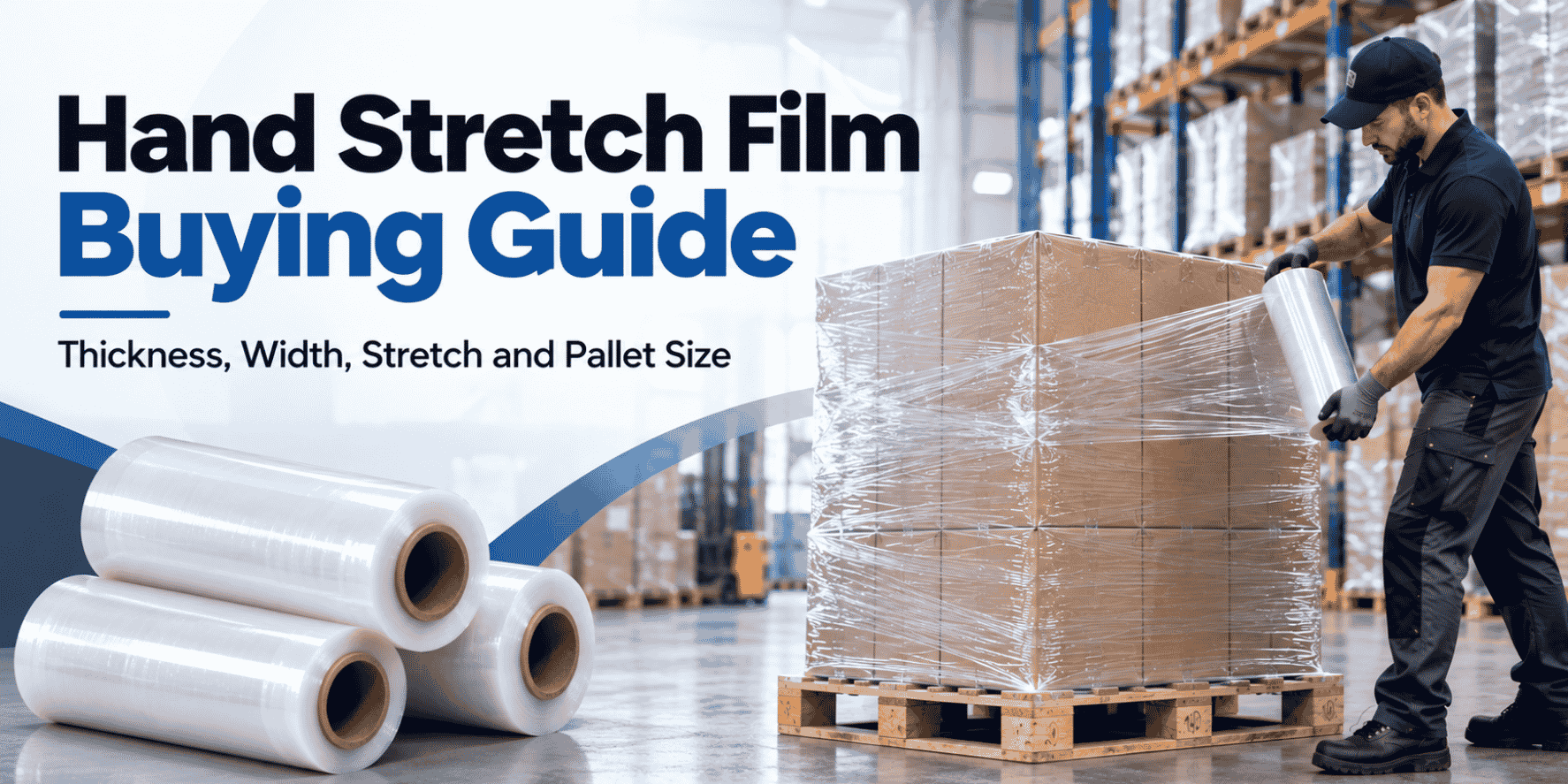
Hand stretch film is a flexible plastic packaging film designed to be applied manually around products, cartons, bundles or pallets. The film stretches during wrapping and creates tension around the load, helping hold individual items together and reduce movement during handling and transportation.
It is commonly used in warehouses, manufacturing facilities, logistics operations, distribution centers and other businesses where pallets need to be secured without an automatic wrapping machine.
The main advantage of hand-applied stretch film is its flexibility. Operators can adjust the amount of tension and the number of wraps according to the shape and stability of the load.
However, because the film is applied manually, the final result can vary considerably depending on the film specification and wrapping technique. Selecting the right film therefore becomes especially important.
Why Does Hand Stretch Film Specification Matter?
Two stretch film rolls can look almost identical while performing very differently during pallet wrapping. The difference can come from film thickness, stretch capability, puncture resistance, cling, width, roll length and the way the film is manufactured.
The objective is not to choose the thickest film available. The objective is to choose a film that provides enough strength and containment for the particular load while using the material efficiently.
For example, a pallet containing lightweight boxes with smooth surfaces may require a different film specification from a pallet containing dense metal components with sharp edges.
The correct film should provide sufficient holding force while remaining practical for the operator to apply consistently.

How Do You Choose the Right Hand Stretch Film Thickness?
Film thickness is one of the first specifications buyers consider. It is normally expressed in microns, with a higher micron value indicating a thicker film.
However, thickness alone does not determine how well a stretch film will perform. A thinner film with good stretch and puncture resistance can sometimes perform more efficiently than a thicker film with weaker performance characteristics.
The right thickness depends on the load being wrapped. Lightweight cartons with relatively smooth surfaces generally place less stress on the film. Heavy loads, irregular products and pallets with sharp corners can require greater resistance to puncture and tearing.
The wrapping method also matters. If an operator is applying substantial tension during wrapping, the film must be able to stretch without breaking. If the film is repeatedly punctured or torn around corners, simply increasing thickness may not be the best solution; a film with better puncture resistance may be more appropriate.
For this reason, thickness should be evaluated together with load weight, product shape, edge characteristics, required stretch and transportation conditions.
What Stretch Percentage Should Hand Stretch Film Have?
Stretch refers to how much the film can elongate when tension is applied. This is an important performance characteristic because stretching the film creates tension around the pallet.
For example, if a film has a 100% stretch capability, its length can theoretically double under suitable conditions. Actual usable stretch depends on the film structure, application method and the amount of force applied by the operator.
A film with appropriate stretch can cover more surface area from the same roll and create effective load containment. However, excessive or uncontrolled stretching can make manual wrapping difficult and may reduce consistency between pallets.
The ideal stretch level therefore depends on both the film and the operator. A good hand stretch film should provide enough elasticity to wrap the load efficiently while remaining manageable during manual application.
Does Stretch Film Width Matter?
Yes. Film width affects how quickly an operator can cover a pallet and how suitable the roll is for different applications.
A wider film can cover more of the pallet with each pass, which can be useful for larger loads. Narrower rolls can provide better control for smaller products, bundles or applications where precise wrapping is required.
The correct width should correspond to the size and shape of the load as well as the operator’s ability to control the film.
For standard pallet wrapping, a commonly used width may be suitable for many applications, but there is no universal width that is ideal for every operation. A buyer should consider the pallet dimensions, load height and wrapping pattern before selecting the roll width.
How Does Pallet Size Affect Hand Stretch Film Selection?
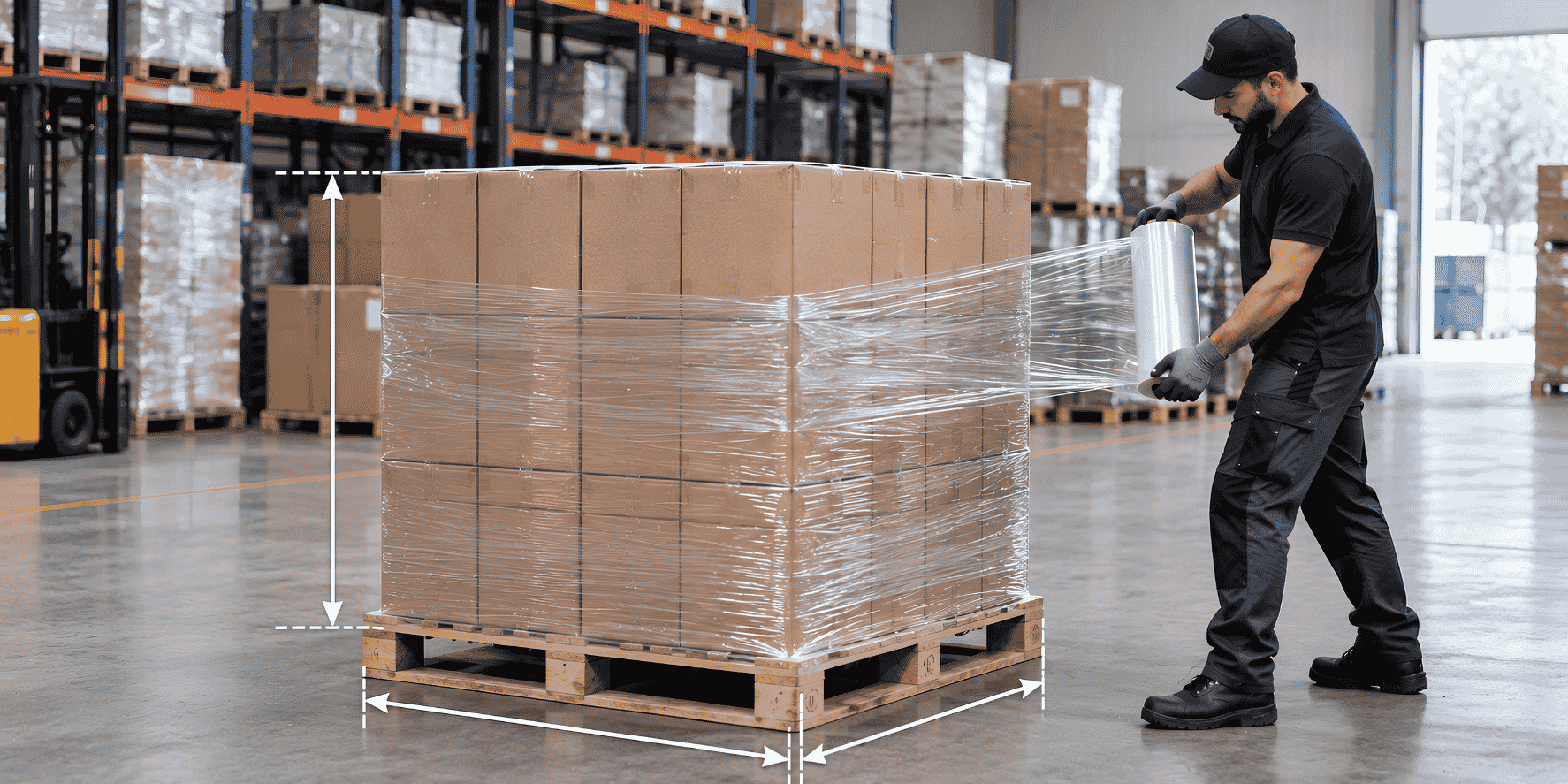
Pallet dimensions are directly connected to film consumption.
A small pallet with a compact load requires less film per wrap than a large pallet with a greater circumference. A tall pallet may also require more film because the operator needs additional vertical passes to stabilize the entire load.
The shape of the load is equally important. A uniform rectangular pallet is generally easier to wrap than a pallet containing irregular products, protruding components or gaps between cartons.
Before selecting hand stretch film, measure the approximate length, width and height of the typical pallet load. Also consider whether the pallet contains sharp edges or products that may move during transportation.
If your business wraps several different pallet sizes, selecting a versatile film specification may be more practical than choosing a film designed around only one load size.
How Much Hand Stretch Film Do You Need Per Pallet?
There is no single amount of stretch film that should be used for every pallet.
Film consumption depends on pallet dimensions, load stability, film width, film stretch, wrapping pattern, number of layers and the amount of overlap between passes.
A stable pallet with uniformly stacked cartons may require fewer wraps than a pallet containing irregular or heavy products. Similarly, a load that will travel a long distance through multiple handling stages may require stronger containment than a load that is moved only within a warehouse.
Instead of choosing a fixed number of wraps for every pallet, businesses should determine the minimum film application that provides reliable load stability.
This can be done through practical wrapping trials. Start with the selected film specification, wrap representative pallets and observe whether cartons shift, film tears, corners puncture the film or the load becomes unstable during handling.
The goal is consistent containment with efficient film usage, rather than simply applying more layers.
Should You Choose a Thicker Film or a Higher-Stretch Film?
This is a common question when comparing hand stretch film options.
A thicker film may provide additional material strength, but it can also increase material consumption and packaging cost. A higher-stretch film may cover more surface area and reduce film usage, provided it has the required strength and containment characteristics.
The better choice depends on the application.
For a relatively smooth and stable load, a film that combines good stretch with sufficient holding force may provide efficient performance. For heavy or sharp-edged products, puncture and tear resistance may be more important than simply maximizing stretch.
The correct approach is to evaluate film thickness and stretch as complementary specifications, rather than treating one as a replacement for the other.
What Type of Hand Stretch Film Is Best for Heavy Loads?
Heavy pallets place greater demands on the film because the load has more inertia during handling and transportation.
If the pallet contains dense machinery parts, metal components, construction materials or other heavy products, the film needs to maintain containment without tearing under tension.
In these applications, buyers should look beyond micron thickness and consider puncture resistance, tear resistance, holding force and the shape of the products.
Sharp corners are particularly important. A heavy product with smooth surfaces may behave differently from a similarly weighted load containing exposed edges.
For demanding applications, it is better to test the film with the actual load rather than selecting a specification based only on pallet weight.
What About Lightweight Pallets?
Lightweight loads generally do not require the same level of film strength as heavy industrial pallets, but that does not mean the cheapest or thinnest film is always the best choice.
Very lightweight cartons can still shift if they are stacked unevenly or if the pallet experiences vibration during transportation.
For these loads, a suitable hand stretch film should provide enough tension to stabilize the cartons while remaining easy for operators to apply.
Using excessive film on lightweight pallets can unnecessarily increase packaging costs. This is why businesses should evaluate actual load stability rather than automatically increasing film thickness.
How Does Load Shape Affect Film Selection?
Load shape is one of the most overlooked factors in stretch film selection.
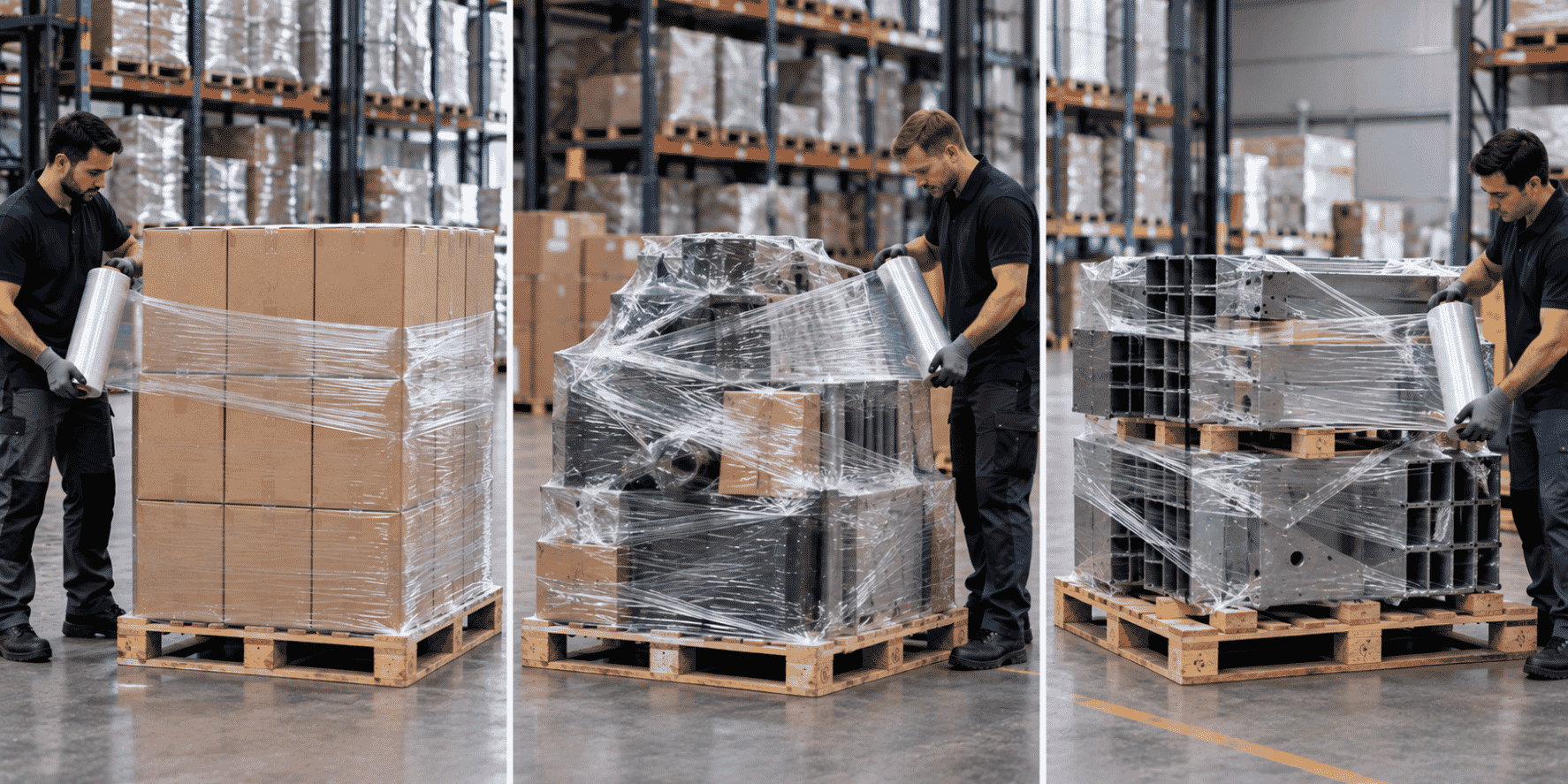
A rectangular pallet with smooth carton surfaces is relatively straightforward to wrap. Irregular loads can create areas of concentrated tension where the film is more likely to stretch unevenly or become punctured.
Products that extend beyond the pallet edge can also create exposed corners. During wrapping, these corners can damage the film if the material does not have sufficient puncture resistance.
For irregular loads, the film should be selected based on the most demanding part of the pallet rather than its average characteristics.
The wrapping technique should also be adjusted. Operators may need additional passes around unstable areas or use corner protection when appropriate.
How Many Layers of Hand Stretch Film Should You Apply?
The required number of layers depends on the load rather than a universal rule.
A stable load with uniform cartons may need fewer layers than a heavy or irregular load. The required coverage also depends on whether the pallet needs protection primarily against movement, dust and moisture, or more demanding transportation conditions.
The important point is to create consistent containment across the load.
Operators should pay attention to the bottom, middle and upper sections of the pallet. Wrapping only the center of the load may leave the upper cartons vulnerable to movement, while insufficient attachment around the pallet base can allow the entire load to shift.
A consistent wrapping pattern is therefore just as important as the number of layers.
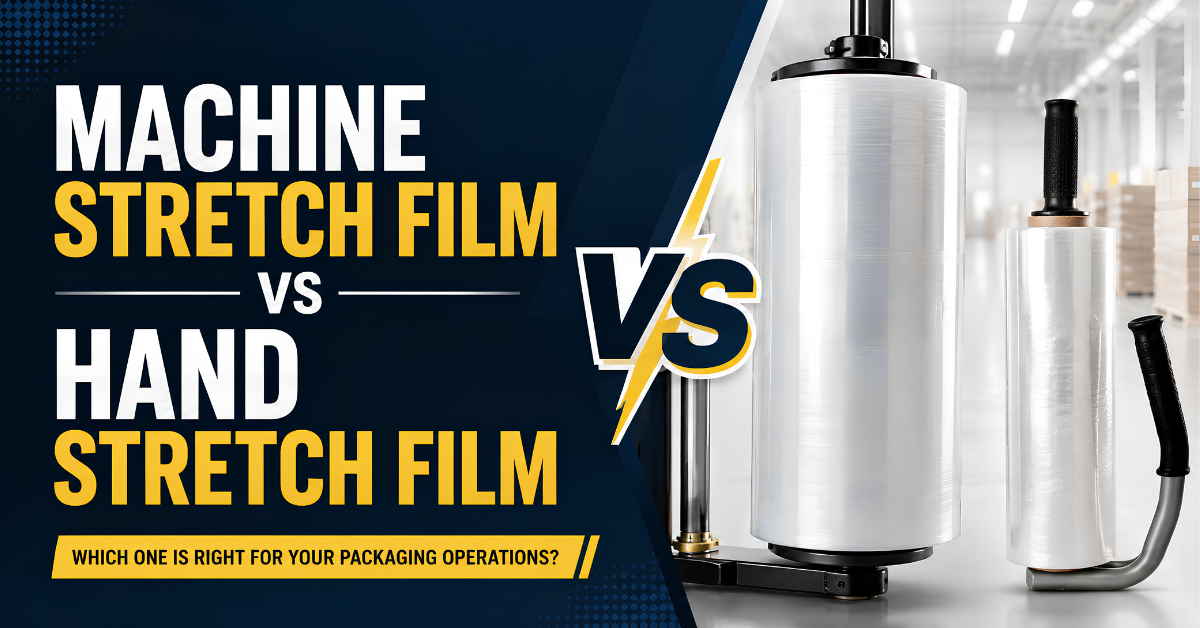
What Is the Difference Between Hand Stretch Film and Machine Stretch Film?
Hand stretch film is designed to be applied manually, while machine stretch film is intended for automatic or semi-automatic wrapping equipment.
The two products can have different performance characteristics because machine wrapping equipment can apply more controlled and consistent tension than a person wrapping a pallet manually.
If your business wraps a limited number of pallets each day, hand stretch film may be practical because it requires little equipment. For high-volume operations, machine stretch film can provide greater consistency and reduce manual labor.
The choice should therefore be based on your wrapping process, pallet volume, labor requirements and equipment rather than simply comparing the film specifications.
For businesses currently using manual wrapping but experiencing increasing pallet volumes, comparing hand and machine stretch film can help identify opportunities to improve packaging efficiency.
How Should You Choose Hand Stretch Film for Export Pallets?
Export pallets can experience longer transportation times, multiple handling points, vibration and changes in environmental conditions.
This makes load containment particularly important.
When selecting hand stretch film for export packaging, consider the total weight of the load, pallet dimensions, product shape, transportation distance and whether the pallet will be stored outdoors or indoors.
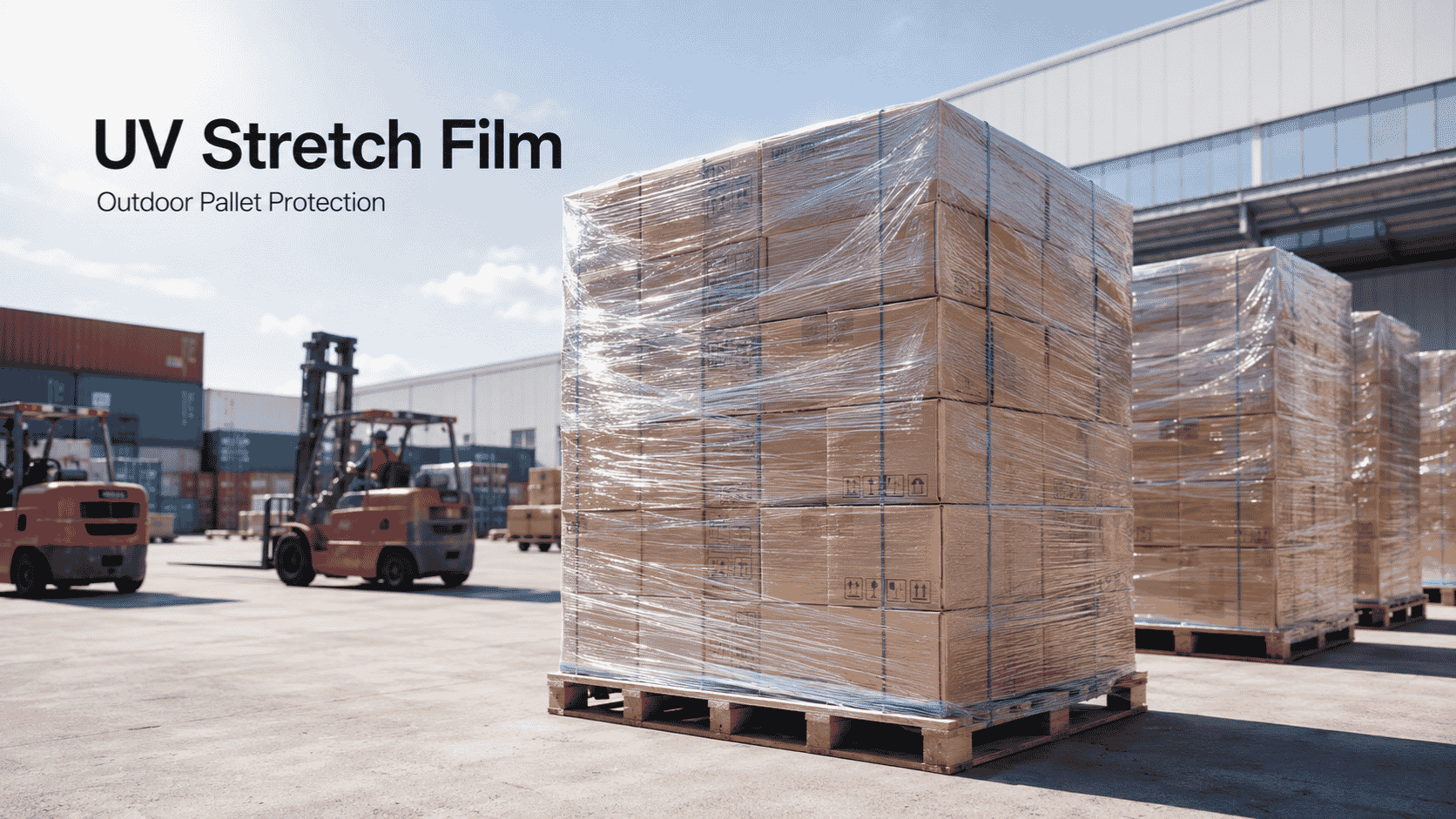
For export applications involving outdoor exposure, a specialized film such as UV-resistant stretch film may be more appropriate when extended sunlight exposure is expected.
The film should ultimately be selected according to the actual transportation and storage conditions rather than simply the destination country.
What Roll Length Should You Choose?
Roll length affects how frequently operators need to replace the film roll and how much film can be applied from each roll.
A longer roll can reduce the frequency of roll changes, which may be useful in operations wrapping many pallets. However, the roll should remain comfortable for the operator to handle.
If the roll is too large or heavy for the operator, manual wrapping can become less efficient and physically demanding.
Therefore, roll length should be evaluated together with roll weight, film thickness, film width and operator handling requirements.
A packaging manager should look at cost per usable pallet, rather than only the purchase price of an individual roll.
How Do You Compare Different Hand Stretch Film Suppliers?
Price is important, but it should not be the only factor when comparing stretch film suppliers.
A supplier should be able to provide consistent film specifications and help you select a suitable product for your application. Film consistency matters because variations in thickness, stretch or roll length can affect packaging performance and material consumption.
Buyers should also consider whether the supplier can provide the required roll dimensions, thickness options, packaging quantities and regular supply.
For larger or recurring requirements, it can be useful to test samples before placing a larger order. Compare how much film is consumed per pallet, how easily operators can apply it, whether the film tears around corners and whether the finished load remains stable during handling.
A slightly higher-priced film can potentially be more economical if it reduces consumption, breakage and rewrapping.
Common Mistakes When Buying Hand Stretch Film
One of the most common mistakes is choosing film based only on price per roll. A cheaper roll does not necessarily mean a lower packaging cost if it requires more material or breaks frequently.
Another mistake is selecting film thickness without considering the load shape. A heavy load with sharp edges may need better puncture resistance rather than simply a thicker film.
Some businesses also use the same film specification for every pallet even when their loads vary significantly. This can result in over-packaging some loads and under-protecting others.
Another problem is failing to measure actual film consumption. Without tracking how much film is used per pallet, it is difficult to determine whether a different film specification could reduce packaging costs.
Finally, inconsistent wrapping technique can make a good film appear ineffective. Operators should be trained to apply consistent tension, overlap and coverage.
A Practical Hand Stretch Film Selection Process
The easiest way to choose the right hand stretch film is to work through the application step by step.
Start by identifying the typical pallet dimensions and total load weight. Next, examine the product shape and determine whether the load contains sharp edges, protruding parts or unstable layers.
Then consider the wrapping environment. Determine whether pallets are wrapped indoors, stored outdoors, transported long distances or exposed to conditions that may require specialized film.
After that, evaluate film thickness, stretch capability, width and roll length. Do not judge the film only by one specification. The combination of these characteristics determines how efficiently the film performs.
Finally, conduct a practical trial using representative pallets. Measure film consumption, wrapping time, film breakage and load stability.
This approach provides a much more reliable basis for purchasing decisions than choosing a film specification based only on a catalog description.
Final Checklist Before Buying Hand Stretch Film
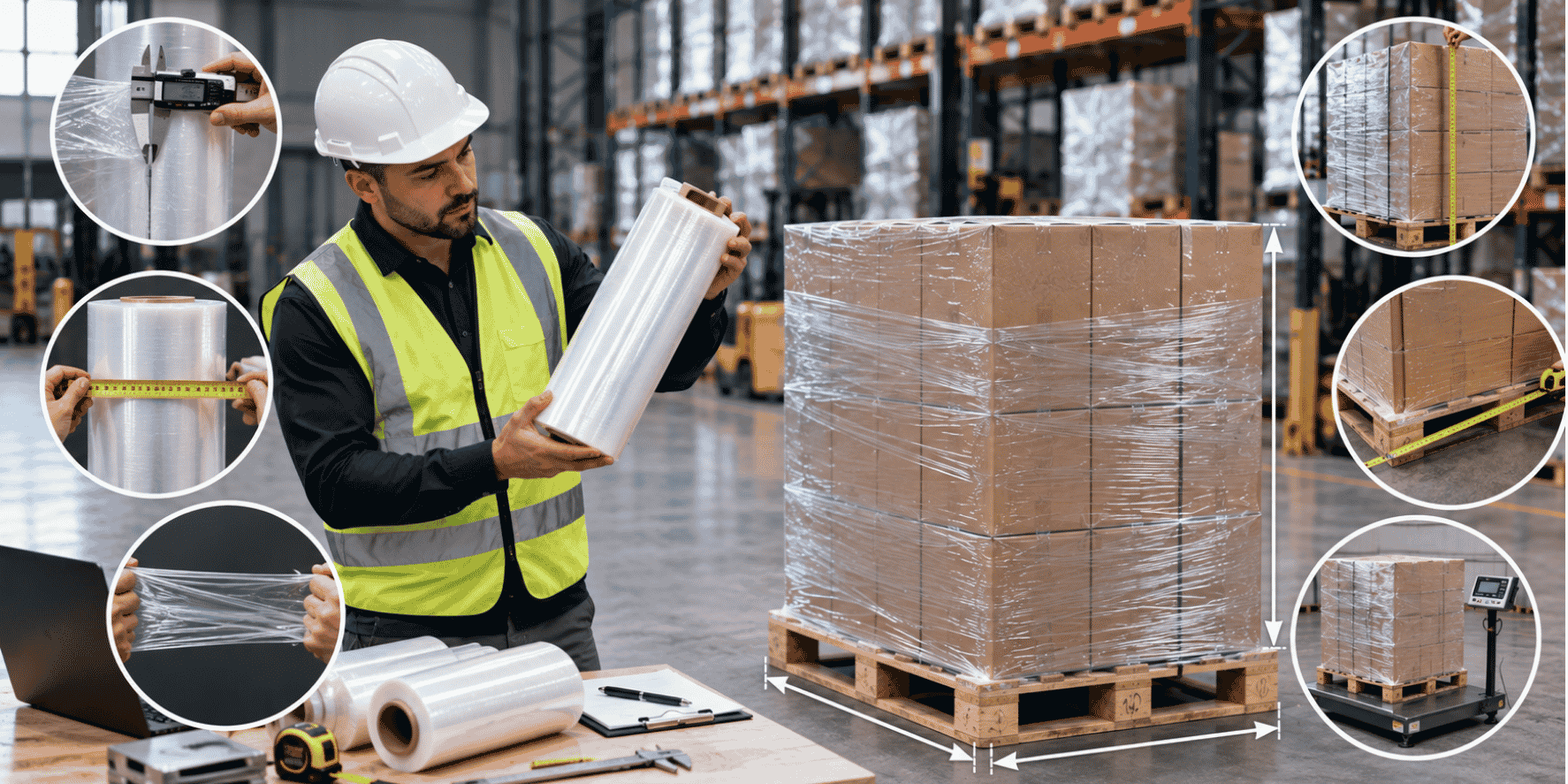
Before placing an order, make sure you understand the typical pallet dimensions, load weight and product shape your operation needs to wrap.
Consider whether the load has sharp edges, whether it needs higher puncture resistance and whether it will experience long-distance transportation or outdoor storage.
Compare film thickness and stretch together instead of choosing based on thickness alone. Check the film width and roll length to make sure the roll is practical for manual application.
Most importantly, test the film on your actual pallets. A short application trial can reveal whether the film provides sufficient containment, whether operators can apply it comfortably and whether the material is being used efficiently.
The best hand stretch film is not necessarily the thickest or cheapest option. It is the film that provides the right balance of strength, stretch, coverage, handling and cost for your specific pallet load.
Conclusion
Choosing hand stretch film requires more than selecting a roll by price or micron thickness. The right specification depends on the relationship between the film and the load it needs to secure.
Pallet size, load weight, product shape, edge characteristics, film thickness, stretch capability, width and roll length all influence performance and material consumption.
For businesses that regularly wrap pallets manually, testing different film specifications on representative loads can help identify the most efficient solution. The objective should be consistent load containment while avoiding unnecessary film usage.
If you are evaluating hand stretch film for your packaging operation, choose a specification based on your actual pallet requirements and wrapping conditions rather than relying on a one-size-fits-all approach.