
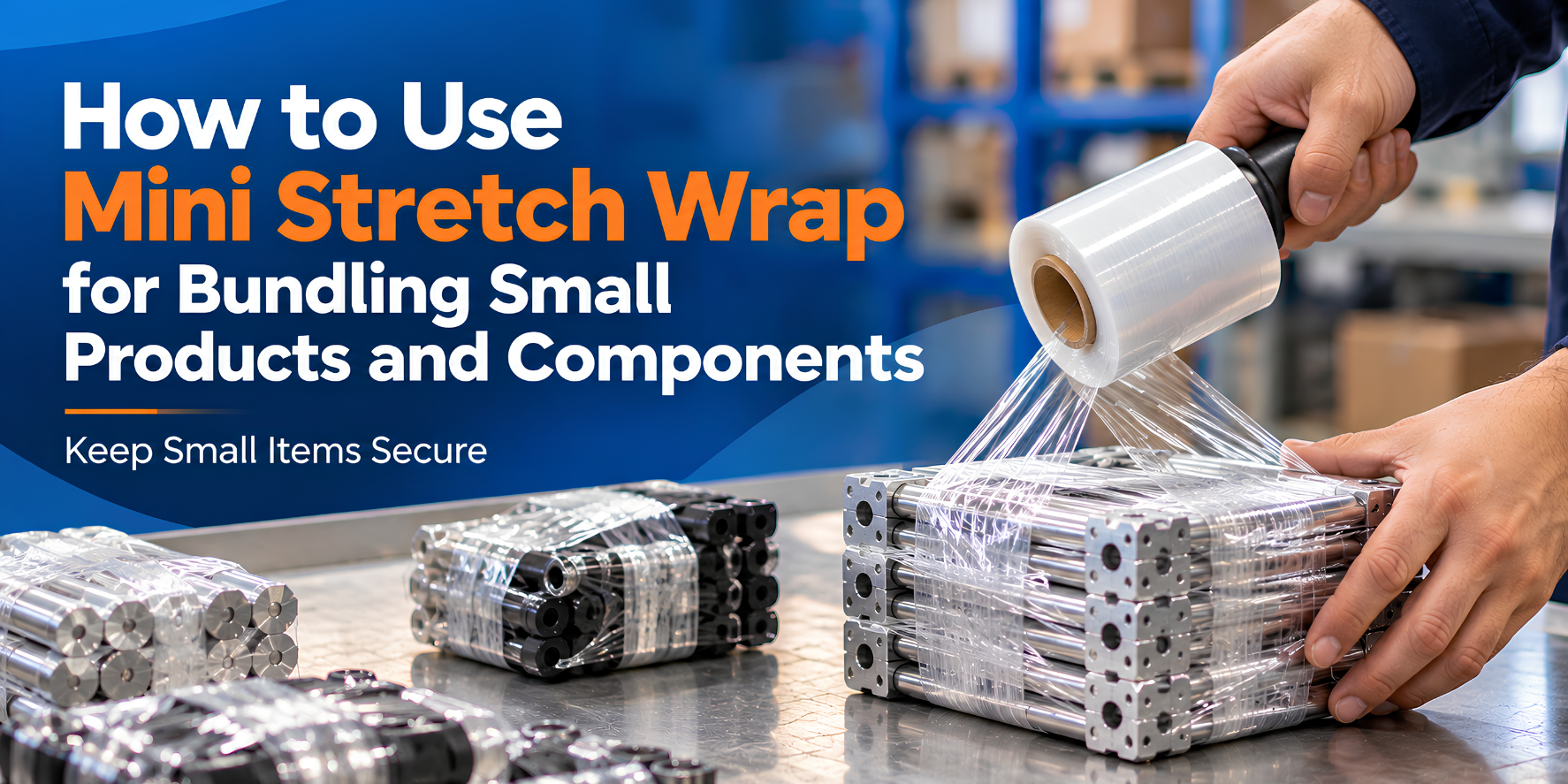
When businesses need to bundle small products, components, parts or lightweight items, using a standard stretch film roll can sometimes be inconvenient. Large rolls are designed for broader wrapping applications, while smaller items often require more control and precision. Mini stretch wrap rolls provide a practical solution for these situations because they are easier to handle around small bundles and individual items.
Mini stretch wrap can be useful in warehouses, manufacturing units, workshops, retail operations and other packaging environments where products need to be grouped together before storage, handling or shipment. Instead of treating every small bundle like a full pallet, businesses can use a more compact wrapping method that allows operators to wrap the product directly and keep the bundle together.

Why Mini Stretch Wrap Is Useful for Small Bundles
Small products can be difficult to keep together during internal movement and routine handling. Individual pieces may become separated, mixed with other components or become difficult to organize when they are stored or moved in larger packaging areas. Wrapping several related items together creates a compact unit that can be easier to handle.
The main advantage of a mini roll is control. A smaller roll can be moved around a compact bundle without requiring the same handling approach used for a full-size stretch film roll. This makes it practical when the packaging task involves individual bundles rather than large pallets.
Mini stretch wrap can also be useful when businesses need to bundle items temporarily before placing them into cartons, shipping containers or larger packaging units. The objective is not necessarily to completely enclose every product, but to hold the selected items together securely enough for the intended handling process.
What Types of Products Can Be Bundled?
Mini stretch wrap can be used for many small-item packaging situations where products need to remain grouped together. The exact wrapping method depends on the shape, weight and handling requirements of the items.
Common examples can include:
- Small manufactured components
- Hardware and assembly parts
- Small tools or accessories
- Lightweight product bundles
- Components prepared for internal movement
- Small retail or distribution items
- Irregular groups of products that need to be held together
For businesses handling multiple small components, bundling can also make warehouse organization easier. Products that belong together can be wrapped as a single unit, helping reduce unnecessary separation during handling.
How to Use Mini Stretch Wrap for Bundling
The wrapping process should begin by arranging the products into a stable bundle. Keep the items positioned as evenly as possible and make sure loose pieces are placed inside the main group rather than extending too far beyond the bundle.
Start the film around the bundle and make the first few rotations carefully. These initial wraps help anchor the film before you continue around the remaining surface. Once the film is attached securely, move the roll around the bundle while maintaining consistent tension.
The goal should be to hold the products together without applying unnecessary force. Excessive tension is not automatically better, particularly when the items are lightweight, delicate or easily marked. A consistent wrapping pattern is generally more useful than simply adding large amounts of film.
As you continue wrapping, overlap successive layers enough to maintain continuity around the bundle. Pay particular attention to the ends and areas where individual pieces could move apart. After the bundle is sufficiently secured, finish the film cleanly so that the wrapped unit is ready for handling or the next stage of packaging.

How Much Film Should You Use?
There is no single amount of mini stretch wrap that is suitable for every bundle. Film usage depends on factors such as the size of the bundle, the shape of the products, how easily the items can move and how the wrapped bundle will be handled afterward.
A small, compact bundle may require only a relatively limited number of passes, while a larger or less stable group may require additional coverage. Instead of applying film based only on a fixed number of rotations, operators should evaluate whether the bundle remains together during normal handling.
A useful approach is to test the wrapping method with representative products from the actual packaging operation. This allows the business to determine an appropriate balance between secure bundling and efficient film use.
Common Mistakes When Bundling Small Products
Even a simple wrapping process can become inefficient when the film is applied inconsistently. One common mistake is starting with products that are poorly arranged. If the items are already unstable before wrapping begins, simply adding more film may not solve the underlying problem.
Another mistake is using excessive tension. Over-tightening can make the packaging process unnecessarily difficult and may not provide a practical improvement for lightweight products. Operators should aim for secure holding rather than maximum pressure.
Other problems can occur when the film is wrapped only around the easiest part of the bundle while leaving loose areas unsecured. Uneven wrapping can allow individual components to move during handling.
For more consistent results, businesses should focus on:
- Starting with a stable arrangement of products
- Anchoring the film before completing the bundle
- Maintaining reasonably consistent tension
- Overlapping the film across the bundle
- Securing areas where components could separate
- Avoiding unnecessary film usage
Mini Stretch Wrap vs Standard Stretch Film
Standard stretch film remains useful for larger packaging tasks, particularly pallet wrapping and other applications involving larger loads. However, a smaller roll can be more convenient when the packaging task involves individual bundles or components.
The choice should therefore depend on the application rather than simply selecting one film format for every packaging operation.
Businesses handling larger pallets and higher-volume loads may benefit from dedicated machine stretch film or hand stretch film depending on their wrapping process. For smaller products and compact bundles, mini stretch wrap rolls provide a more targeted wrapping format.
For businesses comparing different wrapping formats, our guide on choosing the right wrapping roll for packaging can also help explain how the application should influence the wrapping method.
When Mini Stretch Wrap Makes the Most Sense
Mini stretch wrap is particularly practical when the packaging task involves small quantities, compact bundles or products that need to be grouped without using a larger packaging format.
It can be useful for operations where employees regularly collect multiple small items together before storage, assembly, movement or shipment. The smaller roll format can also make it easier to reach around products and control the direction of the film during application.
For businesses handling a combination of small and large packaging tasks, mini stretch wrap does not necessarily replace conventional stretch film. Instead, it can work alongside other film formats, with each type being used according to the size and requirements of the packaging task.
Conclusion
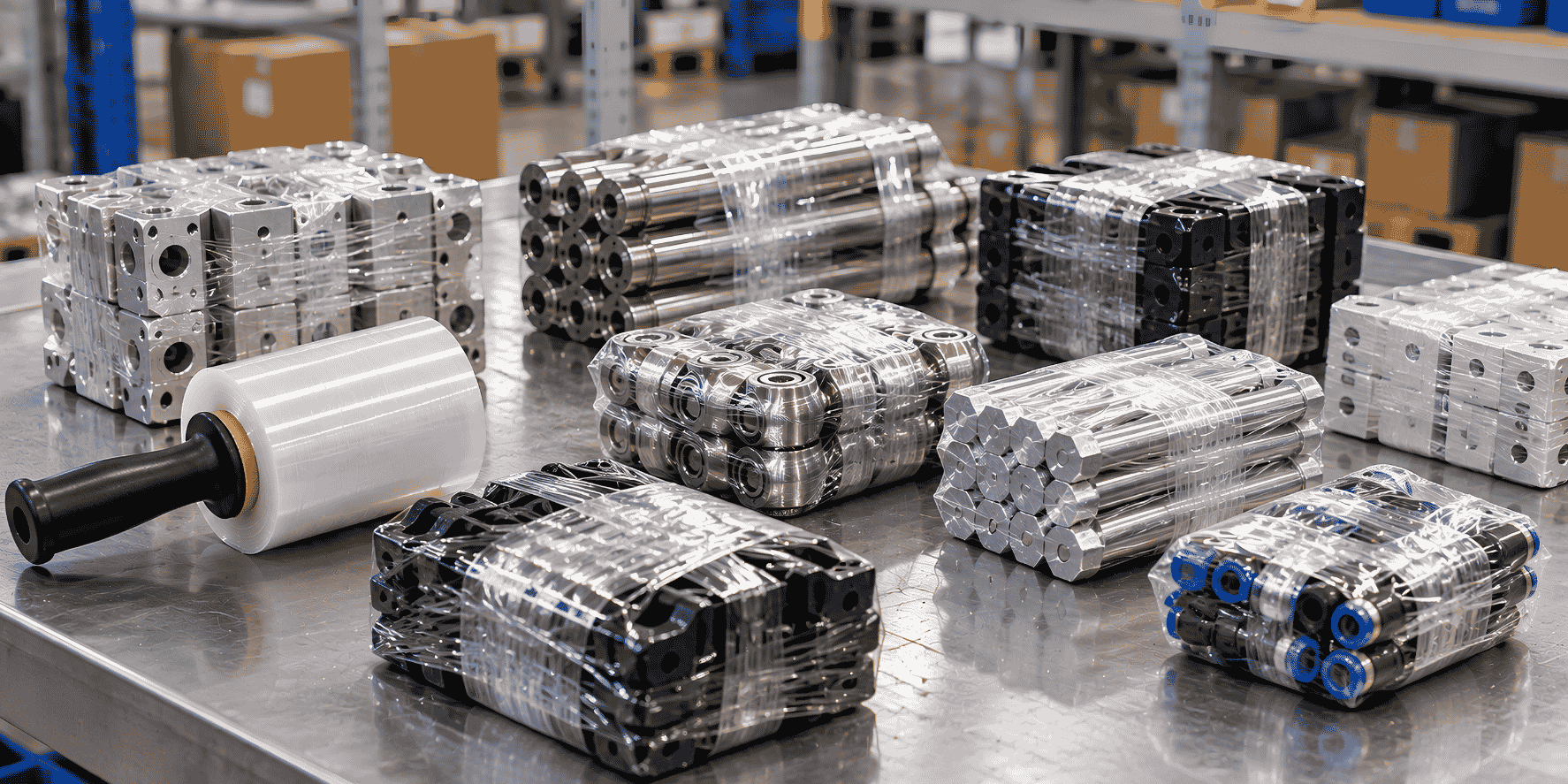
Mini stretch wrap can be a practical packaging option when small products and components need to be grouped together for easier handling, storage or movement. Its compact format gives operators greater control when working with smaller bundles, while the wrapping process can be adjusted according to the size, shape and stability of the products.
The most effective approach is to begin with a well-arranged bundle, apply consistent tension, overlap the film properly and use only the amount of wrapping needed for the intended handling conditions. When businesses match the wrapping format to the actual packaging task, mini stretch wrap can become a useful part of a broader packaging system.