Pallet wrap stretch film is one of the most widely used materials for securing products during storage, handling, and transportation. It is a flexible plastic film designed to stretch around cartons, boxes, containers, and other products stacked on a pallet, creating a stable unit that is easier to move and protect. Although pallet wrapping may appear to be a simple packaging process, the performance of the stretch film has a direct effect on load stability, product protection, and handling efficiency. Understanding what pallet wrap stretch film is, how it works, and how it should be applied can help businesses improve their palletizing and transportation processes.
For warehouses, manufacturers, distributors, logistics companies, and other businesses that regularly prepare palletized goods for shipment, selecting and applying stretch film correctly is important. A suitable film should provide sufficient holding force without unnecessarily increasing material consumption. The wrapping method, film properties, load characteristics, and handling conditions all influence the final result. When these factors are properly considered, stretch film can provide an effective way to stabilize pallet loads while reducing the risk of products shifting, falling, or becoming exposed to external handling conditions.
What Is Pallet Wrap Stretch Film?
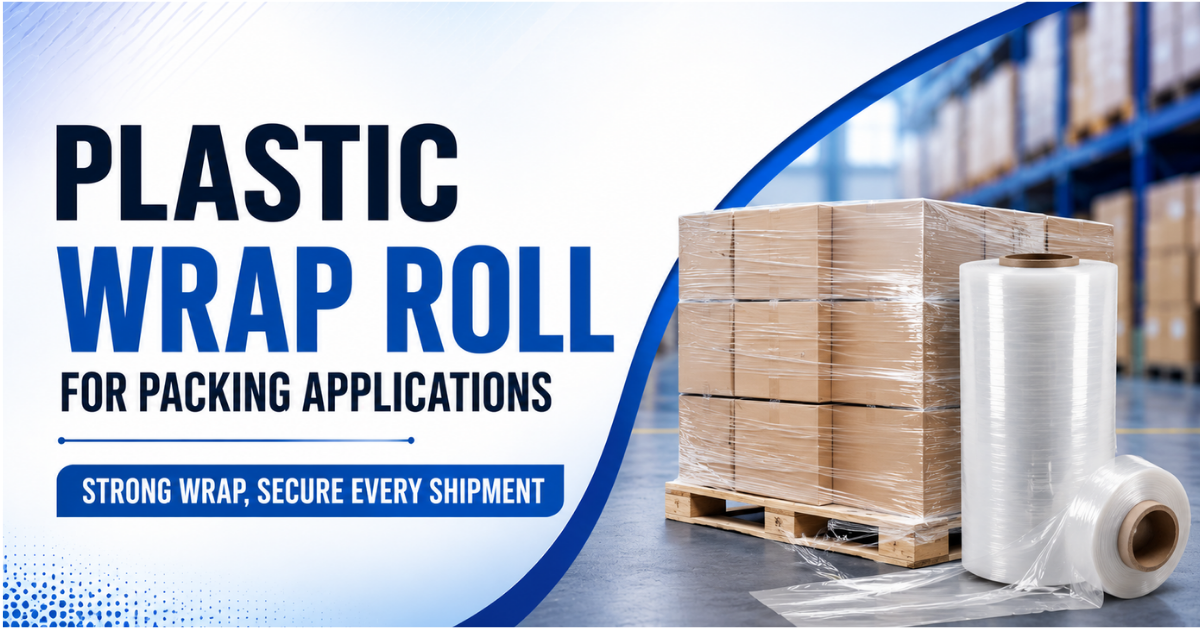
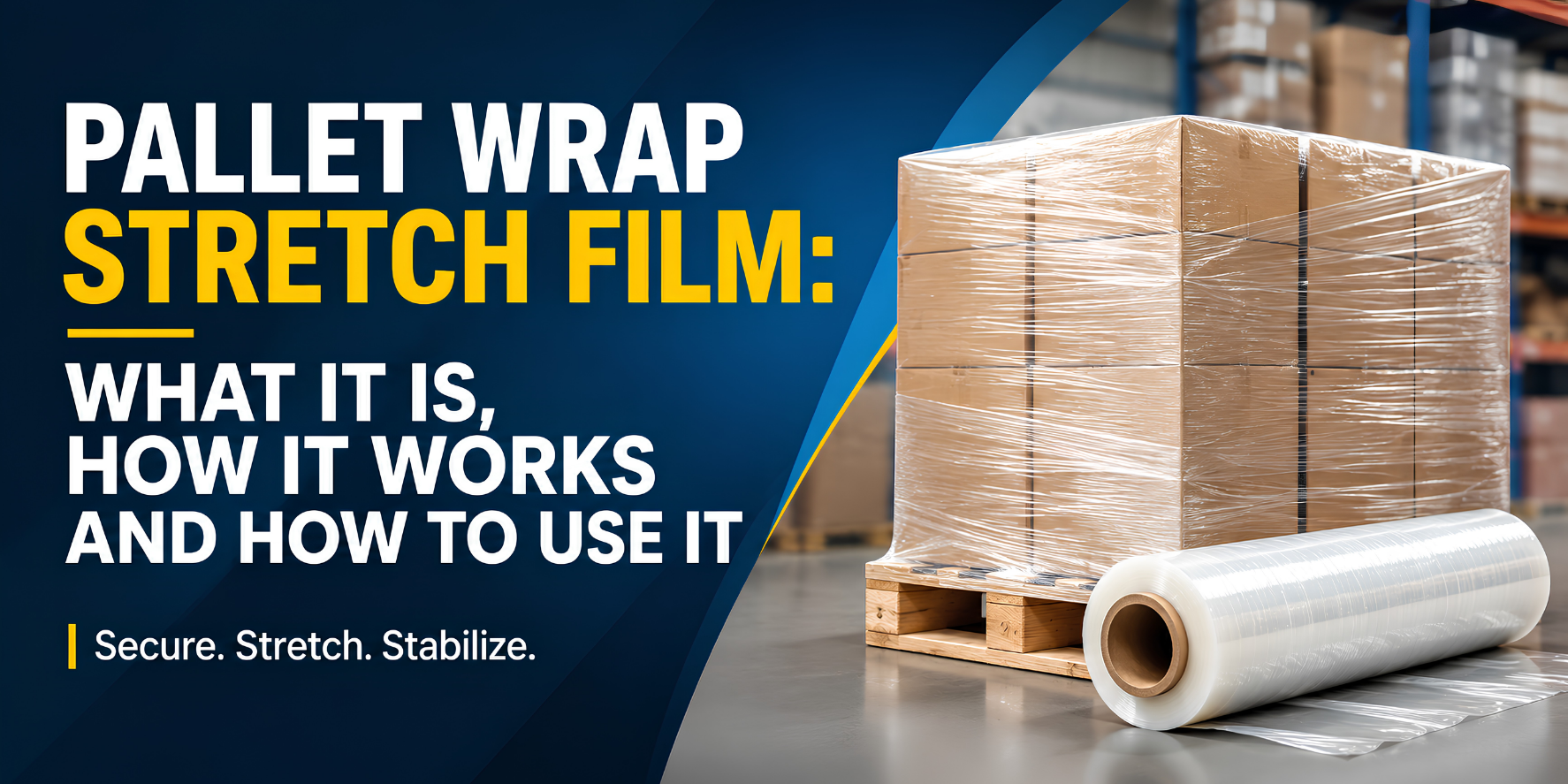
Pallet wrap stretch film is a stretchable plastic packaging film used to secure products together on a pallet. The film is wrapped around the load under tension, allowing it to stretch and create holding force around the individual cartons or products. Multiple layers of film are normally applied around the pallet, depending on the size, weight, shape, and stability requirements of the load.
Unlike rigid packaging materials, stretch film can conform closely to different load shapes. This flexibility allows it to secure mixed cartons, irregular packages, and different pallet configurations without requiring a custom-sized outer container. The film also creates a continuous layer around the load, helping keep individual packages together during movement.
The material is commonly supplied in rolls and can be applied manually or with a stretch wrapping machine. Hand-applied stretch film is often used for smaller operations or loads that require flexible wrapping, while machine stretch film is commonly used in high-volume warehouses and manufacturing environments where consistent wrapping is required.
How Does Pallet Wrap Stretch Film Work?
The basic principle behind stretch film is controlled elasticity. When the film is stretched around a pallet, it develops tension. As the film attempts to return toward its original dimensions, it generates a holding force around the load. This force helps keep cartons and other products compressed together and reduces movement during transportation.
The amount of holding force depends on several factors, including the type of film, the degree of stretch, the wrapping pattern, the number of layers, and the characteristics of the load. Applying more film does not necessarily mean that the pallet will always be more stable. What matters is achieving an appropriate balance between film tension, coverage, and load stability.
During transportation, pallets can experience vibration, sudden stops, acceleration, turning forces, and repeated handling. Without adequate load stabilization, individual cartons may move relative to one another. Properly applied stretch film helps distribute these forces across the wrapped load and keeps the products grouped together.
Why Is Stretch Film Used for Pallet Wrapping?
The primary purpose of pallet wrap stretch film is load stabilization. When products are stacked on a pallet, the individual cartons may not naturally remain in their original positions during handling and transportation. Stretch film creates an additional layer of containment around the load, helping reduce movement and maintain the overall shape of the pallet.
Stretch film can also help protect products from dust, dirt, and general handling exposure. Depending on the film specification and wrapping method, the film can create a protective outer layer around cartons and other packaged products. This can be particularly useful when palletized goods are stored in warehouses or transported through multiple stages of a supply chain.
Another important advantage is flexibility. A single type of stretch film can often be used for different pallet dimensions and load configurations. This makes it practical for businesses that handle a wide variety of products rather than relying on rigid packaging designed for a specific load.
Manual Pallet Wrapping vs Machine Pallet Wrapping
Pallet wrap stretch film can be applied manually or by using automated and semi-automated wrapping equipment. The appropriate method depends on the volume of pallets being processed, the consistency required, labor availability, and the characteristics of the goods.
Manual wrapping is commonly used when pallet volumes are relatively low or when loads vary significantly from one shipment to another. An operator moves around the pallet while applying the film and controlling the amount of stretch manually. This method provides flexibility, but the final wrapping quality can vary depending on the operator’s technique.
Machine wrapping is generally preferred for higher-volume operations because the machine can control important parameters such as film tension, wrapping speed, film application, and the number of rotations. Consistent machine application can help reduce variation between pallets and make material consumption easier to manage.
The choice between manual and machine application should therefore consider not only equipment investment but also the consistency and efficiency required by the packaging operation.
How to Use Pallet Wrap Stretch Film Correctly
Using stretch film effectively begins with preparing a stable pallet load. Products should be stacked as evenly as possible, with heavier cartons generally positioned toward the bottom and lighter products toward the top. Unstable or significantly overhanging loads can be difficult to secure regardless of the quality of the film.
Once the load is prepared, the film should be attached securely near the lower portion of the pallet. The operator then wraps the film around the load while maintaining consistent tension. The film should overlap sufficiently between successive passes so that there are no large uncovered areas.
The wrapping pattern should be adapted to the shape and stability of the load. The lower section of the pallet generally requires adequate containment because this is where the products interact with the pallet base. The operator can then work upward while maintaining consistent overlap and tension.
The final film application should provide a stable unit without unnecessarily compressing or damaging the products. Excessive tension can potentially deform cartons or damage sensitive goods, while insufficient tension may result in inadequate load stability.
How Much Stretch Film Should Be Used?
There is no single amount of stretch film that is suitable for every pallet. The required quantity depends on the load weight, dimensions, product shape, pallet configuration, transportation conditions, film properties, and wrapping method.
A common mistake is to assume that using more film automatically produces a better result. In reality, efficient pallet wrapping is about achieving the required containment force with an appropriate amount of material. A high-performance film may achieve the required load stability with fewer layers or less material than a lower-performance film.
Businesses should therefore evaluate film consumption together with load stability. If pallets remain stable while using less material, the packaging process can become more efficient without compromising protection. Machine wrapping systems can be particularly useful for this type of optimization because film tension and application parameters can be controlled more consistently.
Pre-Stretch and Stretch Film Performance
The concept of pre-stretch is important when discussing pallet wrap stretch film. Pre-stretch refers to stretching the film before it is applied around the load. Depending on the film and wrapping equipment, controlled pre-stretch can improve material efficiency and help produce consistent wrapping tension.
Machine wrapping systems often incorporate pre-stretch mechanisms that stretch the film before it reaches the pallet. This can allow the operator to use the material more efficiently while maintaining the necessary containment force.
However, the appropriate level of stretch depends on the characteristics of the film and the load. Stretching a film beyond its intended performance range can reduce its ability to maintain reliable wrapping or increase the risk of film breaks. Film specifications should therefore be matched with the capabilities of the wrapping equipment.
Choosing the Right Stretch Film for Pallets
Selecting pallet wrap stretch film should begin with an evaluation of the products being secured. Lightweight cartons may require a different approach from heavy industrial products, while irregular or sharp-edged loads may require greater puncture and tear resistance.
Film thickness is another factor, but it should not be considered independently. Modern stretch films can be engineered to provide strong performance at relatively low thicknesses, making film formulation and stretching characteristics just as important as nominal thickness.
The packaging environment also matters. Pallets transported over short distances in controlled warehouse conditions may face different requirements from pallets shipped internationally or stored outdoors. Longer transportation routes can expose loads to vibration, repeated handling, temperature variations, and other stresses that influence the required film performance.
Importance of Load Stability
Load stability is one of the most important factors when evaluating a pallet wrapping process. A pallet should remain stable throughout handling and transportation, with minimal movement between the products and the pallet.
The stability achieved by stretch film depends on the interaction between the film and the load. The film must generate sufficient holding force while maintaining contact with the outer surfaces of the cartons or products. The shape of the load can influence this interaction, which is why irregular or unstable pallet configurations may require different wrapping patterns.
A well-designed wrapping process considers the entire pallet rather than simply applying a fixed number of film layers to every shipment. Different products and pallet configurations may require different wrapping parameters.
Common Pallet Wrapping Mistakes
One of the most common mistakes is applying inconsistent film tension. If the film is too loose, it may not provide sufficient containment. If it is stretched excessively, the material may break or exert unnecessary pressure on the products.
Another problem occurs when the wrapping pattern does not provide adequate coverage at the top or bottom of the load. These areas can be particularly important for maintaining overall pallet stability. Insufficient overlap can also create weak areas where the film does not provide continuous containment.
Using the same wrapping settings for every type of load can also lead to inefficient packaging. A light, uniform pallet and a heavy, irregular industrial load do not necessarily require the same film quantity or wrapping pattern. Adjusting the process according to the load can improve both stability and material efficiency.
Stretch Film and Transportation Protection
Pallet wrap stretch film plays an important role in preparing goods for transportation because palletized products can experience significant mechanical forces during distribution. Trucks, containers, forklifts, loading systems, and warehouse equipment can all subject pallets to movement and vibration.
The purpose of the stretch film is not to replace the primary packaging of the products but to provide an additional layer of load containment. By keeping cartons and packages together, the film can help reduce movement and make the pallet easier to handle.
For long-distance transportation, businesses may also need to consider additional packaging requirements such as edge protection, strapping, corner protection, or other load-securing methods. The appropriate combination depends on the product and transportation conditions.
How Businesses Can Improve Stretch Film Efficiency
Improving stretch film efficiency starts with understanding how much material is actually required to stabilize each type of pallet. Businesses can monitor film consumption, wrapping performance, film breaks, and pallet stability to identify opportunities for improvement.
Machine wrapping can help standardize the process by controlling film tension, speed, overlap, and the number of rotations. For companies processing large numbers of pallets, this consistency can make it easier to identify excessive material usage and optimize the wrapping process.
Film selection also has a major influence on efficiency. A film designed to provide strong performance at an appropriate stretch level may reduce the amount of material required compared with a film that needs additional layers to achieve the same containment force. The objective should always be to achieve reliable pallet stability while using material efficiently.
Conclusion
Pallet wrap stretch film is a simple but highly important component of modern logistics and packaging operations. By stretching around a palletized load, the film creates tension and containment that helps keep products together during storage, handling, and transportation. Its effectiveness depends on more than the film itself; the pallet configuration, wrapping method, film tension, number of layers, equipment, and transportation conditions all contribute to the final result.
For businesses using pallet wrapping regularly, the best approach is to treat stretch film as part of an overall load-stabilization process. Choosing an appropriate film, applying it with consistent tension, using a suitable wrapping pattern, and adjusting the process according to the load can improve stability and reduce unnecessary material consumption.
Whether pallets are wrapped manually or with automated equipment, understanding how stretch film works allows businesses to make better packaging decisions. With the right combination of film performance and application technique, palletized products can be prepared more consistently for efficient handling, storage, and transportation.