When metal components are stored or transported for days or weeks, ordinary packaging may protect the product from dust, handling damage and movement, but it does not necessarily solve one of the biggest risks for metal products: corrosion.
Moisture, humidity, condensation, oxygen and atmospheric contaminants can gradually attack exposed metal surfaces. For manufacturers and exporters, this can lead to rust, staining, rejected components, rework, customer complaints and additional cleaning or finishing costs. The risk can become even greater when parts travel through changing temperatures or remain inside storage and shipping environments for extended periods.
This is where VCI stretch film can become an important part of an industrial packaging system.
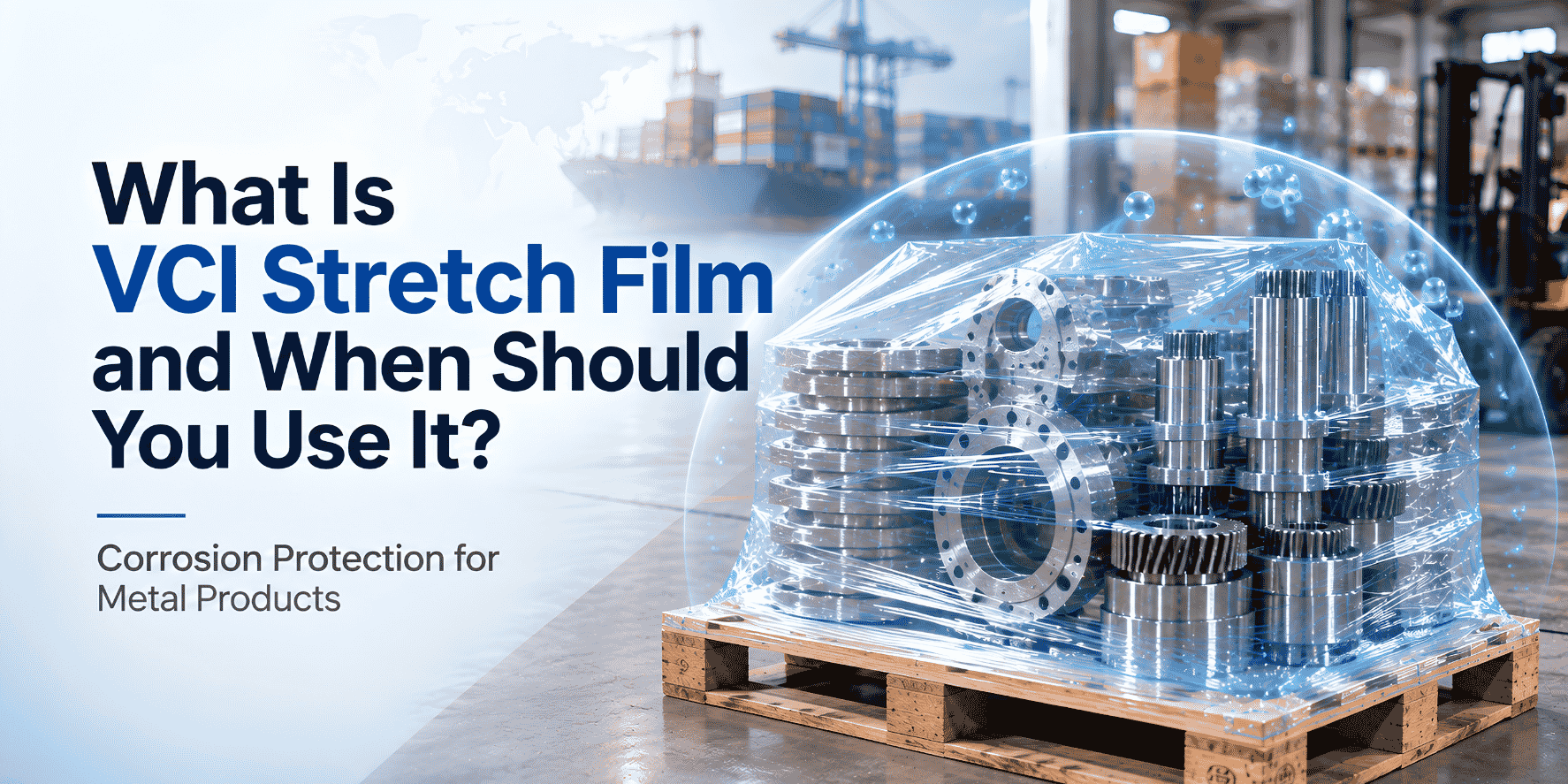
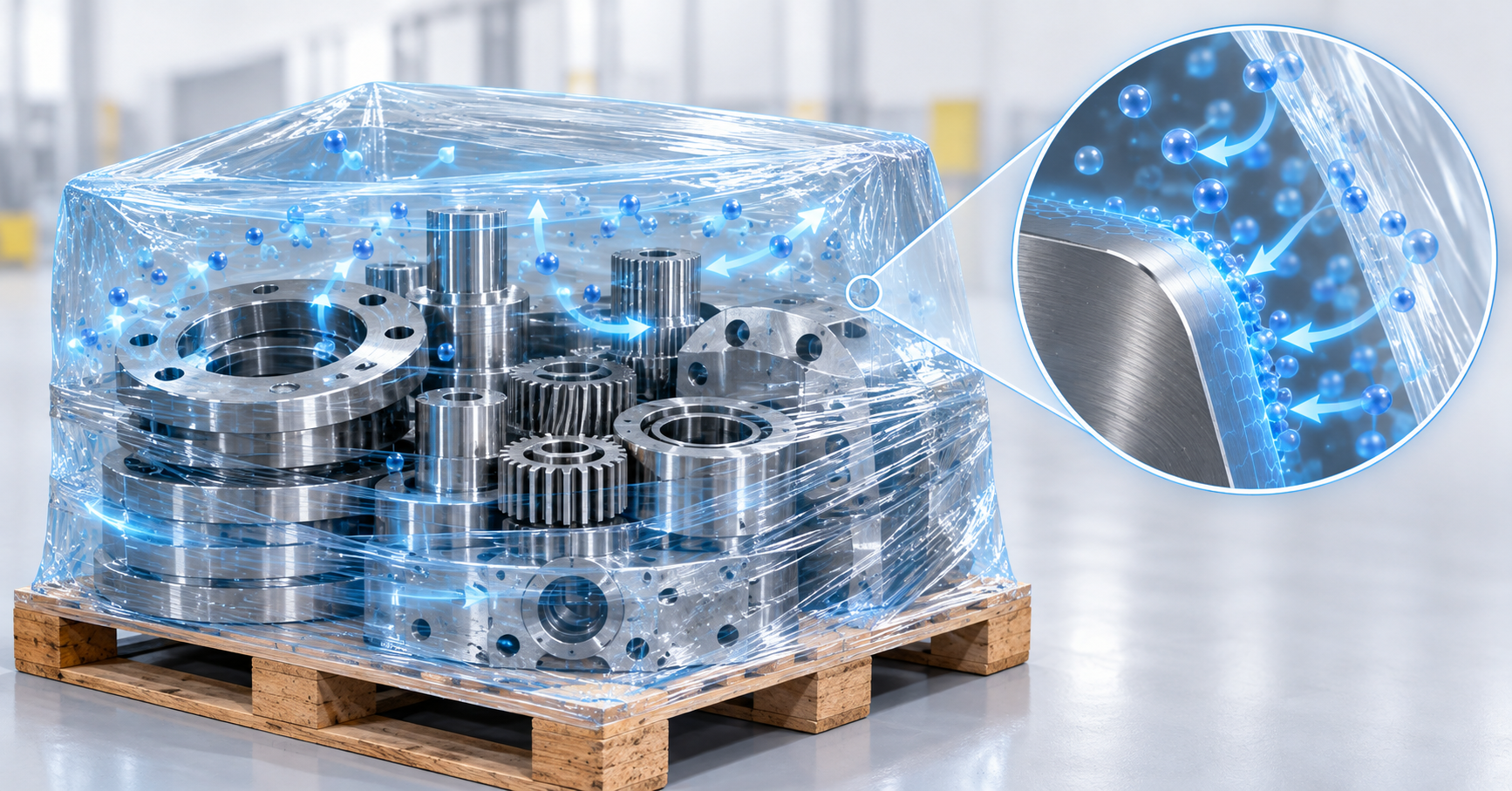
VCI stands for Volatile Corrosion Inhibitor. Unlike conventional stretch film, which is primarily used to secure and stabilize a load, VCI packaging adds an active corrosion-protection function. VCI compounds are released into the enclosed packaging environment and migrate toward exposed metal surfaces, where they form a very thin protective layer that helps reduce corrosion.
For manufacturers handling steel, iron, cast iron, machined parts, automotive components, engineering products and other corrosion-sensitive metal goods, VCI stretch film can therefore provide both load wrapping and temporary corrosion protection in one packaging material.
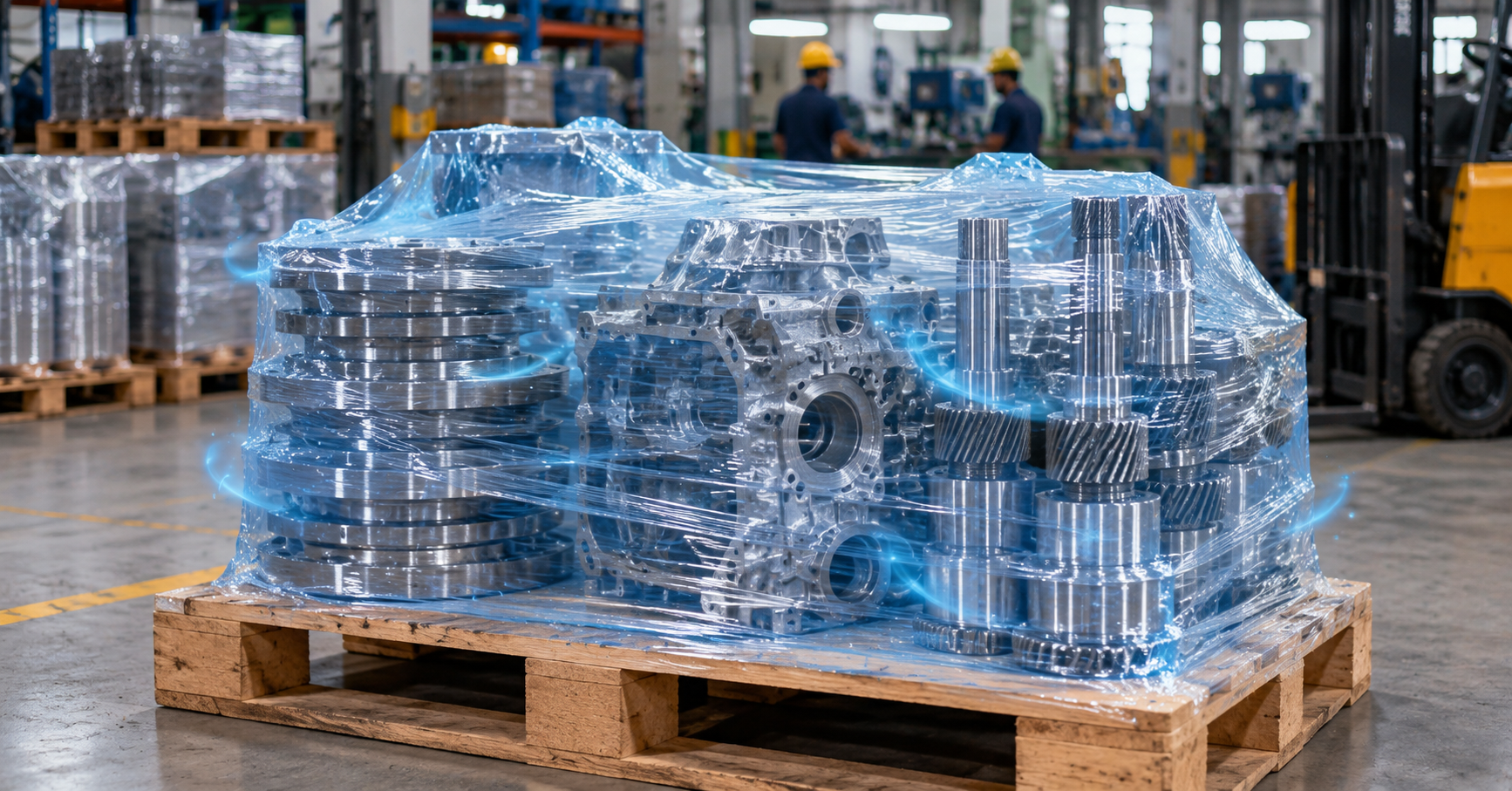
What Is VCI Stretch Film?
VCI stretch film is a stretchable plastic packaging film that contains volatile corrosion inhibitor compounds. It is designed to wrap and secure metal products while also helping create a corrosion-protective environment around the wrapped components.
Traditional stretch film mainly provides mechanical protection. It holds cartons, parts or other products together, helps stabilize pallets and can protect the load from dust and handling. VCI stretch film adds another function because the film releases corrosion-inhibiting substances into the enclosed space around the metal.
The VCI molecules move through the air within the packaging and reach accessible metal surfaces. Once they reach those surfaces, they form a microscopic protective layer that interferes with the conditions needed for corrosion. This means the protection does not depend entirely on the inhibitor being in direct physical contact with every part of the metal surface. VCI vapours can also reach areas such as recesses, cavities and other locations that may be difficult to protect with conventional liquid coatings.
This characteristic makes VCI particularly interesting for industrial products that have complex shapes, machined surfaces, threaded areas or components that need to remain clean and ready for later processing.
How Does VCI Stretch Film Work?
To understand the value of VCI stretch film, it helps to look at what happens inside a properly packaged metal product.
After the metal component is wrapped or enclosed, the active VCI compounds begin to migrate from the film into the surrounding air. As the concentration develops inside the package, the vapour moves toward exposed metal surfaces.
The VCI molecules then adsorb onto the metal surface and create a very thin protective layer. This layer helps interfere with the electrochemical processes associated with atmospheric corrosion. The result is an invisible protective environment around the component rather than a conventional oily coating applied directly to the metal.
One of the important characteristics of VCI technology is that protection can occur through the vapour phase. This makes it possible for inhibitor molecules to reach metal surfaces that are not necessarily in direct contact with the packaging film.
However, VCI should not be treated as a substitute for correct packaging practices. The metal should be clean and surface-dry before VCI packaging. Standing water, heavy condensation or trapped moisture can still create corrosion risks, particularly before the protective environment has been properly established.
How Is VCI Stretch Film Different From Normal Stretch Film?
The biggest difference is the purpose of the material.
Standard stretch film is primarily designed for load containment and packaging stability. It stretches around cartons, pallets, machinery or products and helps keep the load secure during handling and transportation.
VCI stretch film performs this mechanical wrapping function while also providing a corrosion-protection mechanism for suitable metal products.
This distinction is important because a business may have a pallet that looks completely secure from the outside but still contains corrosion-sensitive metal exposed to humidity. Conventional stretch film can hold the load together, but it does not automatically provide the corrosion-inhibiting function associated with a purpose-designed VCI material.
For metal manufacturers, the decision should therefore not simply be based on whether a film is strong enough to wrap the pallet. The packaging system also needs to consider what the product is made from, how long it will be stored, the transportation environment, humidity exposure, packaging enclosure and the required cleanliness of the finished component.
Which Metals Can VCI Stretch Film Protect?
VCI packaging is commonly used for corrosion-sensitive metal products, including applications involving ferrous metals and, depending on the formulation, non-ferrous metals.
Steel, iron and cast iron components are common applications. Specialized VCI products are also available for non-ferrous metals and multi-metal assemblies. The correct VCI formulation should therefore be selected according to the metals involved rather than assuming that every VCI film is suitable for every metal combination.
This is particularly important for manufacturers that package assemblies containing several different metals. The chemical formulation of the VCI system, compatibility requirements and packaging conditions should be evaluated before selecting the film.
For a manufacturer shipping precision metal parts, for example, the goal is not merely to stop visible rust. The packaging solution should also preserve the condition of the component without creating contamination or unnecessary cleaning work before the part enters the next production process.
When Should You Use VCI Stretch Film?
VCI stretch film becomes particularly useful when metal products face a meaningful corrosion risk during storage, transportation or export.
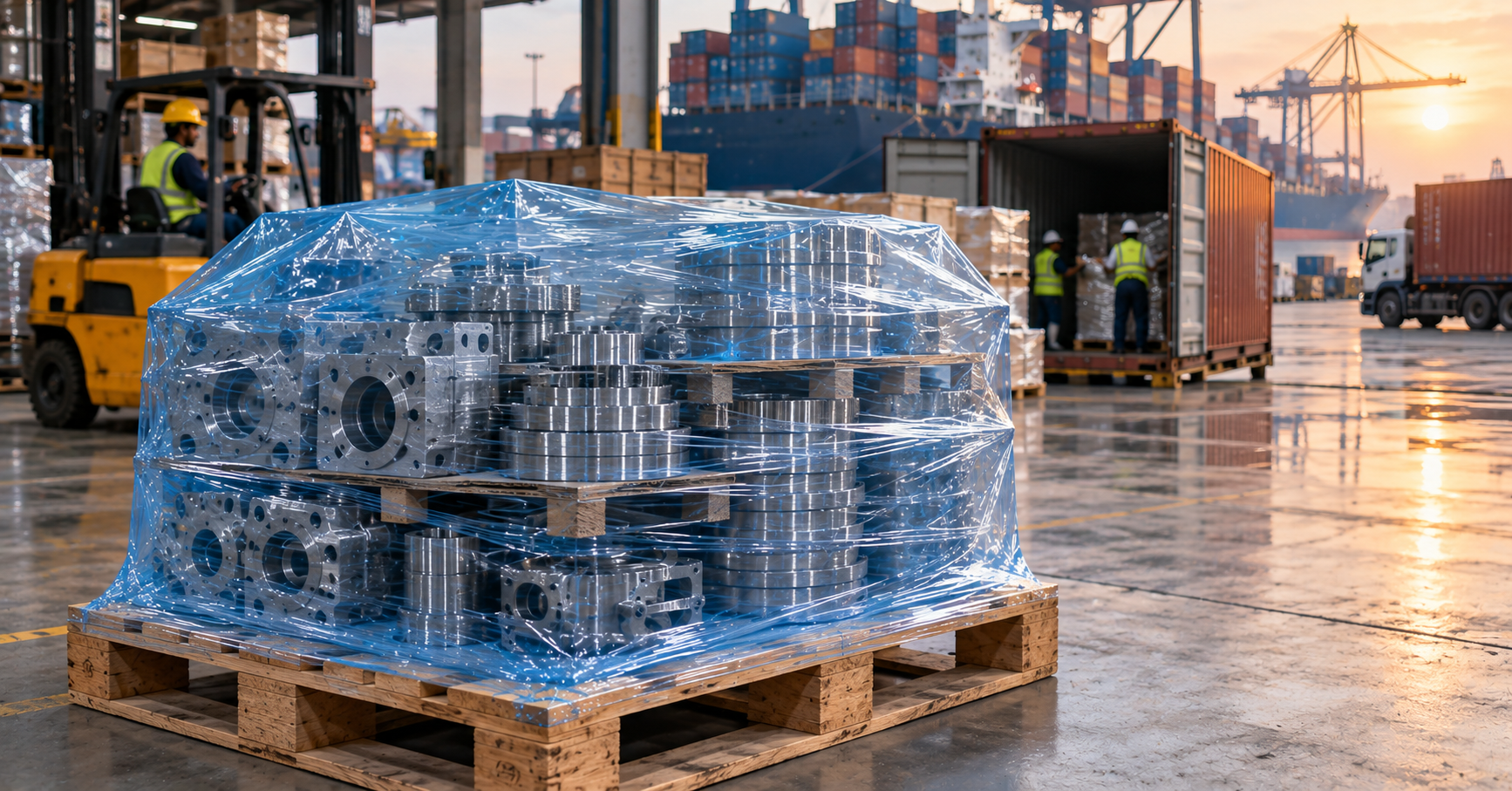
One common situation is long-distance transportation. A metal component may leave a controlled production environment and travel through warehouses, trucks, ports and shipping containers before reaching the customer. Temperature variations during transportation can increase the possibility of condensation, while longer transit periods give corrosion more opportunity to develop.
VCI stretch film can also be appropriate for products that are stored for extended periods before assembly or further processing. Instead of relying only on a temporary liquid coating, manufacturers may use VCI packaging to create a protective atmosphere around suitable metal components.
Another important application is export packaging. Metal parts travelling internationally can experience changing humidity and temperature conditions, making corrosion protection a significant packaging consideration. VCI packaging is widely used as part of corrosion-control systems for metal exports and long-duration transportation.
VCI Stretch Film for Automotive Components
Automotive and engineering manufacturers often deal with components where even small amounts of corrosion, staining or surface damage can affect quality expectations.
Examples can include machined steel components, bearings, fasteners, shafts, fabricated parts, transmission components and other precision-engineered products.
During production, the part may have a carefully controlled surface finish. If it then sits in a warehouse or travels through a humid transportation environment without suitable corrosion protection, the condition of the component can deteriorate before it reaches the next manufacturing stage.
VCI packaging can help manufacturers protect suitable components while maintaining a relatively clean packaging process. Because the protective mechanism is based on VCI vapour rather than a conventional oily coating, the packaging approach can reduce the need for cleaning associated with some traditional corrosion-protection methods. VCI systems are specifically used where components need to remain corrosion-protected, clean and ready for further processing.
For automotive and engineering suppliers, the correct approach should still be based on the actual metal, storage conditions, transportation duration and required corrosion-protection period.
VCI Stretch Film for Metal Parts During Export
Export transportation can create a combination of risks that domestic shipping may not expose a product to for the same duration.
A component may spend time in a factory, warehouse, truck, port, shipping container and destination warehouse. Throughout this process, the temperature and humidity around the product can change.
The packaging objective should therefore extend beyond simply keeping the product physically secure. The package should also be designed to manage the possibility of corrosion during the expected storage and transportation period.
VCI stretch film can form one layer of a broader export packaging system. For higher-risk shipments, VCI may be combined with appropriate moisture barriers, desiccants or other protective packaging methods depending on the product and environmental conditions.
This is why there is no universal “best VCI film” for every export shipment. The packaging design should take into account the metal type, product geometry, packaging volume, free air space, duration of protection, shipping conditions and whether the package will remain sufficiently enclosed.
Can VCI Stretch Film Replace Traditional Rust Protection?
VCI and conventional corrosion-protection methods work differently, so the answer depends on the application.
Traditional approaches can include oils, greases, coatings and other corrosion-prevention treatments. These can provide effective protection, but they may introduce additional handling or cleaning requirements depending on the application.
VCI packaging takes a different approach. Instead of relying primarily on a visible coating applied to the metal surface, the VCI material creates a corrosion-inhibiting environment inside an enclosed package. When the packaging is removed and the component is exposed to normal air, the protective VCI layer is designed to dissipate rather than remain as a permanent coating.
For manufacturers that need clean, ready-to-use components, this can be an important operational advantage.
Nevertheless, VCI packaging should be selected as part of an application-specific corrosion-control system. Products with severe moisture exposure or unusual storage requirements may require additional protective measures.
VCI Stretch Film and Moisture: What You Need to Know
One common misunderstanding is that VCI film simply removes moisture from a package.
That is not the correct way to think about VCI protection.
VCI technology works by establishing a corrosion-inhibiting environment and forming a protective molecular layer on suitable metal surfaces. It does not mean that a wet metal component can simply be wrapped and expected to remain corrosion-free.
Proper part preparation is essential. The metal should normally be clean and surface-dry before it is enclosed in VCI packaging. Standing water, condensation and trapped liquid can create corrosion conditions that packaging alone cannot magically eliminate.
For this reason, drying and preparation should be considered part of the packaging process rather than an unrelated production step.
How to Use VCI Stretch Film Correctly
The effectiveness of a VCI packaging system depends not only on the film but also on how it is applied.
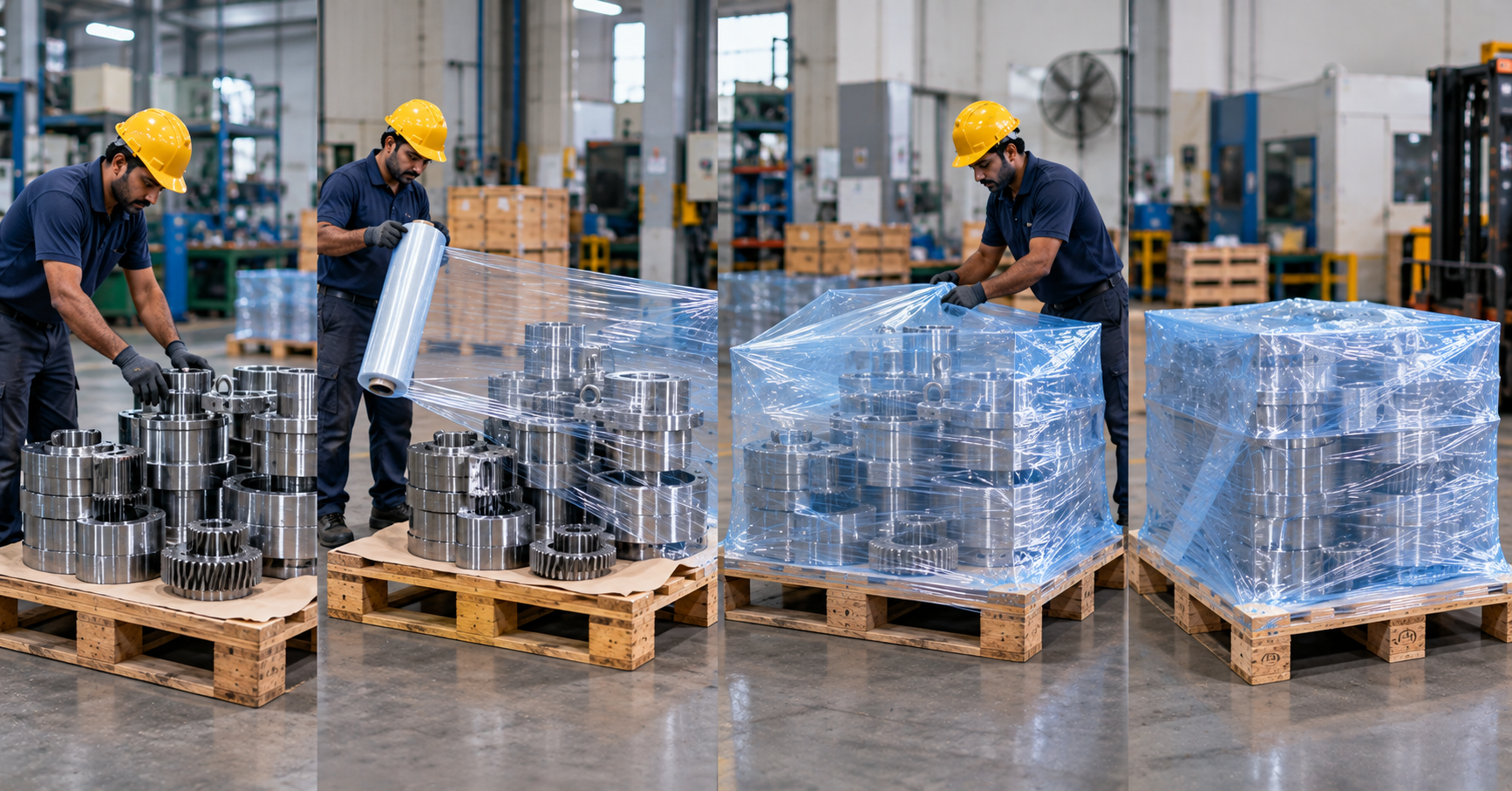
The metal product should first be clean and appropriately dry. Dirt, contaminants, water and other residues should be addressed before packaging.
The VCI film should then be applied so that the product is adequately enclosed and the protective atmosphere can develop around the metal. Large openings, unnecessary gaps or damaged packaging can reduce the ability of the package to maintain the intended VCI environment.
The amount of film and the wrapping method should also suit the shape and size of the component. Irregular or asymmetrical parts may require careful wrapping to ensure that the VCI material remains appropriately positioned around the product.
For palletized applications, the stretch film also needs to provide sufficient mechanical stability during transportation. Corrosion protection and load containment are both important, which is one reason application-specific VCI stretch film selection matters.
How Long Does VCI Protection Last?
The protection period is not determined by a single universal number.
VCI performance depends on the specific product formulation, metal type, packaging design, enclosure quality, environmental conditions, amount of free space, preparation of the metal and expected storage or transportation conditions.
A properly enclosed environment is particularly important because VCI compounds need to reach and maintain a suitable concentration around the metal. Excessive openings or poor sealing can allow the protective environment to escape and make it more difficult to maintain effective protection.
For this reason, manufacturers should select VCI stretch film according to the actual required protection period rather than assuming that every product provides the same duration of corrosion protection.
What Industries Use VCI Stretch Film?
VCI stretch film is particularly relevant to industries that manufacture, store or transport corrosion-sensitive metal products.
Automotive component manufacturers can use VCI packaging for suitable steel and engineering components. Engineering and machinery manufacturers may use it for machined parts, fabricated components and assemblies. Metal processors and exporters can use corrosion-protection packaging when components need to remain protected between production and delivery.
The technology can also be relevant to industrial distribution, spare parts storage and other environments where metal components may remain packaged for extended periods.
The common factor is not the industry name itself. The deciding factor is whether the product is vulnerable to corrosion and whether the storage or transportation environment creates a meaningful corrosion risk.
How Do You Choose the Right VCI Stretch Film?
Choosing VCI stretch film should start with the metal and application, not simply the film thickness.
The first consideration is the type of metal being protected. Ferrous metals such as steel and iron may require a different VCI formulation from non-ferrous metals or assemblies containing multiple metal types.
The second consideration is the packaging environment. A short domestic delivery in a controlled warehouse is different from months of storage or international sea transportation.
The third consideration is the product geometry. Large surfaces, cavities, recesses, threads and irregular shapes can affect how the protective environment develops around the component.
The fourth consideration is the wrapping process itself. Some applications are performed manually, while larger production environments may use automated wrapping equipment.
Finally, the film should be evaluated according to the required corrosion-protection period, packaging enclosure, compatibility requirements and overall mechanical performance.
A packaging supplier with experience in industrial applications should be able to help evaluate these requirements rather than recommending film solely on the basis of thickness or price.
VCI Stretch Film vs VCI Bags and VCI Paper
VCI is not limited to stretch film. Corrosion-inhibitor technology is also available in formats such as bags, paper, emitters, foams and other packaging materials.
VCI bags can be useful where the entire component needs to be enclosed individually. VCI paper may be appropriate for certain parts and packaging arrangements. Emitters can be used where a larger enclosed space needs additional VCI protection.
VCI stretch film becomes particularly interesting when the packaging process also requires stretch wrapping and load stabilization. It can therefore combine the function of wrapping a pallet or component with an active corrosion-protection mechanism.
The right format depends on the product and packaging system rather than the VCI label alone.
When VCI Stretch Film May Not Be the Right Choice
VCI stretch film is not automatically the best solution for every packaging requirement.
If the product is non-corrosion-sensitive, ordinary stretch film may provide all the protection required.
Similarly, if a metal component is heavily contaminated, wet or exposed to standing water, simply applying VCI film does not remove the need for proper preparation.
Highly demanding export environments may also require a combination of VCI packaging, moisture control and barrier packaging rather than relying on one material in isolation.
The goal should therefore be to design a packaging system around the actual corrosion risk rather than treating VCI film as a universal replacement for every other packaging method.
Why VCI Stretch Film Can Be Valuable for Manufacturers
For manufacturers, corrosion can create costs well beyond the original packaging material.
A corroded component may require inspection, cleaning, rework, refinishing or replacement. In some cases, the product may be rejected by the customer because its surface condition no longer meets the expected specification.
VCI packaging can help address this risk by integrating corrosion protection into the packaging process.
It can also support a cleaner handling process compared with some liquid corrosion-prevention methods, particularly where parts need to move directly into assembly or further processing after unpacking. VCI technology is specifically valued for applications where metal parts need to remain corrosion-protected, dry and ready for use.
For exporters and industrial manufacturers, the value of VCI should therefore be considered in terms of total packaging and quality cost, not simply the price of one roll of film.
Final Thoughts
VCI stretch film is more than a specialized version of ordinary stretch wrap. It combines the mechanical benefits of stretch wrapping with an active corrosion-protection function intended for suitable metal products.
The technology works by releasing volatile corrosion-inhibiting compounds into an enclosed packaging environment. These compounds migrate through the air and form a microscopic protective layer on metal surfaces, helping reduce the conditions that lead to corrosion.
For manufacturers of automotive components, engineering products, steel parts, machinery components and other corrosion-sensitive goods, VCI stretch film can be particularly valuable when products face extended storage, long-distance transportation or humid and changing environments.
The most important point is that VCI film should be selected according to the metal type, product geometry, packaging method, transportation conditions and required protection period. Clean and dry product preparation, adequate enclosure and correct application are just as important as the film itself.
When these factors are considered together, VCI stretch film can become an effective part of a broader packaging strategy designed to keep metal products secure, clean and protected from corrosion from the factory floor to the final customer.
For manufacturers and exporters evaluating corrosion-protection packaging, choosing the right VCI stretch film can be an important step toward reducing corrosion-related losses while maintaining efficient industrial packaging operations.