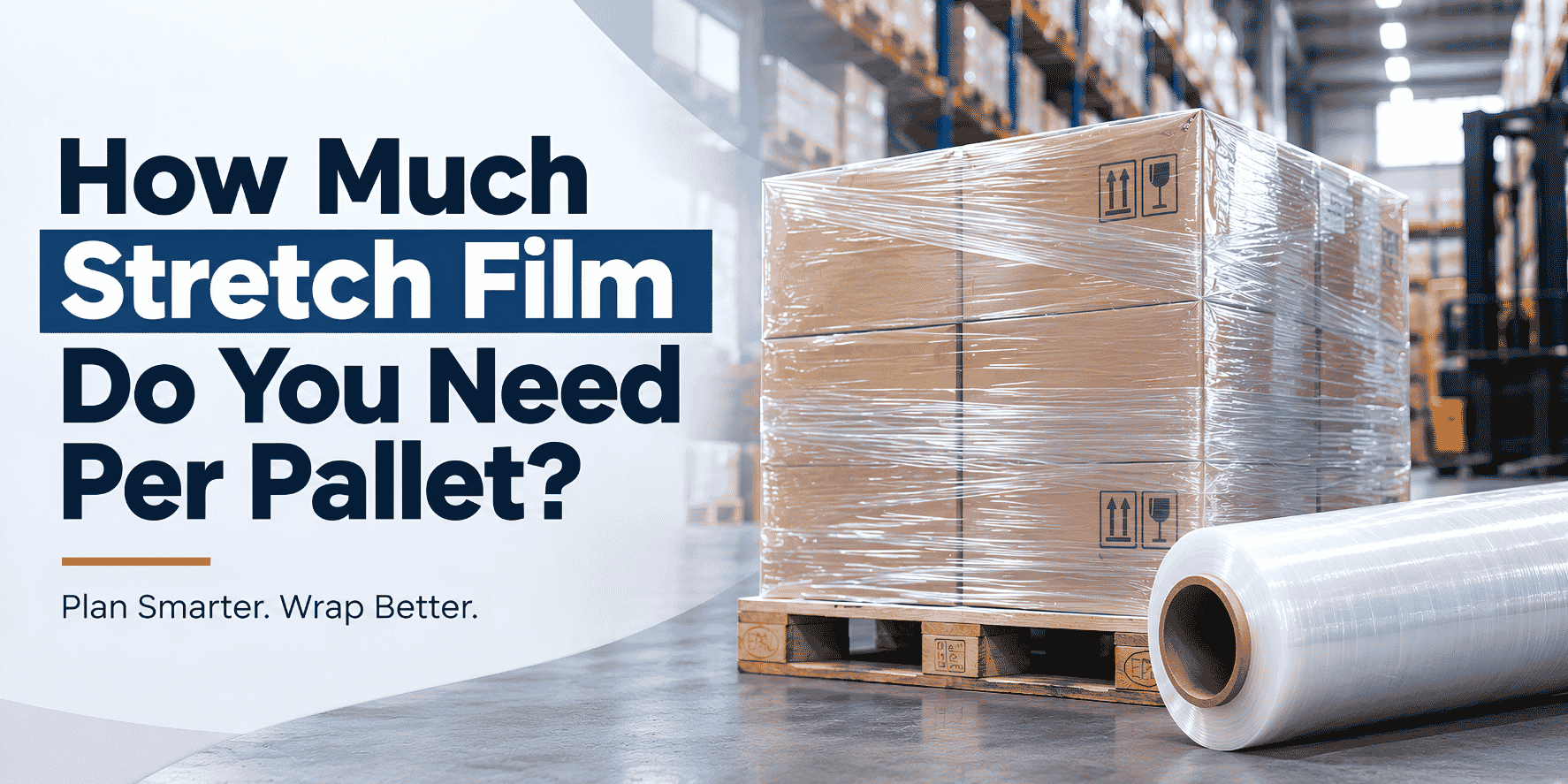
Knowing how much stretch film you need for each pallet is important for controlling packaging costs, maintaining load stability, and avoiding unnecessary film consumption. However, there is no single amount of stretch film that works for every pallet. The actual film requirement depends on the pallet dimensions, load height, number of wraps, film width, film thickness, pre-stretch, wrapping pattern, and the type of products being secured.
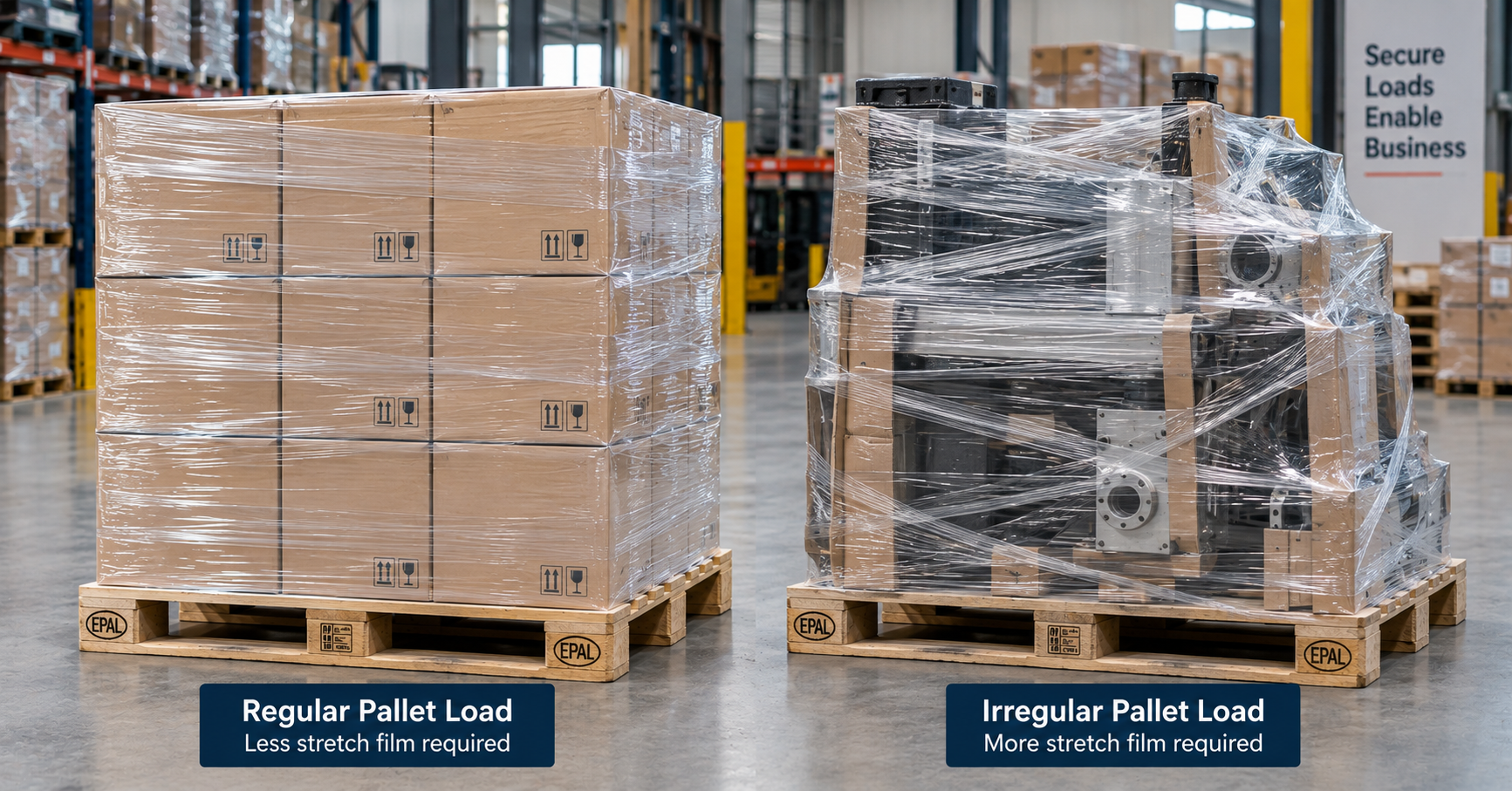
A pallet containing evenly stacked cartons may require considerably less film than a pallet carrying heavy machinery components with sharp corners and irregular shapes. For this reason, estimating stretch film consumption simply by saying that one pallet requires a fixed number of meters can lead to inaccurate purchasing decisions.
The better approach is to understand how film consumption is calculated and then adjust the estimate according to the actual wrapping application.
What Determines How Much Stretch Film a Pallet Needs?
The amount of stretch film used on a pallet is influenced first by the physical size of the load. A wider or taller pallet naturally requires more film because the film has to travel a greater distance around the load. The total number of revolutions around the pallet also has a direct effect on consumption.
The shape of the load is equally important. A regular pallet made up of uniform cartons is generally easier to wrap efficiently because the film can maintain relatively consistent contact with the load. An irregular pallet, on the other hand, may require additional wraps because of gaps, protruding products, corners, or areas where greater load containment is needed.
Film characteristics also affect consumption. Two stretch films with the same roll length may perform very differently because one film may offer greater stretch, better puncture resistance, or stronger containment. As a result, comparing rolls only by their nominal length does not always provide a meaningful comparison of packaging cost.
How Do You Calculate Stretch Film Used Per Pallet?
A practical way to estimate film consumption is to determine how much film is required for one complete revolution around the load and then multiply that distance by the number of film revolutions used during wrapping.
For a simple rectangular pallet, the approximate film required for one horizontal revolution can be estimated from the pallet’s perimeter:
Film required per revolution ≈ 2 × (load length + load width)
The result is then multiplied by the number of revolutions or wrapping cycles.
For example, imagine a pallet with a load measuring approximately 1.2 metres long and 1 metre wide. One revolution around the load would require roughly:
2 × (1.2 + 1.0) = 4.4 metres
If the wrapping process effectively uses 15 revolutions around the load, the theoretical film path would be approximately:
4.4 × 15 = 66 metres
This is only a basic calculation. Actual consumption can be higher or lower because the film may overlap, travel vertically through the wrapping pattern, stretch during application, or be applied differently at the top and bottom of the pallet.
That is why the number obtained from a simple perimeter calculation should be treated as an estimate rather than a guaranteed real-world consumption figure.
A Pallet Does Not Always Use the Same Amount of Film
One of the most common mistakes in packaging procurement is assuming that every pallet should consume the same quantity of stretch film.
Consider two pallets of identical dimensions. The first contains lightweight cartons with smooth surfaces and a stable stacking pattern. The second contains heavy metal components with sharp edges and an uneven centre of gravity. Although the pallet dimensions are similar, the second load may require a different film specification and wrapping strategy.
The heavy or irregular load may need additional wraps, greater containment, higher puncture resistance, or a different stretch percentage. Using the same number of wraps simply because the pallet dimensions are identical may result in either over-wrapping or under-wrapping.
The goal should therefore not be to use the smallest possible amount of film. The goal is to use the minimum effective amount of film needed to achieve the required load stability and protection.
How Film Stretch Changes Actual Consumption
Stretch film is designed to elongate during application. This means the amount of film pulled from the roll is not necessarily equal to the length that was originally manufactured on the roll in an unstretched state.
For example, a film may be designed to stretch significantly during application. As the operator or wrapping machine pulls the film around the pallet, the film extends and covers a greater distance than it would without tension.
This is one reason it is important to distinguish between film length on the roll and film consumed during the wrapping process.
The actual result depends on the film’s characteristics and the way it is applied. Hand wrapping, machine wrapping, and pre-stretch film can produce very different consumption levels even when the pallet dimensions remain the same.
A packaging operation should therefore measure actual film use under its normal wrapping conditions rather than relying only on the nominal roll length stated on the packaging.
What Is the Difference Between Hand and Machine Film Consumption?
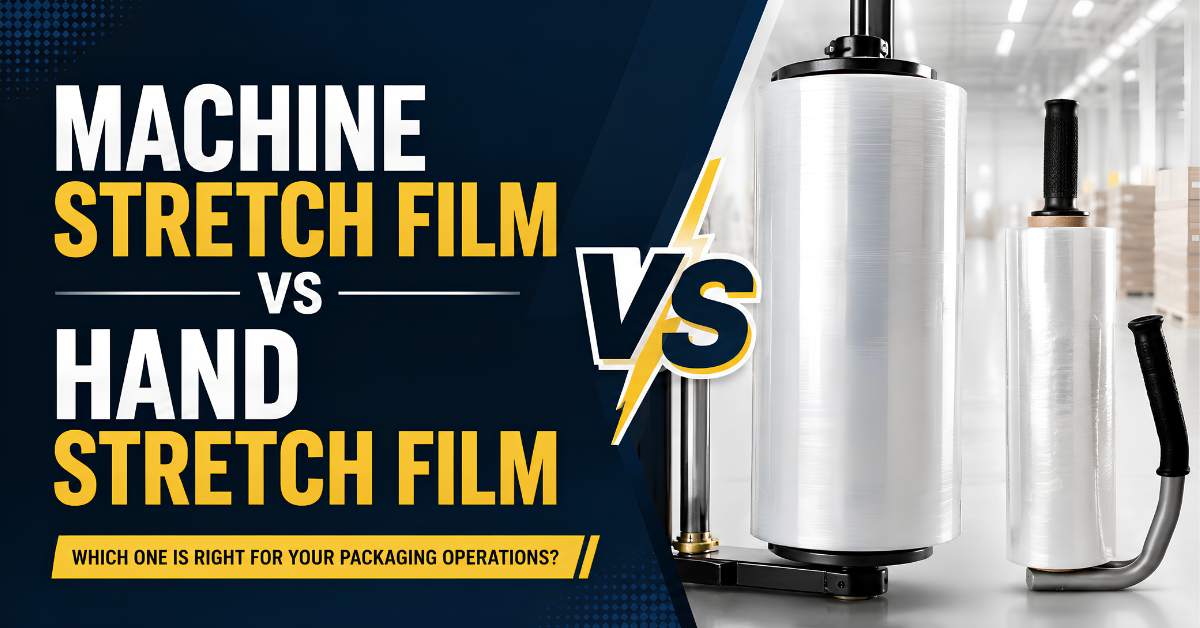
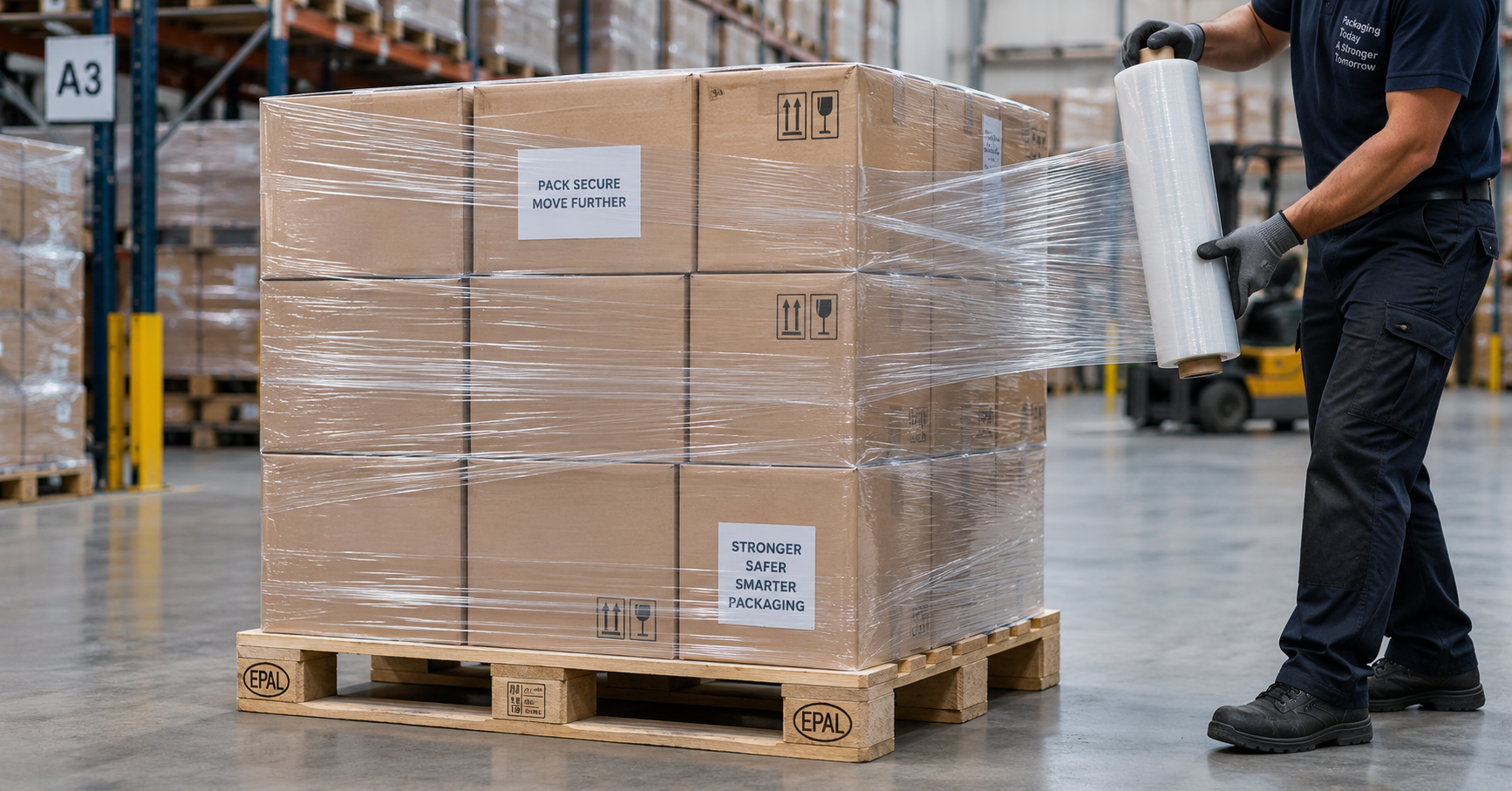
Hand stretch film is commonly applied by an operator who controls the speed, overlap, tension, and number of wraps manually. Because these factors can vary from person to person, film consumption may also vary between operators.
One operator may apply more overlap or more rotations than another. Another may pull the film too tightly in one section and too loosely in another. Over time, these small differences can create significant variations in film usage across hundreds or thousands of pallets.
Machine stretch film can provide greater consistency because the wrapping process is controlled by equipment. The machine can control film tension, carriage movement, pre-stretch and wrapping cycles more accurately than manual application.
For high-volume operations, this consistency can make it easier to measure film consumption and identify opportunities to reduce packaging waste.
Your existing machine stretch film page can be used as the commercial destination here, while the article can explain the operational reasons behind different consumption levels.
Does Pre-Stretch Reduce the Amount of Film Used?
Pre-stretch is one of the most important factors when evaluating film consumption.
Pre-stretch film is designed to be elongated before or during application, allowing the film to cover more area with less film pulled directly from the roll. This can reduce the amount of film consumed per pallet when the film is properly matched to the wrapping process.
However, lower consumption should not be considered the only objective. A film that uses less material but does not provide sufficient load containment may create transport or handling problems. Packaging efficiency should always be evaluated together with load stability.
This is why film consumption per pallet, containment performance, and total packaging cost should be considered together rather than separately.
Your pre-stretch film page should be the main internal link target for readers who want to understand this application in more detail.
How Many Meters of Stretch Film Are Normally Used Per Pallet?
There is no universal number of meters that can accurately represent every pallet.
A small, stable pallet may use substantially less film than a large or irregular industrial load. Even within the same warehouse, consumption can change depending on pallet size, load height, wrapping pattern, film width, film grade, stretch percentage, and required containment.
Instead of using a fixed industry-wide figure, businesses should establish their own baseline.
A practical approach is to select a representative group of pallets and measure the actual film consumed during normal production. After recording the result over multiple pallets, you can calculate an average consumption figure that reflects your specific application.
For example, suppose a warehouse measures film consumption over 50 similar pallets and finds that the average consumption is 72 metres per pallet. That figure is far more useful for purchasing and cost analysis than a generic estimate taken from an unrelated application.
The baseline can then be monitored over time. If consumption rises from 72 metres to 85 metres per pallet without any significant change in the products being wrapped, the packaging team can investigate whether there has been a change in film specification, machine settings, operator technique, overlap, or wrapping cycles.
How Pallet Size Affects Stretch Film Consumption
Pallet dimensions are one of the easiest factors to measure and one of the most important to consider.
A wider pallet increases the horizontal distance covered by each revolution. A taller pallet can require more vertical travel during the wrapping process. When both dimensions increase, overall film usage can rise significantly.
Load geometry also matters. Products that extend beyond the pallet footprint may require additional attention around corners and protruding areas. In some situations, the film needs to be reinforced through additional passes or a different wrapping sequence.
This is why a film consumption target should ideally be specified for a particular pallet configuration, rather than simply saying “one pallet equals X metres of film.”
The Number of Wraps Matters More Than Many Buyers Realize
The number of wraps around a pallet has a direct effect on film consumption.
If a wrapping process uses unnecessary additional revolutions, the business is effectively paying for film that may not contribute meaningful additional load stability. At the same time, too few wraps can leave the pallet vulnerable to shifting during storage or transportation.
A better approach is to determine the number of wraps required to achieve the desired containment for the particular load.
This can involve testing different wrapping patterns and observing whether the pallet remains stable during handling, transport, and storage. In industrial packaging, the optimal wrapping process is usually the one that achieves reliable load security without excessive material consumption.
Film Thickness Does Not Tell You the Entire Story
Film thickness is important, but it should not be treated as the only indicator of how much film a pallet needs.
A thicker film may provide increased resistance to puncture or tearing, but that does not automatically mean it is the most economical option. A thinner, higher-performance film may sometimes provide the required performance with less material, depending on the application and film technology.
Your existing article on why stretch film thickness matters should be linked here because readers evaluating consumption often need to understand why film selection cannot be based on thickness alone.
The more useful question is:
How much film is required to achieve the required performance?
That question shifts the discussion from roll price to total packaging efficiency.
Stretch Film Cost Per Pallet Is More Important Than Roll Price
A common purchasing mistake is to compare suppliers only by the price of a roll.
Suppose one roll costs less but requires substantially more material per pallet. Another roll may have a higher purchase price but provide better stretch and containment, resulting in lower actual consumption.
The useful metric is therefore cost per pallet, not simply cost per roll.
A basic calculation is:
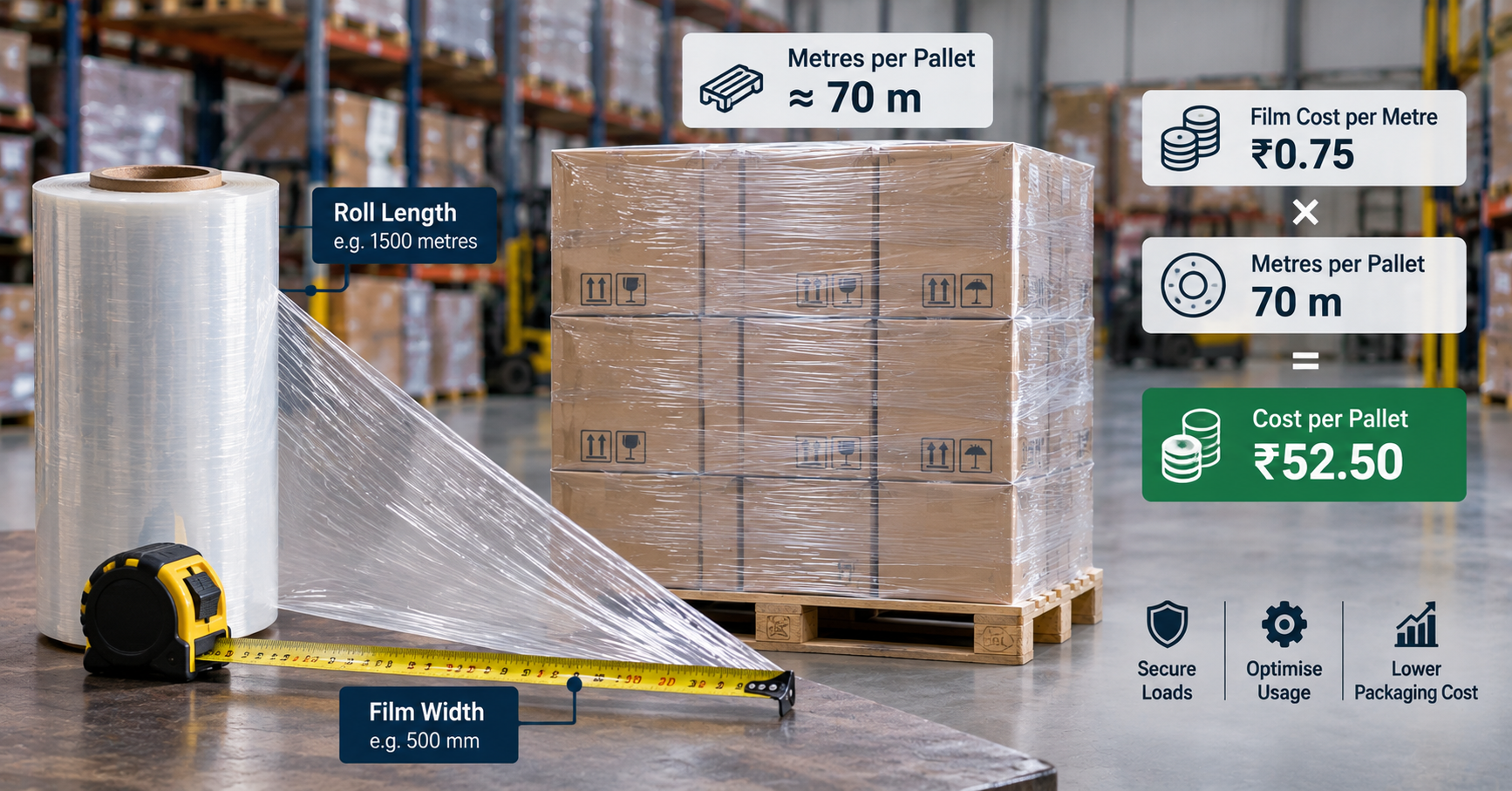
Cost per pallet = film cost per metre × metres consumed per pallet
For example, if the effective film cost is ₹0.75 per metre and a pallet uses 70 metres, the direct film cost would be:
₹0.75 × 70 = ₹52.50 per pallet
If a packaging improvement reduces consumption to 60 metres while maintaining the same load security, the cost becomes:
₹0.75 × 60 = ₹45 per pallet
At small volumes, the difference may appear minor. At hundreds or thousands of pallets per month, the cumulative savings can become significant.
For this reason, packaging buyers should evaluate stretch film according to cost per securely wrapped pallet, not merely the purchase price of individual rolls.
How to Measure Your Actual Stretch Film Consumption
The most reliable way to determine film usage is to measure it directly.
Start with a defined pallet type and wrapping procedure. Record the pallet dimensions, product type, film specification, film width, and wrapping method. Then measure the amount of film consumed during the wrapping process.
For manual wrapping, this can involve measuring the roll before and after a known number of pallets or recording the film length used for representative wraps. For machine wrapping, the packaging team may be able to use machine settings and film-length information together with physical measurements.
The process should be repeated across enough pallets to account for normal variation.
Once a baseline has been established, the business can compare future results against that baseline.
A useful internal KPI could be:
Average stretch film consumption per pallet
This can be tracked alongside:
Film cost per pallet
and:
Film consumption per pallet by product or load type
This approach makes it much easier to identify packaging inefficiencies.
What Happens If You Use Too Much Stretch Film?
Over-wrapping can increase material costs without necessarily improving pallet stability proportionally.
Excessive film can also make the wrapping process slower and increase the amount of plastic used per shipment. For businesses handling large daily pallet volumes, even a small amount of unnecessary film on every pallet can accumulate into substantial material consumption.
The problem is particularly common when operators use additional wraps as a safety margin without knowing whether those wraps are actually necessary.
Instead of simply increasing film quantity, the better approach is to investigate the underlying load requirements and optimize film selection, wrapping pattern and containment.
What Happens If You Use Too Little Stretch Film?
Under-wrapping creates the opposite problem.
The pallet may look properly wrapped when leaving the warehouse but fail to maintain adequate stability during transportation. Cartons can shift, products can lean, or the load can become less secure during loading and unloading.
This can lead to damaged products, rework, customer complaints and higher logistics costs.
The correct objective is therefore not “the least film possible.”
It is:
the least amount of film that consistently provides the required load stability and protection.
This principle should guide both manual and machine wrapping operations.
How to Determine the Right Film Consumption for Your Business
The best film consumption target should come from your actual application.
Begin by identifying the main pallet configurations used in your operation. Group them according to similar dimensions, load types and stability requirements. Then establish a wrapping specification for each group.
For each pallet type, evaluate the film grade, width, thickness, stretch level, number of wraps and wrapping pattern. Measure actual film consumption and compare it with the stability of the finished pallet.
Over time, this creates a packaging profile for your operation.
For example, a business may find that standard carton pallets can be securely wrapped at one consumption level, while heavy engineering pallets require a different film specification. Outdoor storage loads may require another approach, particularly where UV exposure is involved.
This is why there is no single stretch-film specification or consumption target suitable for every application.
A Simple Stretch Film Consumption Checklist
Before setting a standard number of metres per pallet, review the following:
- Pallet length and width
- Overall load height
- Load weight and stability
- Product shape and surface
- Sharp edges or protruding components
- Film width and thickness
- Hand, machine or pre-stretch application
- Required number of wraps
- Film overlap
- Required load containment
- Storage and transportation conditions
These variables provide a much more reliable basis for estimating film requirements than the pallet count alone.
How Packaging Teams Can Reduce Film Consumption
Reducing stretch film consumption is usually an optimization exercise rather than simply switching to a thinner film.
Start by checking whether operators are applying excessive overlap or unnecessary wraps. Review machine settings and pre-stretch levels where machinery is used. Examine whether the current film is appropriate for the load and whether a different film specification could deliver the same containment using less material.
It is also useful to monitor film usage by pallet type rather than using one average across every product.
If one category consistently consumes significantly more film, investigate why. The reason may be the pallet geometry, product characteristics, wrapping pattern, or film specification rather than operator performance alone.
In many operations, the biggest savings come from combining better film selection with better application control.
Choosing the Right Stretch Film for Different Pallet Applications
Different pallet conditions may require different film characteristics.
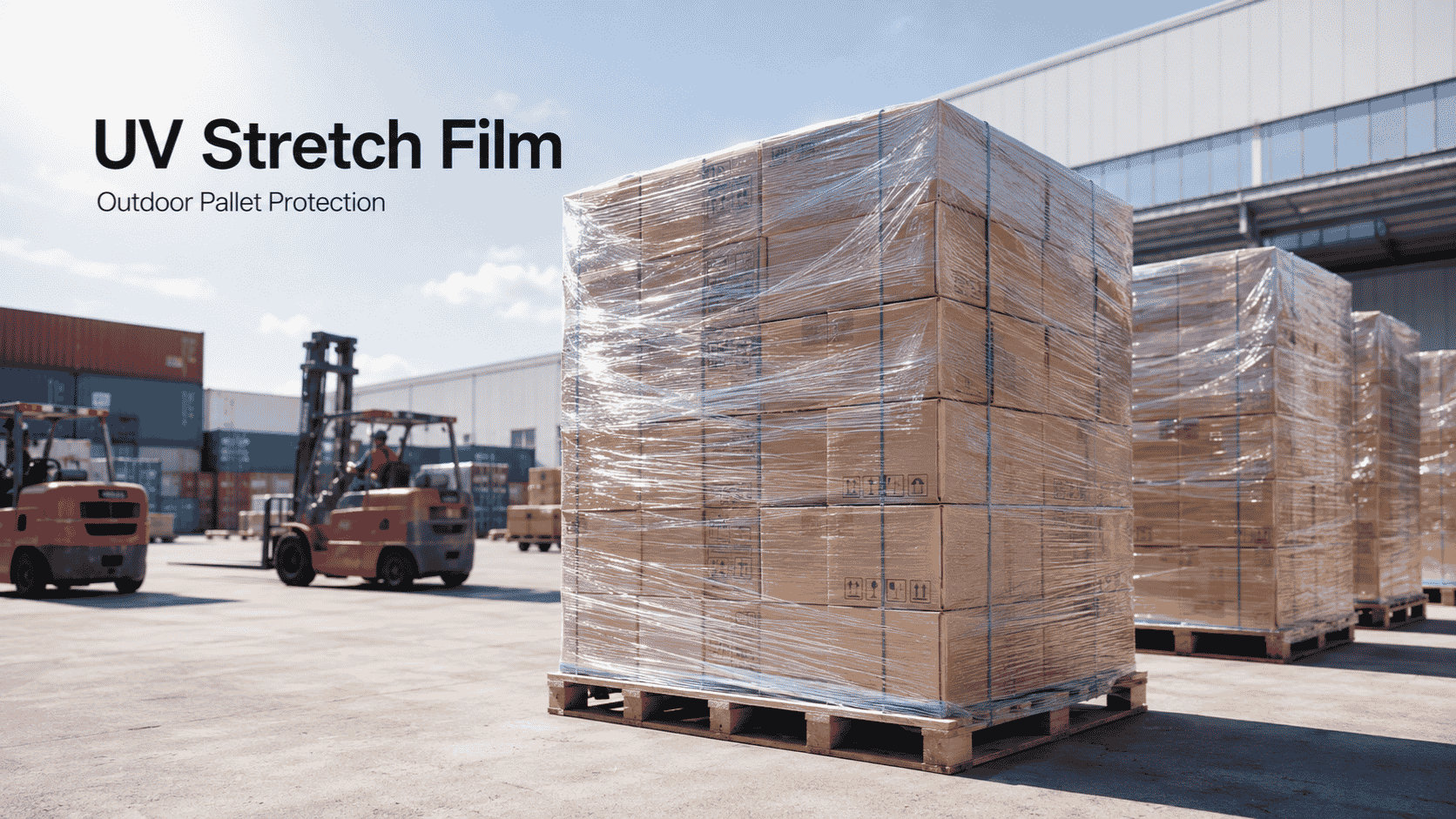
Standard carton pallets may prioritize consistent stretch, clarity and economical performance. Heavy industrial loads may place greater emphasis on puncture resistance and containment. Outdoor storage applications may require UV-resistant stretch film, while metal components may require corrosion protection through VCI technology.
Similarly, manual pallet wrapping may call for a hand stretch film designed for operator handling, while automated operations may require machine stretch film optimized for the wrapping equipment.
This is why choosing film according to the application is more reliable than choosing a film solely by price or thickness.
Final Takeaway: Measure Film Per Pallet, Not Just Film Per Roll
The amount of stretch film required per pallet depends on much more than pallet dimensions.
Load size, shape, weight, number of wraps, film width, film thickness, stretch performance, wrapping method and containment requirements all influence actual consumption. A simple perimeter calculation can provide a useful starting point, but real-world measurement is the best way to establish an accurate consumption benchmark.
For businesses using large quantities of stretch film, the most useful performance metric is not simply how much a roll costs. It is how much film is required to securely wrap one pallet and what that film costs per pallet.
Once you begin tracking metres per pallet and cost per pallet, it becomes easier to identify waste, compare film specifications, optimize machine settings and make better purchasing decisions.
The right target is not the lowest possible film consumption. The right target is efficient film consumption that maintains reliable pallet stability throughout handling, storage and transportation.
For businesses evaluating different stretch-film options, comparing the film according to application, required performance and total cost can provide a much more accurate basis for purchasing decisions than comparing roll prices alone.