Introduction
Every business that ships products wants one thing its goods should reach customers safely and in the same condition they left the warehouse. Whether the shipment contains consumer products, industrial components, food items, or pharmaceutical goods, damaged pallets can result in financial losses, delayed deliveries, and dissatisfied customers. This is why stretch film has become one of the most important packaging materials in modern logistics. It secures products on a pallet, keeps the load stable during transportation, and protects it from dust, moisture, and everyday handling throughout the supply chain.
When businesses begin selecting stretch film, they often discover two main options: hand stretch film and machine stretch film. Although both products are manufactured from similar LLDPE material and serve the same purpose, they are designed for completely different packaging environments. The decision isn’t simply about choosing one roll over another it affects labor productivity, packaging speed, material consumption, and long-term operating costs. Understanding these differences helps businesses invest in the right solution instead of paying more for packaging than necessary.
Why This Comparison Matters
Many companies purchase stretch film based only on price, assuming every roll performs the same job. In reality, the packaging process itself has a direct impact on operational efficiency. A warehouse that wraps only a few pallets each day has different requirements from a manufacturing facility that prepares hundreds of shipments before dispatch. Using the wrong type of stretch film can slow production, increase labor costs, and waste packaging material.
The right stretch film improves much more than pallet protection. It creates consistent wrapping quality, reduces product movement during transportation, and helps warehouses maintain faster packaging operations. Over time, these improvements contribute to lower packaging costs and fewer damaged shipments, making the initial purchasing decision far more important than many businesses realize.
What You Will Learn in This Guide
Instead of simply listing technical differences, this guide explains how both types of stretch film perform in real packaging environments. We will compare their working methods, applications, cost efficiency, advantages, limitations, and the type of business each product is designed for. By the end of this article, you’ll have a clear understanding of which stretch film is the better investment for your packaging operation.
Understanding Hand Stretch Film
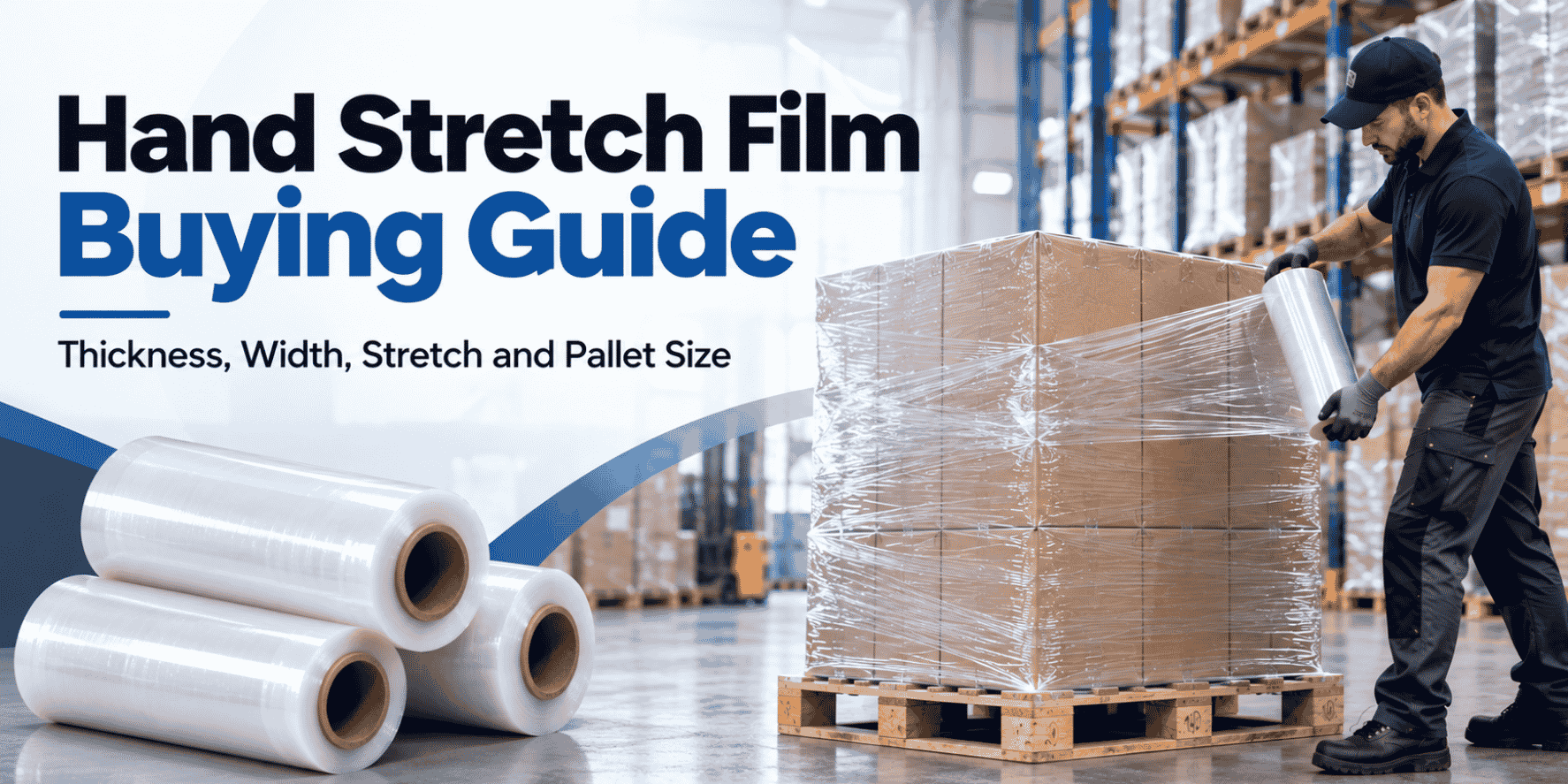
Hand stretch film is designed for manual pallet wrapping, making it one of the most commonly used packaging materials in small and medium-sized warehouses. Since it does not require a stretch wrapping machine, businesses can start using it immediately without making any investment in automated equipment. The film is supplied in lightweight rolls that are easy to carry and apply, allowing workers to wrap pallets of different shapes and sizes whenever required. This flexibility makes hand stretch film a practical choice for companies with lower shipping volumes or operations where packaging requirements frequently change.
During the wrapping process, the operator walks around the pallet while pulling the film to create the required tension. The effectiveness of the wrap depends largely on the person’s technique, including how tightly the film is stretched, how many layers are applied, and how well the base of the pallet is secured. An experienced worker can achieve good load stability, but the results often vary from one operator to another, making consistency one of the biggest challenges of manual wrapping.
Where Hand Stretch Film Works Best
Hand stretch film is commonly used in businesses that ship a limited number of pallets each day or require greater flexibility in their packaging operations. It performs well in environments where purchasing and maintaining automated wrapping equipment would not be financially practical.
Some of the industries that commonly use hand stretch film include:
- Retail warehouses
- Wholesale distributors
- Small manufacturing units
- Agricultural product suppliers
- Furniture and hardware businesses
- Local logistics companies
For these businesses, the lower investment and simple application process often outweigh the benefits of automation. As long as daily packaging volumes remain manageable, hand stretch film provides an economical and reliable solution for securing palletized loads.
Understanding Machine Stretch Film
Machine stretch film is specifically engineered for use with semi-automatic and fully automatic stretch wrapping machines. Unlike manual wrapping, the machine applies controlled and consistent tension throughout the entire wrapping cycle, ensuring that every pallet receives the same level of protection. This consistency improves load stability while reducing unnecessary film usage, making machine stretch film a preferred choice for facilities handling large shipment volumes every day.
One of the biggest advantages of machine stretch film is its ability to improve packaging efficiency. Instead of requiring employees to spend several minutes wrapping each pallet manually, automated systems can complete the process much faster while maintaining uniform wrapping quality. This allows warehouse staff to focus on other important tasks, increasing overall productivity without compromising packaging performance.
The Key Differences Between Hand Stretch Film and Machine Stretch Film
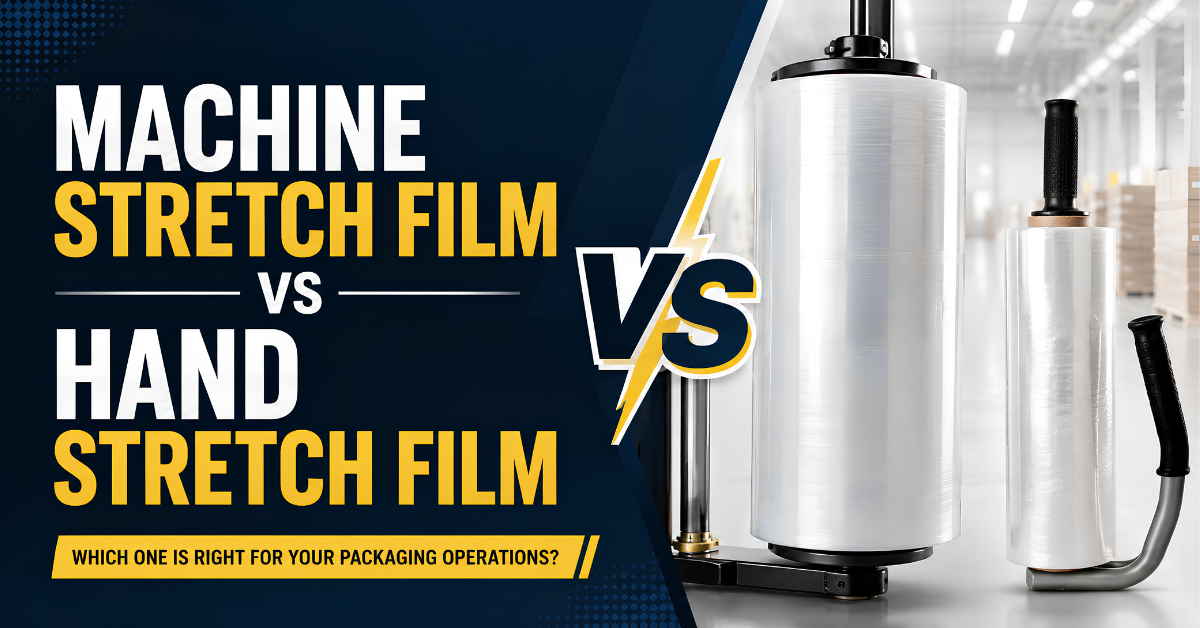
Although both products are manufactured using linear low-density polyethylene (LLDPE) and perform the same primary function of securing palletized loads, the difference lies in how they are applied and the level of performance they deliver. Hand stretch film is designed for manual application, giving operators complete control over the wrapping process, while machine stretch film is engineered to work with automated wrapping equipment that applies consistent tension and overlap throughout every cycle.
This difference has a direct impact on packaging efficiency. Manual wrapping depends on the skill and physical effort of the operator, which means two employees may wrap the same pallet differently. Automated wrapping, on the other hand, follows the same programmed settings for every load, resulting in uniform wrapping quality, improved pallet stability, and better utilization of stretch film.
Comparison at a Glance
| Feature | Hand Stretch Film | Machine Stretch Film |
| Application Method | Manual | Automatic or Semi-Automatic Machine |
| Ideal Daily Volume | Low to Medium | Medium to High |
| Wrapping Speed | Depends on Operator | Fast and Consistent |
| Film Consumption | Usually Higher | Optimized and Controlled |
| Initial Investment | Very Low | Requires Stretch Wrapping Machine |
| Wrapping Consistency | Varies Between Operators | Uniform for Every Pallet |
| Labor Requirement | Higher | Lower |
Which Option Is More Cost-Effective?
Many businesses assume hand stretch film is always the cheaper option because the film rolls themselves are generally less expensive and no machine is required. While this may be true for companies wrapping only a small number of pallets each day, the situation changes as production increases. When dozens or hundreds of pallets need to be wrapped daily, labor costs, slower packaging speed, and higher film consumption often become much larger expenses than the price of the stretch film itself.
Machine stretch film usually requires a higher initial investment because it is used with stretch wrapping equipment, but it can significantly reduce long-term operating costs. Automated machines apply the exact amount of film needed for each pallet, minimizing waste while increasing productivity. For warehouses with continuous packaging operations, these savings can quickly offset the investment in automation, making machine stretch film the more economical choice over time.
Advantages of Hand Stretch Film
One of the biggest reasons businesses continue to use hand stretch film is its simplicity. There is no need for expensive machinery, operator training is minimal, and packaging can begin as soon as the film roll is available. This makes it an ideal solution for start-ups, small manufacturers, wholesalers, and businesses where shipping volumes fluctuate throughout the year. Even if only a few pallets need to be wrapped, hand stretch film offers enough flexibility to handle different product sizes without changing machine settings or interrupting warehouse operations.
Another advantage is mobility. Since wrapping is done manually, employees can secure pallets anywhere in the warehouse instead of moving them to a dedicated wrapping station. This is particularly useful for oversized products, irregular loads, or warehouses with limited space. For businesses that prioritize flexibility over speed, hand stretch film remains a practical and cost-effective packaging solution.
Advantages of Machine Stretch Film
Machine stretch film is designed for businesses where packaging speed and consistency are essential. Automated wrapping machines apply the film with controlled tension, ensuring every pallet receives the same wrapping pattern regardless of the operator. This not only improves load stability but also reduces the amount of film required for each pallet, helping businesses lower material costs over time.
As production volumes increase, automation becomes one of the biggest advantages. Instead of assigning employees to manually wrap pallets throughout the day, warehouses can process more shipments in less time with fewer labor resources. This improves workflow, reduces operator fatigue, and creates a more efficient packaging process, especially in manufacturing plants, distribution centers, and export facilities that handle large numbers of palletized goods every day.
When Should You Upgrade from Hand Stretch Film to Machine Stretch Film?
Many businesses begin with hand stretch film because it is affordable and easy to use, but there comes a point where manual wrapping starts limiting productivity. If employees spend a significant portion of their day wrapping pallets, shipments begin waiting for packaging, or film consumption continues to increase despite careful handling, it may be time to consider automation.
A growing business should view machine stretch film as an investment rather than an expense. When pallet volumes continue to rise, automated wrapping improves efficiency, delivers more consistent packaging quality, and reduces long-term operating costs. Instead of focusing only on the initial price of a wrapping machine, businesses should evaluate the savings in labor, packaging material, and reduced product damage over the years, which often provide a much higher return on investment.
Which Stretch Film Should You Choose?
There is no single stretch film that is perfect for every business. The right choice depends on your daily packaging requirements, available workforce, production capacity, and long-term business goals. For companies wrapping only a limited number of pallets each day, hand stretch film offers a practical and economical solution. It provides the flexibility to wrap different types of loads without investing in machinery, making it suitable for small warehouses, local distributors, and businesses where packaging demand changes frequently.
On the other hand, businesses with high shipping volumes should look beyond the initial investment and consider overall operational efficiency. Machine stretch film allows faster wrapping, consistent load containment, and better control over film usage. As packaging requirements grow, automation not only improves productivity but also helps reduce labor dependency and material waste, making it a more cost-effective solution in the long run.
Final Thoughts
Both hand stretch film and machine stretch film play an important role in modern packaging, but they are designed for different working environments. Selecting the right option is not simply about choosing a type of film it is about finding a solution that matches your warehouse operations, shipping volume, and future growth plans. A business that understands its packaging requirements will always achieve better efficiency, lower operating costs, and improved product protection during storage and transportation.
If your operation is still growing, hand stretch film can provide reliable performance without significant investment. However, once packaging volumes increase and consistency becomes a priority, upgrading to machine stretch film can transform warehouse productivity and deliver measurable long-term savings. Evaluating your current workflow, labor costs, and shipment volumes before making a decision will help ensure that your packaging process remains efficient, scalable, and capable of supporting future business growth.