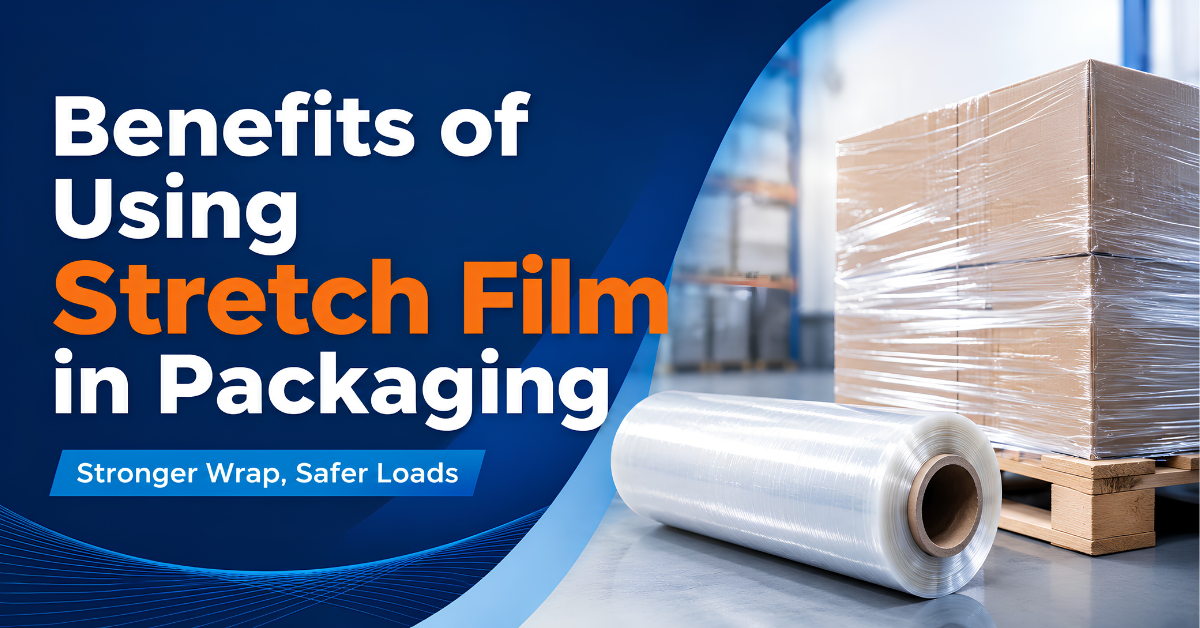
Packaging does more than hold products together. It protects goods in motion, keeps warehouse handling efficient, and helps businesses deliver orders in better condition. Stretch film is one of the most practical materials for this job because it secures loads tightly, adapts to different product shapes, and supports fast palletized shipping without adding unnecessary bulk.
Used correctly, stretch wrap can reduce shifting, improve load stability, protect against dust and moisture, and make pallet handling safer and more consistent. Whether you are wrapping cartons, bundling mixed goods, or preparing full pallets for transport, choosing the right stretch film packaging can make a noticeable difference in daily operations.
What makes stretch film useful in packaging?
Stretch film is useful because it combines flexibility, cling, and tension to hold products securely during storage and transport. When wrapped around a load, the film stretches and tries to return to its original shape, creating containment force that keeps items together. This is what makes it especially effective for pallet wrapping, where stability matters from the warehouse floor to the final delivery point.
Unlike rigid packaging materials, stretch film can conform to uneven shapes, stacked cartons, sharp corners, and mixed pallet loads. It also works well with manual wrapping, semi-automatic machines, and automated systems, giving businesses options as their packaging volume changes. For many operations, that balance of protection, speed, and adaptability is the main reason stretch film remains a standard packaging material.
It is also lightweight compared with many alternatives. That matters because packaging weight can affect handling, transport efficiency, and material use. A properly selected pallet stretch film can secure a load without requiring excessive secondary packaging, helping teams protect products while keeping processes simple.
Load stability is the biggest everyday advantage
The primary role of stretch film is to keep goods from moving. A pallet that looks stable when it leaves the packing area can still shift during forklift handling, truck vibration, braking, turning, or unloading. Stretch film for pallets helps reduce that movement by binding individual cartons or units into one more stable load.
Good load stability has practical benefits across the supply chain. Warehouse teams can move pallets with more confidence. Drivers and logistics partners deal with fewer unstable loads. Customers receive products that are less likely to be crushed, separated, or scattered on arrival.
To improve stability, the wrapping process matters as much as the film itself. Operators should pay attention to:
- Film tension: Too little tension may leave the load loose, while too much can crush lightweight cartons.
- Overlap: Consistent overlap between layers helps distribute holding force across the pallet.
- Bottom wraps: Extra wraps at the pallet base help lock the load to the pallet, not just to itself.
- Top coverage: The upper layers should secure the highest items without pulling them out of alignment.
- Load shape: Irregular pallets may need reinforcement, corner protection, or a different wrap pattern.
When these details are controlled, stretch film becomes more than a covering. It becomes part of the load containment system.
Stretch film protects products from common warehouse risks
Most packaging environments expose goods to more than one type of risk. Dust, dirt, light moisture, handling marks, and accidental contact can all affect product condition before shipment. Stretch film creates a protective barrier around the load, helping keep products cleaner and more contained while they wait in storage or move through distribution.
This protection is especially useful for cartons, bagged goods, bottled products, cans, and stacked retail items. The film helps prevent loose items from falling away and reduces direct exposure to debris in busy warehouse spaces. It can also deter casual tampering because a wrapped pallet is easier to inspect for disturbance than an unwrapped one.
However, it is important to understand what stretch film can and cannot do. Standard stretch wrap offers basic surface protection, but it is not a complete weatherproofing solution for long-term outdoor storage. If loads will face extended moisture, sunlight, or harsh conditions, businesses may need specialized film, covers, strapping, or other protective packaging.
Industrial stretch film supports demanding operations
Industrial stretch film is designed for environments where packaging must perform consistently under heavier use. These settings often include manufacturing facilities, distribution centers, wholesale warehouses, and freight operations. In these spaces, the film must handle repeated wrapping, heavy pallet movement, variable load weights, and tight shipping schedules.
The advantage of using industrial-grade film is consistency. A film that stretches predictably and resists tearing can reduce interruptions during packing. Operators spend less time rewrapping damaged loads, and machines can run more smoothly when film quality is stable.
Industrial stretch film may be selected for different performance priorities, such as puncture resistance, stretchability, clarity, cling, or load-holding strength. For example, a pallet with sharp carton edges may require a tougher film than a pallet of smooth, uniform boxes. A high-volume operation using wrapping equipment may prioritize machine-grade film that unwinds cleanly and performs consistently at speed.
The right choice depends on the load, the process, and the journey the pallet must survive. A film that works well for light in-house storage may not be the best fit for long-distance freight or stacked mixed goods.
Why is LLDPE stretch film so widely used?
LLDPE stretch film is widely used because linear low-density polyethylene offers a strong combination of stretch, toughness, and flexibility. It can elongate under tension while maintaining the cling and resilience needed to hold loads together. This makes it practical for many packaging applications, from hand wrapping small shipments to machine wrapping high-volume pallets.
The structure of LLDPE helps the film resist punctures and tears better than many basic plastic films. That is useful when wrapping loads with corners, edges, or uneven surfaces. It also gives the film the ability to stretch around products without immediately breaking, which supports secure wrapping with less material when applied properly.
Another reason LLDPE stretch film is common is its versatility. It can be manufactured in different gauges, widths, colors, and performance grades. Businesses can choose lighter films for uniform loads, stronger films for difficult pallets, or specialty options for visibility, privacy, or identification.
In practice, this flexibility allows packaging teams to match film performance to real handling conditions instead of relying on a one-size-fits-all approach.
Stretch wrap can improve packaging efficiency
Efficiency in packaging is not only about speed. It is also about reducing rework, preventing avoidable damage, and helping teams follow repeatable processes. Stretch wrap supports this by making pallet preparation straightforward and scalable.
For small operations, hand-applied film can be a practical starting point. It allows employees to wrap shipments without complex equipment. For growing operations, dispensers and semi-automatic wrappers can improve consistency, reduce operator fatigue, and control film usage more effectively. In high-volume warehouses, automatic systems can help maintain throughput while applying pallet wrapping film with repeatable tension and overlap.
Efficient wrapping can support several day-to-day goals:
- Faster pallet preparation because loads can be secured quickly after picking or production.
- Fewer handling disruptions when products stay together during movement.
- More consistent packaging quality when operators use the same wrap pattern and film type.
- Reduced material waste when the film is matched to the load and applied with proper tension.
- Cleaner storage areas because wrapped loads are easier to stage, move, and identify.
The best results come from treating stretch film as part of a packaging process, not just a supply item. Training, equipment condition, film selection, and load design all influence the outcome.
Pallet wrapping film helps protect margins
Product damage, shipment delays, returns, and repacking all carry costs. Even when one damaged pallet seems like a small issue, repeated packaging failures can affect margins over time. Pallet wrapping film helps reduce these risks by giving products a stable, protective layer before they enter storage or transit.
The financial value is often indirect but important. A secure pallet may reduce the chance of cartons being rejected on delivery. Cleaner loads can improve customer perception. Faster wrapping can free employees for other work. Better film performance can reduce the frustration of breaks, loose wraps, and inconsistent containment.
That does not mean the thickest or strongest film is always the most cost-effective choice. Over-wrapping can increase material use without improving performance. Under-wrapping can lead to damage and rework. The goal is to find the film and application method that provide enough containment for the actual load and shipping route.
A practical review might include questions such as:
- Are pallets arriving with shifted, crushed, or leaning loads?
- Are operators using excessive film to compensate for weak containment?
- Does the film tear on corners or during machine wrapping?
- Are different teams wrapping pallets in inconsistent ways?
- Are there lighter or higher-performance film options that could do the job with less material?
Small improvements in these areas can make packaging more reliable and easier to manage.
Stretch film works for more than standard pallets
Although pallet wrapping is one of the most common uses, stretch film packaging can support many other tasks. Businesses often use it to bundle products, secure partial pallets, group long items, or protect materials during internal movement. Its flexibility makes it useful across industries that handle goods in varied shapes and volumes.
For example, a warehouse may use stretch wrap to secure mixed cartons after order picking. A manufacturer may wrap components between production stages. A distributor may use colored film to identify product categories or separate shipments. Retail and wholesale teams may use clear film to keep products visible while still holding them together.
There is also a difference between stretch film and cling film in everyday language. In packaging, stretch film usually refers to stronger wrap used for pallets, bundles, and transport loads. Cling film often refers to lighter film used for food or small-item wrapping. The terms can overlap casually, but in industrial and logistics settings, choosing the correct film type is important because performance needs are very different.
The right film depends on the load and application method
Choosing stretch film should start with the load, not just the roll. A uniform pallet of boxed goods, a stack of lightweight cartons, and an irregular load with sharp edges all place different demands on the film. The same film will not perform equally well in every situation.
Key selection factors include:
- Load weight: Heavier loads usually need stronger containment and may require higher-performance film.
- Load shape: Irregular or protruding products can increase puncture risk.
- Product sensitivity: Lightweight cartons may crush if too much tension is applied.
- Storage conditions: Dust, humidity, temperature, and exposure time may influence film choice.
- Transport distance: Long or rough journeys often require more secure wrapping.
- Wrapping method: Hand film and machine film are designed for different application styles.
- Visibility needs: Clear film allows scanning and inspection, while opaque or colored film can improve privacy or identification.
A good packaging supplier or internal packaging review can help match these factors with the correct pallet stretch film. The goal is not simply to buy film, but to create a repeatable wrapping setup that protects the load without unnecessary waste.
How can businesses get better results from stretch film?
Businesses can get better results by standardizing the film, training operators, checking wrap quality, and reviewing damaged or unstable loads regularly. The most effective stretch film program combines the right material with the right technique. Even a high-quality film can underperform if it is applied with poor tension, inconsistent overlap, or too few anchoring wraps.
A practical improvement plan does not need to be complicated. Start by observing how pallets are wrapped now. Look for loose tails, uneven layers, crushed corners, film breaks, or loads that wobble when moved. Then adjust one variable at a time, such as film grade, wrap pattern, tension, or equipment settings.
Use this checklist as a simple starting point:
- Confirm the film type matches the wrapping method.
- Anchor the film securely at the pallet base.
- Use consistent overlap as the film moves up and down the load.
- Reinforce the bottom third of the pallet where movement often begins.
- Avoid pulling so tightly that cartons deform.
- Keep rolls clean and stored away from damage or extreme conditions.
- Inspect wrapped pallets after handling, not only at the wrapping station.
- Review recurring damage patterns and adjust the process accordingly.
Over time, these habits make packaging more predictable. Teams can identify whether problems come from the film, the pallet pattern, the wrapping method, or the conditions in transit.
Sustainable use starts with smarter application
Many businesses are paying closer attention to packaging waste, and stretch film is part of that conversation. The most responsible approach begins with using the correct amount of the correct film. Applying excessive wrap may feel safer, but it can increase material use without solving the real cause of poor containment.
Smarter application can include using pre-stretched film, optimizing machine settings, improving pallet stacking, or choosing a film with better performance at a lower gauge where appropriate. Some operations may also explore recycling programs or supplier options that support waste reduction. The right path depends on local recycling access, contamination levels, film type, and operational requirements.
Sustainability should not come at the expense of product protection. If using less film leads to more damaged goods, the total waste problem may become worse. A balanced approach considers both packaging material and the products being protected.
A practical packaging material with everyday value
Stretch film remains popular because it solves a simple but critical problem: it keeps products together when they need to move. From basic bundling to full pallet loads, it offers flexibility, protection, and efficiency in a format that fits many packaging workflows. When selected and applied well, it can support safer handling, cleaner storage, fewer packaging failures, and more consistent shipments.
For businesses using stretch film for pallets, the best results come from matching the film to the load, training teams on proper application, and reviewing performance regularly. Whether you use hand stretch wrap, machine-applied industrial stretch film, or specialized LLDPE stretch film, the goal is the same: stable, protected products that arrive in the condition customers expect.