Pallet wrap is one of the simplest and most effective ways to keep palletized goods stable during storage, handling, and transportation. Also known as stretch film or pallet stretch wrap, it is wrapped around cartons, bags, drums, crates, or bundled products on a pallet so the load moves as one secure unit. For businesses in India involved in road transport, warehouse transfers, export packing, manufacturing, or distributor deliveries, the right pallet wrap stretch film can help reduce product movement, contamination, damage, and unnecessary repacking.
What Is Pallet Wrap and How Does It Secure a Load?
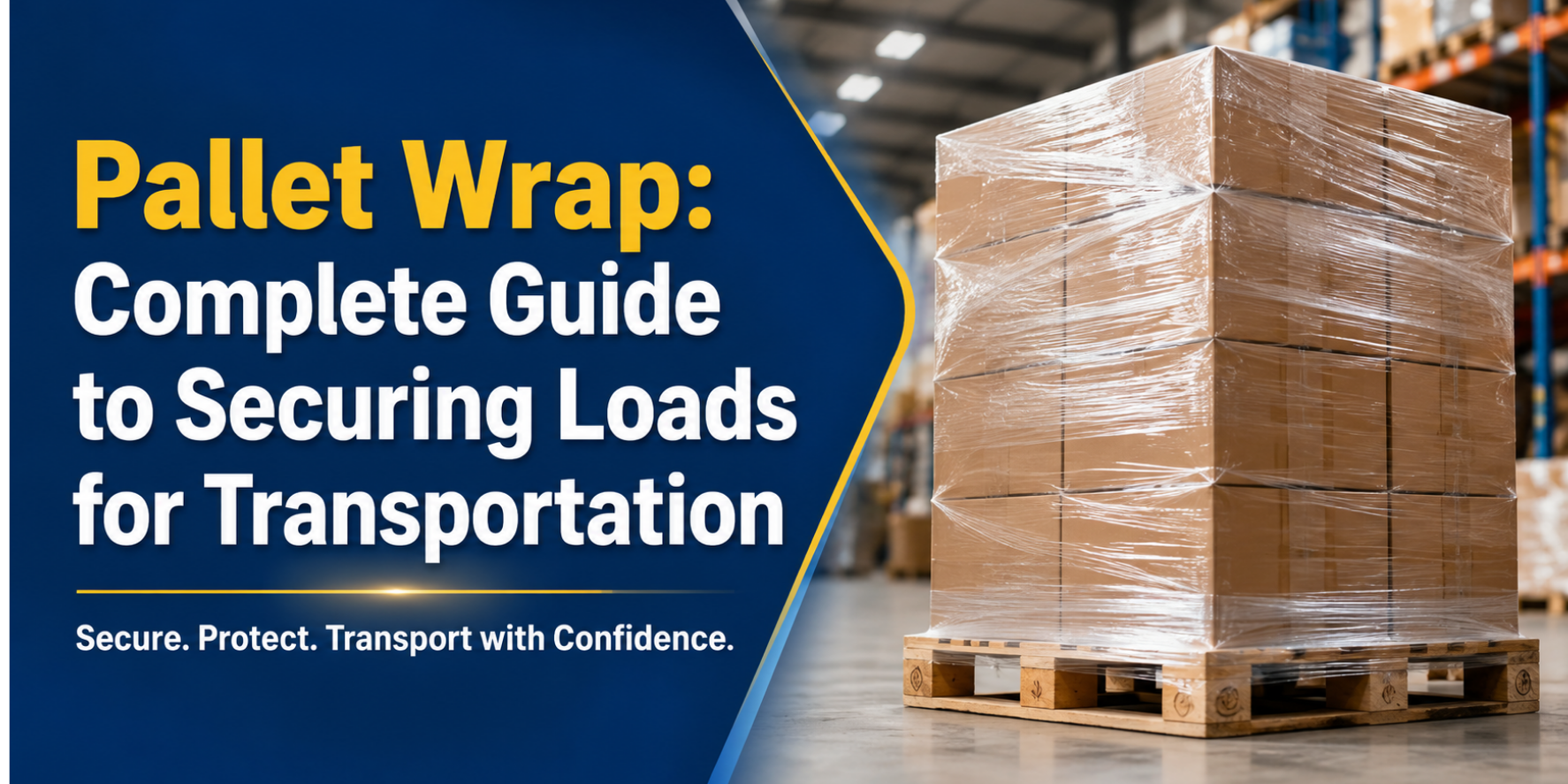
Pallet wrap is a stretchable plastic film used to hold goods tightly together and connect the load to the pallet. When the film is stretched around a pallet, it creates tension and containment force as it attempts to return toward its original shape. This holding force helps keep cartons aligned, brings individual products together, and reduces the chance of shifting during lifting, turning, braking, vibration, and transportation.
A good pallet wrapping process does more than simply cover the outside of a shipment. The film needs to anchor the load to the pallet, secure the lower layers, maintain suitable tension throughout the stack, provide sufficient overlap, and finish securely so the film does not loosen during handling. This makes pallet wrapping film useful across industries such as FMCG, pharmaceuticals, textiles, e-commerce, chemicals, food packaging, automotive components, and general manufacturing.
The main purpose of pallet wrap is load stability. Even a carefully arranged pallet can become unstable when cartons are smooth, lightweight, uneven, loosely stacked, or positioned at different heights. Stretch film creates a flexible containment layer around these products, helping them behave as a single unit without requiring rigid strapping for every application.
Why Pallet Wrap Matters During Transportation
Transportation can expose palletized goods to repeated movement and handling. A shipment may travel through factory floors, loading docks, warehouses, forklifts, trucks, distribution centers, and customer delivery locations before reaching its final destination. During these stages, products can experience vibration, tilting, braking forces, dust, humidity, and handling pressure.
Pallet wrap helps create a controlled outer layer around the shipment. Properly applied stretch film for pallets can reduce carton movement, help keep products cleaner, and make palletized loads easier to handle and identify. For long-distance road transportation, suitable pallet wrap can be particularly valuable because loads may experience repeated acceleration, braking, road vibration, and multiple loading and unloading operations.
Pallet wrapping can also support warehouse efficiency. A properly wrapped pallet is easier to move, scan, store, and handle with material-handling equipment. When products arrive with fewer damaged or displaced cartons, businesses can spend less time on repacking, pallet rebuilding, product replacement, and delivery-related disputes.
How Does Pallet Wrapping Film Work?
Pallet wrapping film works through a combination of stretch, cling, puncture resistance, and containment force. Each property contributes to the overall performance of the wrapped load.
When stretch film is applied around a pallet, stretching creates tension within the film. This tension produces an inward holding force that helps keep the products together. The cling between film layers helps the wrap maintain contact with itself, while puncture resistance helps the film withstand carton corners and irregular product edges. Containment force is particularly important because it determines how effectively the film continues to hold the load after wrapping.
A reliable pallet wrapping process generally includes several important steps. First, the film should be anchored correctly so the load is connected to the pallet rather than simply wrapped around itself. The lower section should receive sufficient attention because the bottom layers experience significant movement stress. Film layers should overlap consistently to avoid weak gaps, while tension should be controlled to prevent unnecessary tearing or carton deformation.
The objective is not to use the maximum possible amount of film. Instead, the goal is to use the right pallet wrap film at the appropriate stretch level, with a suitable wrapping pattern and enough containment force for the specific load.
Types of Pallet Wrap Available
Different loads and packaging operations require different types of pallet wrap. Film selection can affect load stability, puncture resistance, visibility, application speed, operator effort, and overall packaging efficiency.
Hand Pallet Wrap
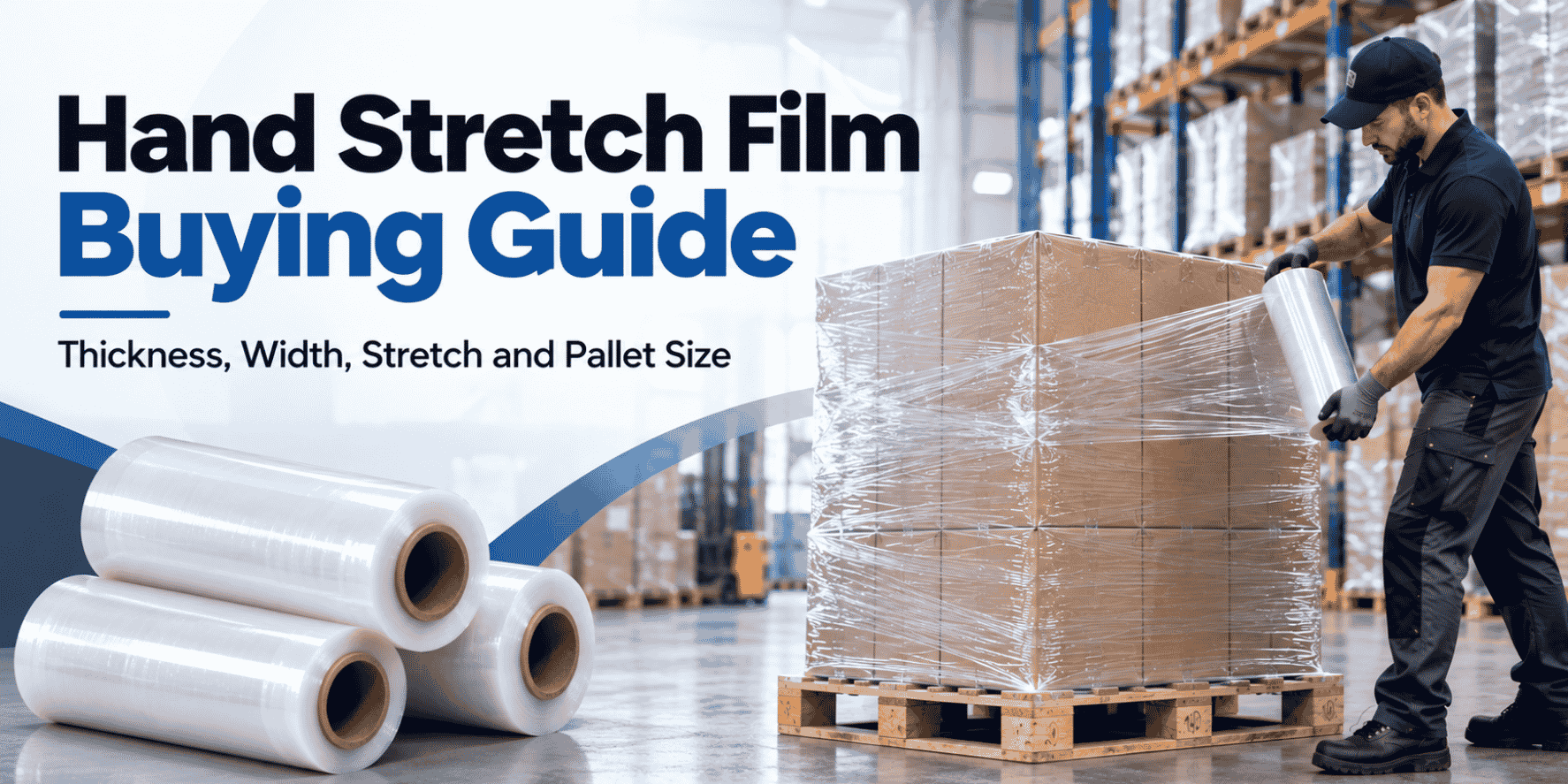
Hand pallet wrap is designed for manual application. Operators can use the roll directly by hand or with a simple dispenser to wrap pallets in low- to medium-volume packaging operations. It is particularly useful when pallet dimensions vary, wrapping requirements change frequently, or investing in a wrapping machine is not practical.
Hand stretch film is commonly used by small manufacturers, warehouses, distribution operations, and businesses handling mixed product lines. Its major advantage is flexibility because operators can adjust the wrapping process according to the individual pallet. However, the final result depends significantly on operator technique. Differences in tension, overlap, and wrapping pattern can affect load security.
Machine Pallet Wrap
Machine pallet wrap is designed for use with stretch wrapping machines. Machines can apply film with more controlled tension, stretch, and overlap, making this type of pallet wrapping film suitable for higher-volume operations where consistency is important.
Machine wrapping can reduce operator effort and improve repeatability across large numbers of pallets. It is commonly used by manufacturers, logistics facilities, distribution centers, and packaging lines that wrap many pallets during a shift. Controlled pre-stretch and consistent application can also help businesses use film more efficiently.
Cast Stretch Film
Cast stretch film is known for its clarity, smooth application, and good cling. Its transparent appearance can make it easier for warehouse teams to see labels, barcodes, and product markings through the wrapped load. It can be a suitable option for general pallet wrapping applications where visibility and smooth unwinding are important.
Blown Stretch Film
Blown stretch film is often selected for demanding applications where puncture and tear resistance are important. Its toughness can make it suitable for irregular products, sharp edges, heavy loads, or palletized goods that place greater stress on the film during transportation.
Blown film can be noisier during unwinding than cast film, but its additional toughness may be useful when load conditions require stronger resistance to punctures and tears.
Pre-Stretched Film
Pre-stretched film has already undergone stretching during manufacturing. Because less force is required to apply it manually, it can help reduce operator fatigue and make wrapping easier in some hand-wrapping applications.
Pre-stretched pallet wrap can also support more consistent application when operators have difficulty maintaining high tension manually. Its suitability depends on the load, application method, and required containment performance.
Coloured and Opaque Pallet Wrap
Coloured pallet wrap can be used for product identification, batch separation, warehouse organization, or shipment coding. Different colours can help teams distinguish products or shipments quickly during handling and storage.
Opaque pallet wrap can provide additional visual concealment for sensitive or valuable goods during transportation. These films can be useful when privacy, security, product identification, or quick visual sorting is an important part of the packaging process.
Hand Pallet Wrap vs Machine Pallet Wrap
Hand and machine pallet wrapping serve different operational requirements. Hand application is generally more suitable when flexibility and low setup requirements are more important than speed. It can work well for lower pallet volumes, changing pallet dimensions, remote packing locations, and operations where installing a wrapping machine is not justified.
The main limitation of manual wrapping is consistency. Different operators may apply different levels of tension or overlap, and excessive tension can cause film tearing while insufficient tension can result in weak containment. Operator fatigue can also affect wrapping quality during long shifts.
Machine pallet wrapping is more appropriate when speed, repeatability, and consistent application are priorities. A machine can control film tension, stretch, overlap, and wrapping cycles according to the packaging process. This can be valuable for businesses shipping regular pallet loads or operating high-volume production and distribution lines.
| Feature | Hand Pallet Wrap | Machine Pallet Wrap |
|---|---|---|
| Application | Manual | Stretch wrapping machine |
| Best suited for | Low to medium volume | Medium to high volume |
| Flexibility | High | Moderate |
| Wrapping consistency | Operator dependent | More consistent |
| Initial setup | Low | Higher |
| Operator effort | Higher | Lower |
| Best application | Variable pallet sizes | Repeatable pallet loads |
In simple terms, hand pallet wrap provides flexibility for varied and lower-volume operations, while machine pallet wrap is better suited to higher-volume, repeatable, and process-driven packaging environments.
How to Choose the Right Pallet Wrap Film
Choosing the right pallet wrap starts with understanding the load rather than simply selecting the cheapest or thickest film available. The film should match the weight, shape, stability, packaging material, wrapping method, transport conditions, and handling risks associated with the pallet.
Start by examining the load itself. Is it light or heavy? Is it tall or compact? Are the products uniform or irregular? Does the pallet contain sharp corners, slippery cartons, loose bags, drums, or products that may settle during transportation? These factors influence the required film type, thickness, stretch capability, puncture resistance, and wrapping pattern.
Several factors should be considered when selecting pallet wrapping film:
Load weight: Heavy pallets generally require stronger containment and suitable film performance.
Load shape: Irregular or sharp-edged products may require higher puncture and tear resistance.
Pallet height: Tall loads need careful attention to overlap, top stability, and containment.
Transport distance: Long-distance transportation and repeated handling can increase the demands placed on the film.
Storage environment: Dust, moisture, temperature, and warehouse conditions can influence film selection and performance.
Application method: Hand and machine applications require different film characteristics and application settings.
Visibility: Clear film can make product identification and barcode scanning easier.
Security: Coloured or opaque film may be useful for shipment identification or concealing products.
Cost efficiency: The lowest-priced film is not necessarily the most economical option if it tears easily, requires excessive wrapping, or results in load damage.
How to Wrap a Pallet Step by Step
A consistent pallet wrapping process is important because even a high-quality film may not provide reliable load security when applied incorrectly. Before wrapping, inspect the pallet and make sure the products are stable, properly arranged, and within the pallet footprint.
Step 1: Inspect and prepare the pallet.
Check the pallet condition and make sure cartons or products are not leaning, damaged, or positioned beyond the pallet edges. Heavy products should generally be placed toward the bottom of the stack.
Step 2: Anchor the film to the pallet.
Begin by securing the pallet wrap so that the film connects the load to the pallet base. Wrapping only around the products may hold the cartons together without adequately securing them to the pallet.
Step 3: Secure the bottom section.
Apply sufficient film around the lower part of the pallet. The bottom section is important because it connects the load to the pallet and helps resist movement during forklift handling and transportation.
Step 4: Move upward with consistent overlap.
Continue wrapping upward while maintaining consistent overlap between film layers. Avoid large gaps because weak areas can reduce containment and allow individual cartons to move.
Step 5: Maintain suitable tension.
Apply enough tension to create effective containment without crushing cartons or overstretching the film. The required tension depends on the product and film characteristics.
Step 6: Reinforce vulnerable areas.
Pay additional attention to corners, irregular products, unstable sections, and areas exposed to greater movement. Where necessary, additional wrapping or suitable protective materials may be used.
Step 7: Secure the upper section.
Complete the upper portion of the pallet according to the height and stability of the load. Do not concentrate all wrapping in the middle while leaving the top and bottom insufficiently secured.
Step 8: Finish the film securely.
Finish the wrapping so the film tail does not unwind during transportation or handling. The completed pallet should be checked for loose sections, exposed unstable products, and obvious gaps.
The purpose of this process is not simply to cover the pallet with plastic. The objective is to create a stable unit that can withstand normal handling and transportation conditions.
Pallet Wrap Thickness and Performance
Film thickness can influence strength, puncture resistance, stretch performance, and material usage. Thicker film may be appropriate for heavy or demanding loads, while thinner films can work effectively for lighter and stable pallets when the film quality and application process are suitable.
Pallet wrap film is commonly discussed in microns in India. Lower-micron films may be used for lighter or more stable loads, while medium-thickness films are commonly considered for general warehouse and transportation applications. Higher-thickness films may be selected when loads are heavier, irregular, sharp-edged, or require stronger resistance to punctures and tears.
However, thickness should not be considered in isolation. Stretch capability, containment force, puncture resistance, cling, film quality, and application technique can all affect real-world performance. A well-engineered stretch film may provide effective load security at a lower thickness than a poor-quality film that requires additional layers.
For this reason, businesses should evaluate film performance on actual pallet loads rather than assuming that the thickest available film will always provide the best result. Testing can help determine the appropriate film and wrapping pattern for a specific product, pallet configuration, and transportation route.
For more information about film thickness and selection, see our guide on Why Stretch Film Thickness Matters.
Better Pallet Wrapping Starts With Proper Load Preparation
Even the best pallet wrap cannot completely compensate for poor stacking. Before applying stretch film, the pallet should be structurally sound and the products should be arranged so the load is as stable as possible.
Heavy products should generally be positioned toward the bottom, cartons should be aligned where practical, and excessive overhang should be avoided. Products that extend beyond the pallet footprint can increase the risk of damage and may make it more difficult for the film to create consistent containment.
A stable pallet gives the film a reliable structure to hold. When cartons are leaning, crushed, loosely stacked, or separated by large gaps, the film may need to compensate for poor load preparation. This can increase film consumption while still producing weaker load security.
Good preparation includes using a pallet strong enough for the load, keeping cartons within the pallet edges, placing heavier products lower in the stack, reducing unnecessary gaps between boxes, using corner protection where sharp edges could damage the film, and ensuring that important labels or barcodes remain visible when scanning is required.
Once the load is properly prepared, pallet stretch wrap can work more effectively and provide more consistent containment.
Common Pallet Wrapping Mistakes and How to Avoid Them
Many pallet wrapping problems result from small process errors that are repeated during everyday packaging operations. These issues may not become obvious until goods arrive loose, damaged, dusty, or unstable.
Not Anchoring the Film to the Pallet
Wrapping only around the products may hold cartons together but does not necessarily connect the load securely to the pallet. During forklift movement, acceleration, braking, or road vibration, the load can shift on its base. The wrapping process should therefore establish a secure connection between the load and pallet.
Using Too Little Tension
Loose film may not generate enough containment force to hold the load securely. The pallet can look fully wrapped while the cartons continue to move inside the film layer. Controlled tension should be applied according to the product and film characteristics.
Overstretching or Tearing the Film
Excessive pulling can weaken or tear the film and may damage light cartons. If film breaks frequently, check the film quality, roll handling, carton edges, application technique, and selected film type. A different pallet wrap film may be required for the application.
Ignoring the Bottom and Top Sections
The bottom of the pallet requires sufficient anchoring, while the upper portion also needs enough support to reduce movement. Wrapping only around the middle of the load can leave important areas insufficiently contained.
Choosing the Wrong Film
A lightweight hand film may not be suitable for a heavy industrial pallet. Similarly, film designed for machine application may not deliver the intended performance when applied manually. Film selection should consider the product, pallet profile, transportation conditions, and wrapping method.
Focusing Only on Roll Price
A low-priced roll does not automatically provide the lowest packaging cost. Film that tears frequently, requires additional layers, or fails during transportation can increase the overall cost through higher material consumption, repacking, product damage, and labor.
Businesses should evaluate the total cost per successfully wrapped pallet rather than comparing roll prices alone.
Best Practices for Secure Pallet Wrapping
A repeatable wrapping process helps maintain consistent packaging quality when multiple operators or shifts are involved. Standardization is particularly valuable for warehouses and manufacturing facilities where large numbers of pallets are prepared every day.
Start by inspecting the pallet and load before wrapping. Correct leaning cartons, unstable layers, or damaged packaging before applying film. Secure the film at the base and apply enough wrapping to establish a stable connection between the load and pallet.
Maintain consistent overlap between film layers and adjust tension according to the product. Rigid and stable products may tolerate different tension levels from delicate cartons or lightweight packaging. Pay additional attention to corners, edges, the lower section of the pallet, and other areas where movement or film damage is more likely.
Finish the wrap securely so the film does not loosen during handling. Finally, use transportation and delivery results as feedback. If pallets regularly arrive with shifting cartons, torn film, or collapsed sections, review the film type, thickness, wrapping pattern, tension, and application method.
These practices can improve pallet stability without unnecessarily increasing film consumption.
Pallet Wrap for Different Transportation and Storage Applications
Pallet wrap can be used across a wide range of logistics and packaging situations. The specific film selection should depend on the product and handling conditions rather than using one film specification for every shipment.
For warehouse storage, stretch film can help keep cartons grouped together and reduce exposure to dust and handling-related movement. For domestic road transportation, the film needs to maintain containment while the pallet experiences vibration, braking, acceleration, and repeated handling.
For export shipments, businesses may need to consider longer transportation routes, multiple handling points, storage conditions, and visibility requirements. In these situations, appropriate film selection and proper load preparation become especially important.
Manufacturers shipping regular pallet configurations may benefit from machine application because repeatable settings can improve consistency. Businesses with changing pallet dimensions or lower volumes may find hand pallet wrap more flexible.
Conclusion: The Right Pallet Wrap Supports Safer, Smoother Logistics
Pallet wrap may appear to be a simple packaging material, but it plays an important role in maintaining load stability throughout storage, handling, and transportation. By combining suitable stretch film with proper load preparation and a consistent wrapping process, businesses can reduce unwanted movement and help protect palletized products during the supply chain.
For businesses in India, the right solution depends on the product, pallet configuration, wrapping method, film thickness, transport route, and handling conditions. Hand pallet wrap offers flexibility for varied or lower-volume requirements, while machine pallet wrap supports speed and consistency for larger operations. Cast, blown, pre-stretched, coloured, and opaque films can each serve different packaging requirements.
The most effective approach is to evaluate the complete packaging process rather than choosing film based only on price or thickness. Film quality, stretch performance, containment force, puncture resistance, application technique, and load preparation all contribute to successful pallet wrapping.
If you are reviewing your packaging process, start with the pallets that experience the most movement, damage, rework, or instability. Testing the appropriate pallet wrap stretch film on these loads can help identify opportunities to improve containment, reduce film waste, and create a more consistent transportation process.
Need help choosing stretch film for pallets? Explore our stretch film products and manufacturing solutions to find the right pallet wrap, hand stretch film, or machine stretch film for your packaging and transportation requirements.