Cling film is one of the most commonly used food packaging materials in homes, restaurants, supermarkets, bakeries, and food processing industries. It creates a protective barrier around food, helping reduce exposure to air and moisture while keeping products fresh for longer.
Although many people use cling film every day, questions such as what is cling film, what is cling film used for, and is cling film safe are still commonly searched online. In this guide, we’ll answer these questions and explain how cling film works, the different types available, and where it is used.
What Is Cling Film?
Cling film is a thin, transparent plastic film designed to wrap food and containers tightly without using glue or adhesive. Its natural cling properties allow it to stick to smooth surfaces, creating a protective seal around food.
Depending on its application, cling film is manufactured using food-safe materials such as PVC (Polyvinyl Chloride) or PE (Polyethylene). Both materials offer excellent flexibility and transparency, making them suitable for preserving a wide variety of food products.
Today, cling film is widely used in:
- Homes
- Restaurants
- Hotels
- Bakeries
- Supermarkets
- Catering businesses
- Food processing industries
Businesses that require reliable food packaging often choose food grade cling film because it provides excellent clarity, stretchability, and protection during storage and transportation.
What Is Cling Film Made Of?
Modern cling film is generally manufactured using food-safe plastic materials designed for flexibility and durability.
The two most common materials are:
| Material | Features | Common Uses |
|---|---|---|
| PVC Cling Film | Excellent cling, high transparency, flexible | Fresh fruits, vegetables, meat, supermarkets |
| PE Cling Film | Odor-free, recyclable in some regions, food-safe | Food processing and industrial packaging |
The material used depends on the packaging application, storage conditions, and food type.
What Is Cling Film Used For?
Cling film has become an essential packaging material because it helps maintain food quality during storage, transportation, and display.
Some of its most common applications include:
- Wrapping fresh fruits and vegetables
- Covering prepared meals
- Packaging meat and seafood
- Wrapping bakery products
- Storing dairy products
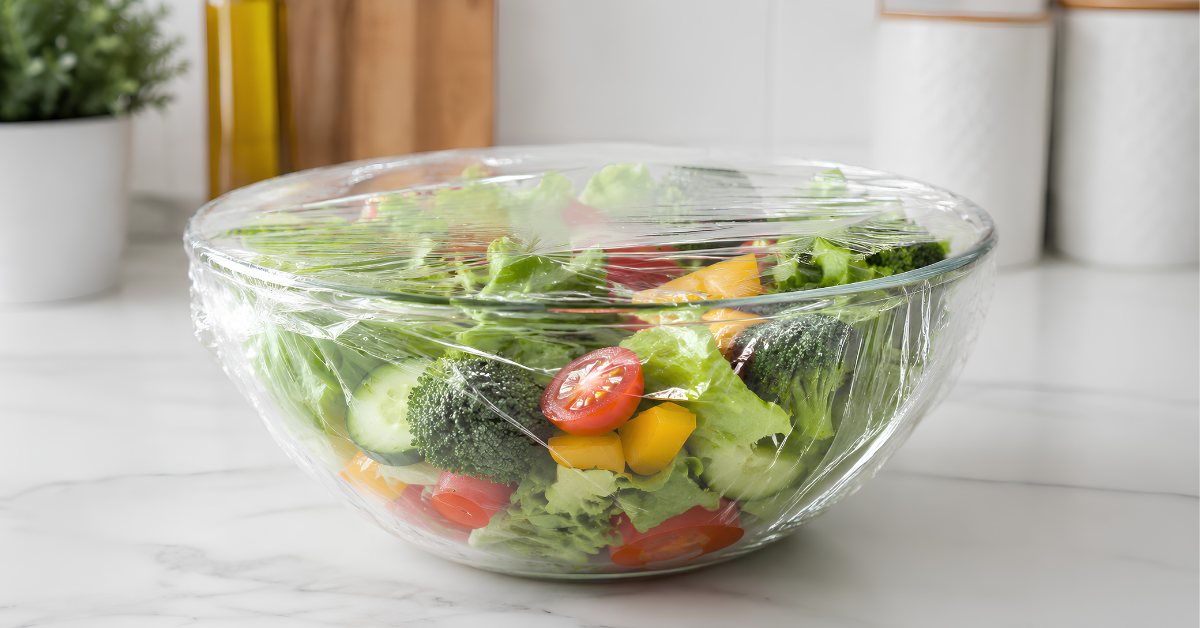
- Covering bowls and food containers
- Commercial food packaging
- Supermarket display packaging
Because of its flexibility, cling film easily conforms to different container shapes without requiring adhesive tape.
Different Types of Cling Film
Not all cling films are the same. Different industries use different types depending on their packaging requirements.
PVC Cling Film
PVC cling film offers excellent stretchability and cling performance. It is commonly used in supermarkets, grocery stores, and food retail packaging where product visibility is important.
PE Cling Film
PE cling film is increasingly used for commercial food packaging because it provides good strength while being suitable for many food applications.
Food Grade Cling Film
Food grade cling film is manufactured specifically for direct food contact. It complies with food safety standards and helps protect food from external contamination during storage and transport.
Businesses looking for reliable food grade cling film should always choose products manufactured using high-quality food-safe materials suitable for commercial packaging applications.
Benefits of Using Cling Film
One of the biggest reasons cling film is widely used is its ability to keep food fresh while reducing unnecessary food waste.
Some important benefits include:
- Helps retain moisture
- Protects food from dust and contaminants
- Improves food presentation
- Reduces odor transfer inside refrigerators
- Fits containers of different shapes
- Lightweight and easy to use
- Suitable for home and commercial food packaging
Is Cling Film Safe for Food?
Yes, food-grade cling film is generally considered safe when used according to the manufacturer’s instructions.
However, it is important to remember that not every cling film is designed for every application. Some products are suitable for refrigeration only, while others can also be used for freezer storage or microwave reheating.
When selecting cling film, always check:
- Food-grade certification
- Recommended temperature range
- Microwave compatibility (if required)
- Intended food application
Choosing the right product ensures both food safety and packaging performance.
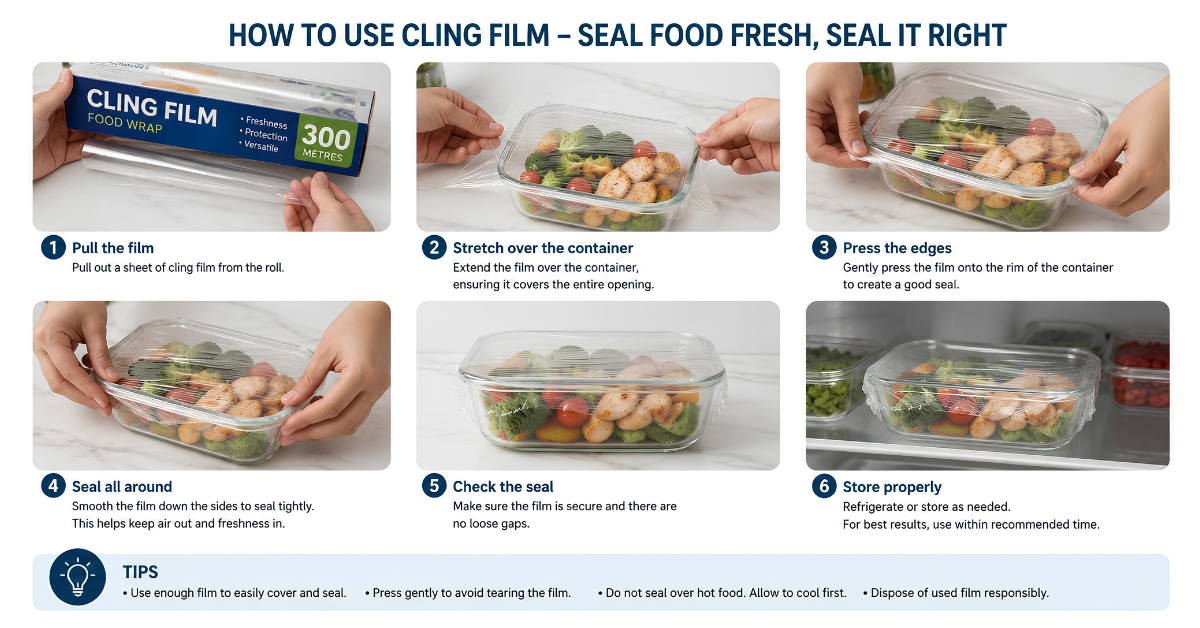
How to Use Cling Film Correctly
Using cling film properly improves its sealing performance and helps keep food fresh longer.
Start by pulling enough film to completely cover the food or container. Stretch it gently over the surface and press around the edges to create a secure seal.
For best results:
- Wrap food as soon as it cools
- Avoid leaving large air gaps
- Store wrapped food at the correct temperature
- Replace damaged or loose wrapping
Proper application helps maintain freshness while reducing exposure to air and moisture.
Cling Film vs Plastic Wrap
Many people use the terms cling film, plastic wrap, and cling wrap interchangeably.
In most countries, they refer to the same type of food wrapping material. The difference is mainly regional terminology rather than the product itself.
| Term | Common Regions |
|---|---|
| Cling Film | UK, India, Australia |
| Plastic Wrap | United States |
| Cling Wrap | Common generic term |
Choosing the Right Cling Film
Whether you’re packaging food at home or operating a commercial food business, choosing the right cling film depends on:
- Food type
- Storage conditions
- Required film thickness
- Roll size
- Packaging volume
- Food safety requirements
Commercial users often prefer high-quality cling film rolls because they provide consistent performance, better stretchability, and reliable sealing across different food packaging applications.
Conclusion
Cling film remains one of the most practical food packaging materials available today. Its ability to stretch, seal, and protect food makes it suitable for homes, restaurants, supermarkets, bakeries, and food processing businesses.
Understanding what cling film is, what it is made of, and how to use it correctly helps you choose the right packaging solution for different food applications. Whether you’re storing fresh produce, covering prepared meals, or packaging products for retail display, using the right cling film can help maintain freshness, improve presentation, and support better food storage practices.