Introduction
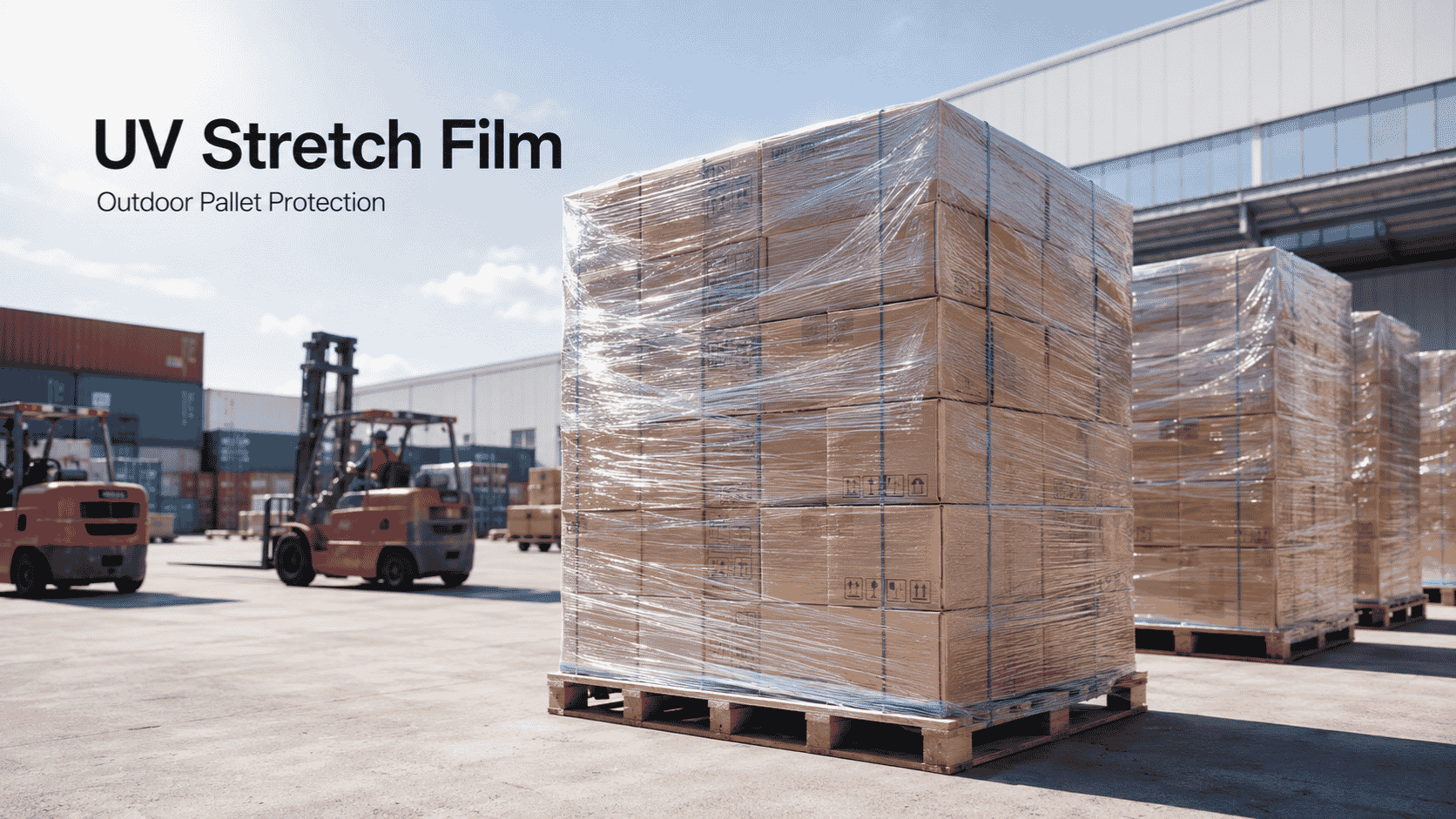
Packaging is often judged by what happens after products leave the warehouse. A pallet that looks perfectly secure during loading may spend days or even months in container yards, open storage areas, construction sites, or distribution centers where it is exposed to intense sunlight and changing weather conditions. During this time, the performance of the stretch film becomes just as important as the quality of the product itself.
Many businesses assume that all stretch films provide the same level of protection. In reality, conventional stretch film is primarily designed to stabilize loads during transportation and short-term storage. Continuous exposure to sunlight gradually weakens the material, causing it to lose elasticity and eventually crack or tear. Once this happens, the pallet becomes unstable, increasing the risk of damaged products, additional handling costs, and delayed deliveries.
UV stretch film was developed to solve this problem. Instead of treating sunlight as an unavoidable risk, it is engineered to withstand prolonged outdoor exposure while maintaining the load containment needed for safe storage and transportation. For industries that store products outside or move goods through ports, rail terminals, and open logistics yards, this difference can significantly reduce losses and operational costs.
Understanding when UV stretch film is necessary, how it works, and how to select the right specification helps businesses make informed packaging decisions rather than simply purchasing the least expensive option.
Understanding UV Stretch Film
UV stretch film is a stretch wrapping material manufactured with additives that improve its resistance to ultraviolet radiation from sunlight. While it performs the same basic function as conventional stretch film—holding products securely together on a pallet—it is specifically designed for environments where outdoor exposure cannot be avoided.
Like most stretch films, it is produced from polyethylene-based materials that offer flexibility and excellent stretching characteristics. The difference lies in the formulation. During manufacturing, stabilizing additives are incorporated into the film to slow the degradation normally caused by prolonged UV exposure.
The objective is not to make the film permanent or indestructible. Instead, the goal is to preserve its mechanical properties for a much longer period than standard stretch film under outdoor conditions. The film continues to stretch, cling, and maintain containment force instead of becoming brittle after extended exposure to sunlight.
For businesses, this means that the wrapping material remains functional throughout storage and transportation rather than failing before the products reach their destination.
Why Standard Stretch Film Performs Poorly Outdoors
Stretch film performs exceptionally well inside warehouses because environmental conditions are relatively controlled. Indoor storage typically protects pallets from direct sunlight, extreme temperature fluctuations, and continuous weather exposure.
Outdoor environments are entirely different.
Sunlight contains ultraviolet radiation that gradually affects many plastic materials. As exposure continues, the film loses flexibility and becomes increasingly rigid. Small cracks may begin to appear, followed by tearing around corners or high-tension areas of the pallet. Wind movement and repeated heating and cooling cycles accelerate this process.
The problem rarely appears immediately. During the first few days, the pallet may look perfectly secure. Over time, however, the holding force decreases, allowing cartons or products to shift during handling or transportation. In severe cases, the wrapping fails altogether, requiring the load to be rewrapped or repalletized.
The cost of this failure extends beyond replacing the film. Additional labor, damaged products, transportation delays, and customer complaints often exceed the value of the packaging material itself.
For operations that regularly store pallets outdoors, using standard stretch film simply transfers risk further down the supply chain.
How UV Stretch Film Protects the Load
Many people assume that UV stretch film protects products by blocking sunlight completely. While darker films may reduce light penetration, the primary function of UV stabilization is different.
The film is designed to resist the damaging effects that sunlight has on the wrapping material itself. By slowing degradation, it maintains the elasticity and containment force necessary to keep the pallet stable throughout storage and transportation.
This continued performance offers several practical benefits.
The load remains tightly secured, reducing movement between cartons or packages. Because the film retains its flexibility, it is better able to absorb vibrations and handling stresses during loading and unloading. The likelihood of tearing around sharp corners or protruding edges is also reduced when the film maintains its intended mechanical properties.
In addition to protecting the packaging system, stable wrapping indirectly protects the products inside. Labels remain easier to manage, cartons are less likely to collapse, and the overall appearance of the shipment is preserved.
The result is greater confidence that the pallet leaving the warehouse will arrive in the same condition at its final destination.
Different Types of UV Stretch Film
Not every outdoor application requires the same type of UV protection. Selecting the appropriate film depends on the products being wrapped, the expected storage duration, and operational requirements.
Clear UV Stretch Film
Clear UV stretch film is the preferred choice when visibility remains important. Warehouses and distribution centers often need to identify products quickly or scan barcodes without removing the wrapping.
Because the film remains transparent, inventory management becomes easier while still providing improved resistance to outdoor exposure compared with conventional stretch film.
It is commonly used for export pallets, retail distribution, and industrial products where inspection during storage is necessary.
Black UV Stretch Film
Some products require more than load stabilization. They also need protection from direct light or additional security during storage and transportation.
Black UV stretch film addresses these requirements by reducing visibility of the pallet contents while helping shield light-sensitive products from exposure.
Industries handling chemicals, agricultural products, specialty polymers, or high-value materials often choose black film when confidentiality and environmental protection are equally important.
Another advantage is theft deterrence. Products that cannot be easily identified are generally less attractive targets during outdoor storage or transit.
Hand-Applied UV Stretch Film
Operations with moderate packaging volumes or changing pallet configurations frequently rely on manual wrapping.
Hand-applied UV stretch film allows operators to secure loads without specialized equipment while still benefiting from enhanced outdoor durability. It is particularly useful for construction sites, temporary warehouses, and businesses where packaging requirements vary from day to day.
Its flexibility makes it a practical solution for organizations that value mobility and lower capital investment.
Machine-Applied UV Stretch Film
High-volume distribution centers often require greater consistency and productivity than manual application can provide.
Machine-applied UV stretch film is designed for automated or semi-automated wrapping systems that apply controlled tension and uniform overlap throughout the wrapping cycle.
When properly configured, these systems produce repeatable containment force while reducing material variation between pallets. For businesses handling large numbers of shipments, this consistency contributes to improved efficiency and lower overall packaging costs.
Choosing the Right UV Stretch Film
Selecting the right film involves much more than comparing thickness or price.
The first consideration should be storage duration. A pallet that remains outdoors for a few days faces very different challenges than one stored for several months.
The second consideration is environmental exposure. Locations with intense sunlight, high temperatures, or significant seasonal variation place greater demands on the packaging system.
Product characteristics also matter. Uniform cartons generally require different packaging strategies than irregular loads with sharp edges or uneven weight distribution.
Operational methods should also influence selection. Facilities using automated wrapping equipment should choose films optimized for machine application, while businesses relying on manual wrapping should prioritize ease of handling and consistent performance.
Finally, purchasing decisions should focus on total cost rather than material price alone. A slightly more expensive film that reduces product damage, labor, and rewrapping often provides better long-term value than a lower-cost alternative.